A comfortable home rarely depends on expensive furniture or elaborate décor. Instead it often comes from thoughtful design choices that make rooms feel balanced and welcoming. One of the most effective approaches is mixing patterns and textures for interior spaces in a way that adds warmth, character, and visual interest. When patterns and materials work together, even a simple room can feel layered and lively rather than flat or sterile.
Interior designers have long used texture and pattern combinations to create emotional comfort in living spaces. According to design research referenced by the University of Minnesota Extension, visual variety created through materials, color, and surfaces helps maintain interest and prevents a room from appearing monotonous. When done correctly, these combinations guide the eye naturally through the space and create harmony.
This guide explains the design principles behind pattern mixing, how textures influence perception, and practical steps homeowners can follow to create stylish rooms. By understanding how to mix patterns and textures in a room, anyone can build a space that feels comfortable while still looking thoughtfully designed.
Why patterns and textures matter in home design
Interior spaces influence mood more than most people realize. Elements like fabric surfaces, woven materials, and printed textiles affect how a room feels both visually and physically.
Texture refers to the surface quality of materials. Examples include soft fabrics, rough wood, smooth ceramics, or knitted textiles. Patterns refer to repeated decorative designs such as stripes, florals, or geometric shapes. When these two elements interact, they create depth and movement in a room.
Museums such as the Victoria and Albert Museum highlight how textiles have historically played a central role in domestic interiors. Patterns in rugs, curtains, and upholstery historically helped define comfort and cultural identity within homes. These design traditions still influence modern interiors today.
When homeowners use warm home decor patterns and textures, they bring warmth and personality to rooms that might otherwise feel overly minimal. A soft wool throw on a leather chair or a patterned rug beneath a wooden table introduces contrast that draws attention without overwhelming the space.
Understanding texture in living spaces
Before combining patterns and textures, it helps to understand the role of texture in design.
Textures influence both the visual and tactile experience of a room. Even when people do not physically touch a surface, the brain interprets visual texture as either warm, soft, cool, or structured. Designers often rely on interior texture contrast to highlight differences between surfaces and create depth within a room. Materials such as wood grain, woven fabrics, or stone surfaces introduce subtle variation that keeps spaces visually interesting while still maintaining visual balance in rooms.
Common interior textures include
Natural wood grain
Stone and ceramic surfaces
Woven fabrics like cotton and linen
Knitted or chunky textiles
Metal finishes such as brass or steel
Glass surfaces that reflect light
Design education resources from MIT OpenCourseWare explain that texture contributes to spatial perception. Rough or layered materials add visual weight while smooth materials reflect light and appear lighter. These relationships between surface materials in interiors help determine how light interacts with different objects in the room.
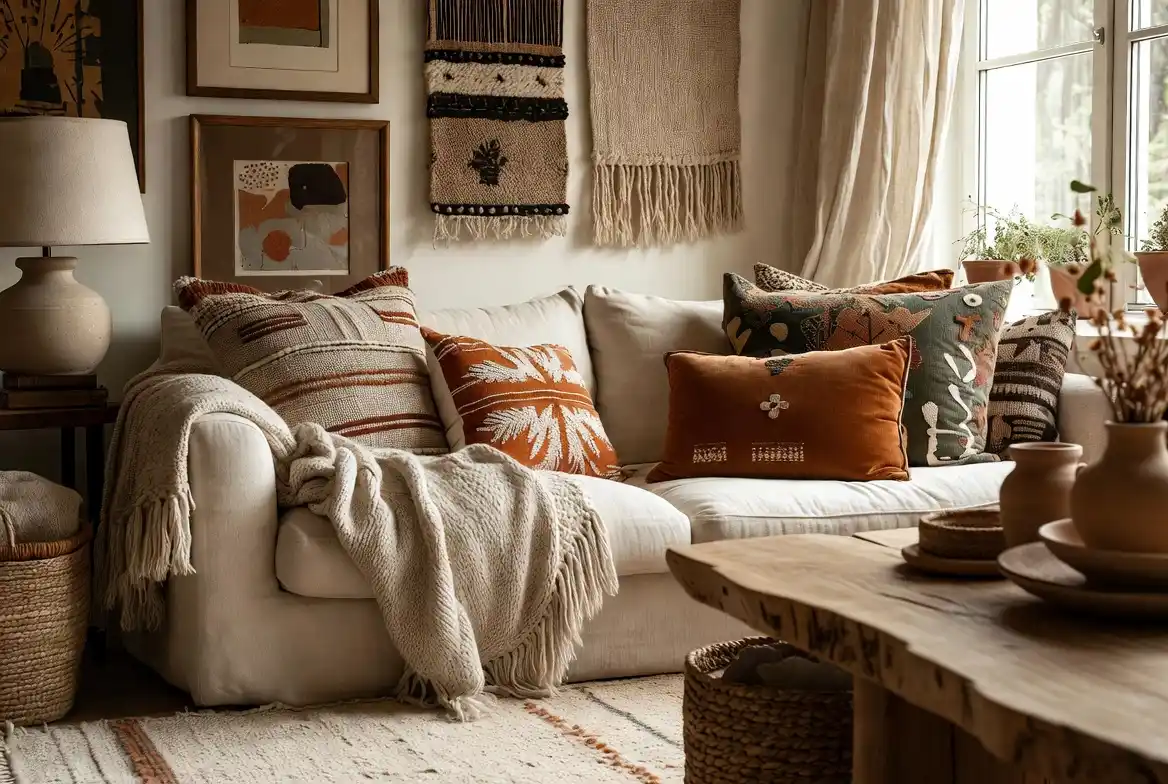
This explains why layering textures in interior design helps rooms feel richer and more balanced. For example, pairing a sleek sofa with knitted cushions and a textured rug creates contrast that prevents the space from looking overly uniform while increasing interior visual depth.
How patterns influence visual balance
Patterns bring rhythm to a room. They guide the viewer’s eye across surfaces and help define focal points.
Design experts often categorize patterns into three common groups
Large scale patterns such as bold florals or oversized prints
Medium scale patterns like geometric shapes
Small scale patterns such as subtle dots or fine stripes
Combining different scales helps maintain visual balance. If every pattern in a room appears the same size, the design may look cluttered or chaotic. Understanding pattern scale in design allows designers to combine prints without overwhelming the space.
When learning how to coordinate patterns and textures in a room, many designers recommend starting with one dominant pattern. Smaller supporting prints can then complement the main design without competing for attention. Applying thoughtful pattern coordination techniques ensures that each textile contributes to the overall look rather than competing with other elements.
This layered approach helps create the comfortable visual flow commonly found in cozy home decor patterns and textures while building a natural visual rhythm in interiors.
Mixing patterns and textures for interior harmony
Creating harmony requires careful balance between variety and restraint. This is where mixing patterns and textures for interior spaces becomes an art rather than a random process.
Designers often follow several practical guidelines.
Start with a neutral base
Neutral walls, flooring, or large furniture pieces provide a calm background that allows patterns and textures to stand out. Without a stable base, strong prints may compete with each other visually.
Introduce contrast gradually
A common strategy involves pairing smooth materials with tactile ones. For example
A velvet cushion on a linen sofa
A woven rug on a polished floor
A knitted throw on a leather chair
These combinations introduce warmth while supporting design harmony in home spaces. Many decorators also explore combining fabrics and prints in home decor to achieve subtle layering without overcrowding the room.
This technique reflects the principle of blending textures in interior design, which helps create warmth without overwhelming the room and contributes to a naturally warm interior atmosphere.
Use repeating colors
Repeating color tones across different patterns and textures connects them visually. A patterned rug and floral cushion may look cohesive if they share similar colors.
Balance bold and subtle elements
Bold prints attract attention, while smaller patterns support the overall composition. Together they create balanced interiors rather than chaotic spaces.
Choosing patterns that complement each other
Pattern selection often determines whether a room feels coordinated or cluttered.
Interior designers frequently combine three pattern types within one space
Dominant patterns that define the theme
Supporting patterns that add rhythm
Accent patterns that introduce subtle detail
For example, a large floral curtain might act as the dominant element, while striped cushions provide secondary structure. Small patterned textiles such as throws or decorative pillows can add finishing touches. These details often appear in decorative textiles for homes, which play a central role in creating inviting interiors.
Understanding how to layer patterns and textures in a room often involves observing how these different layers interact visually. Designers frequently rely on thoughtful textile design elements to keep patterns balanced and cohesive.
Color harmony also plays a major role. When patterns share similar color palettes, they appear connected even when their shapes differ significantly.
The science behind comfortable interiors
Human perception responds strongly to visual complexity that remains organized rather than chaotic. Studies referenced by the National Endowment for the Arts highlight how balanced visual environments support comfort and creativity.
Rooms that contain both smooth and textured materials tend to feel more inviting because they stimulate the senses without overwhelming them. This explains why cozy home decor patterns and textures remain a popular design approach across cultures.
The Smithsonian Institution has also documented how layered textiles historically improved comfort in domestic environments. Rugs, blankets, and fabric wall coverings not only provided warmth but also softened interiors visually.
Modern interior design continues to use these principles when arranging textures in interior design for both aesthetic and psychological comfort.
Practical steps for combining patterns and materials
Creating a cozy interior does not require professional training. Several practical strategies can help homeowners build visually appealing spaces.
Use textiles as flexible design elements
Textiles offer the easiest way to introduce patterns without committing to permanent changes. Examples include
Throw blankets
Decorative cushions
Area rugs
Curtains
These items represent essential tools in soft furnishings design, allowing homeowners to experiment with patterns and textures safely. Many decorators also rely on fabric layering ideas to test different combinations before making permanent design changes.
Mix natural materials
Natural textures create warmth and authenticity in interiors. Combining materials such as wood, cotton, wool, and stone supports the concept of natural material interiors, which emphasize organic surfaces and timeless design.
Maintain visual breathing space
Not every surface should contain a pattern. Empty areas provide visual rest and prevent sensory overload.
Pay attention to lighting
Lighting enhances the effect of textures by creating shadows and highlights. A woven surface, for example, becomes more visually interesting under directional light and helps define home styling textures within the space.
These steps make it easier to experiment while learning how to mix patterns and textures in a room without making costly mistakes.
Layering textures in interior design for seasonal comfort
Interior textures often change with the seasons. Homes naturally shift toward lighter fabrics in warmer months and thicker textiles during colder seasons.
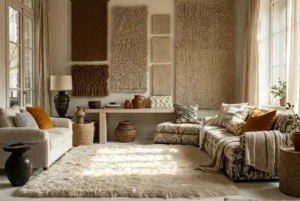
Seasonal texture adjustments may include
Light linen curtains during summer
Cotton or woven rugs in warmer weather
Wool throws and heavier fabrics during winter
Knitted cushions that add warmth in colder months
This seasonal approach illustrates how integrating textures in interior design helps maintain comfort throughout the year.
Even small adjustments such as adding textured cushions or swapping lightweight blankets can transform the atmosphere of a room.
Creating cozy living rooms with patterns and textures
Living rooms provide one of the best opportunities to experiment with design layering.
Designers often combine several elements to build inviting spaces
Textured rugs that anchor furniture
Patterned cushions that add personality
Soft throws that introduce comfort
Wood or stone surfaces that provide contrast
When arranged thoughtfully, these combinations form the essence of snug home decor patterns and textures. These design approaches often contribute to comfortable living room decor that feels welcoming while remaining visually balanced.
The key lies in moderation. Too many patterns may create clutter, while too few textures can make a space feel sterile. Designers often focus on balancing textures and patterns in living spaces so that every element contributes to the overall atmosphere.
Balanced design sits comfortably between these extremes and demonstrates effective decor layering techniques often used in modern textile based interior styling.
Common mistakes to avoid
Even well intentioned design attempts can go wrong when certain principles are ignored.
Using too many bold patterns
Large patterns and textures attract attention. When several appear together, they compete rather than complement each other.
Ignoring scale differences
Patterns that share identical sizes often clash visually. Combining large, medium, and small prints helps maintain balance.
Overlooking texture contrast
A room filled entirely with smooth surfaces may feel cold and uninviting. Conversely, too many rough textures can feel heavy.
Also Read: 15 practical small apartment decorating ideas to transform your space step by step
Forgetting color cohesion
Even beautiful patterns may appear disconnected if they do not share a color relationship.
Avoiding these mistakes allows homeowners to confidently experiment while combining patterns and textures in interior design spaces.
Conclusion
Thoughtful design does not rely on expensive décor but on balanced visual elements that create warmth and personality. By understanding the principles behind mixing patterns and textures for interior spaces, homeowners can transform ordinary rooms into inviting environments filled with character.
Patterns guide the eye and establish rhythm, while textures add depth and tactile interest. Together they form the foundation of comfortable interiors. Techniques such as combining textures in interior design, selecting complementary prints, and balancing bold and subtle elements help create spaces that feel both stylish and welcoming.
Whether decorating a living room, bedroom, or reading corner, the careful use of inviting home decor patterns and textures allows interiors to feel warm, balanced, and visually engaging.
With patience and experimentation, anyone can master the art of combining materials and prints to create a home that reflects personal style while maintaining comfort.
Sources and references
University of Minnesota Extension
Principles of interior design and visual balance
Victoria and Albert Museum
Historical use of textiles in domestic interiors
MIT OpenCourseWare
Foundations of design and spatial perception
National Endowment for the Arts
Research on environment and creative spaces
Smithsonian Institution
History of textiles and decorative arts in interiors
FAQs
How can beginners learn how to combine patterns and textures in a room without making mistakes?
A practical starting point involves limiting the number of patterns and focusing on texture first. Beginners often find success by combining two or three textiles that share similar colors but differ in surface feel. For example, a woven rug, soft cushion fabric, and a smooth wooden surface naturally create contrast without visual chaos. Once comfort grows, additional patterned items such as curtains or throws can be introduced gradually.
Why does mixing textures in interior design make rooms feel warmer?
Texture affects the way light interacts with surfaces. Materials like wool, linen, and woven cotton scatter light differently than smooth surfaces such as glass or polished metal. This variation creates shadows and depth that visually soften interiors. Rooms with varied textures tend to feel more comfortable because the eye encounters visual richness rather than uniform surfaces.
What are the easiest soft home decor patterns and textures to start with?
Simple geometric patterns, subtle stripes, and woven fabrics usually work well for beginners. These patterns provide visual structure while remaining flexible enough to match many furniture styles. Pairing them with tactile materials like knitted throws, cotton cushions, or natural fiber rugs often produces a balanced cozy effect.
How do natural materials improve relaxing home decor patterns and textures?
Natural materials such as wood, wool, cotton, and stone introduce organic variation into interiors. Their irregular surfaces and subtle color differences prevent rooms from appearing overly manufactured. Because these materials reflect light differently than synthetic finishes, they help create depth that enhances pattern combinations.
Can layering textures in interior design work in small spaces?
Small spaces actually benefit greatly from layered materials. Even when furniture remains minimal, adding varied textures through cushions, rugs, or curtains introduces visual interest. Designers often use textured fabrics and subtle patterns to make compact rooms feel more inviting without adding clutter.
What colors work best when learning how to mix patterns and textures in a room?
Neutral palettes usually provide the most flexibility. Shades like beige, cream, grey, and soft earth tones allow different textures to stand out without overwhelming the room. Once a neutral foundation exists, accent colors can appear through patterned textiles or decorative accessories.
How do designers keep cozy home decor patterns and textures from looking messy?
Professional designers focus on repetition and balance. When colors or shapes repeat across multiple items, patterns appear coordinated rather than random. Maintaining empty visual space between patterned objects also helps the eye rest, preventing the room from feeling crowded.