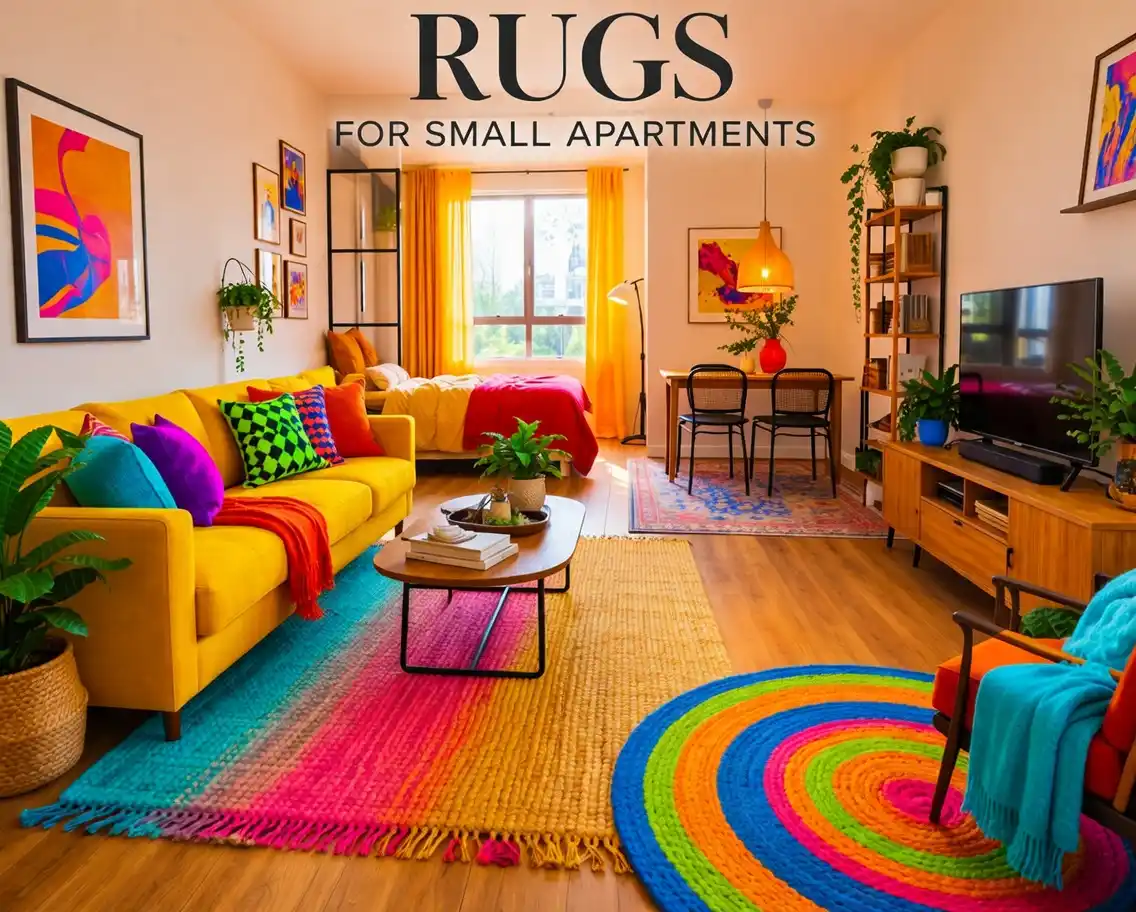
Living in a tiny apartment comes with its challenges, especially when it comes to creating a sense of space without cluttering. Rugs for small apartments can be an unsung hero in these situations, serving both functional and aesthetic purposes. Using rugs strategically allows you to visually separate areas, define zones, and inject personality into compact living spaces. Rugs for small apartments are particularly useful because they anchor furniture, add warmth, and provide clear delineation between spaces such as the living room, dining area, and bedroom. This article explores expert strategies to optimize your small apartment using rugs effectively.
Why rugs are essential in small apartments
Rugs for small apartments are more than decorative elements; they are versatile tools for spatial management. In small apartments, furniture often competes for limited space, and clear boundaries become necessary to avoid a chaotic look. Rugs create visual zones without the need for walls or screens, which can make small spaces feel even smaller. Additionally, rugs add texture and color, offering a design element that ties a room together. Research from the American Society of Interior Designers emphasizes that visual cues like rugs can enhance the perception of space and improve the flow of movement in compact apartments.
Choosing the right rug size
Selecting the right rug size is critical in small apartments. A rug that is too small can make a zone feel disconnected, while one that is too large can overwhelm the space. Experts recommend leaving at least 18 inches of bare floor between the rug and walls in very small rooms to maintain openness. For living areas, a rug that fits under the front legs of the sofa and chairs helps create a cohesive seating zone. In dining areas, the rug should extend beyond the table and chairs to prevent awkward gaps. Area rugs for tiny apartments work best when proportioned carefully to the furniture layout.
Rug placement ideas for small apartments
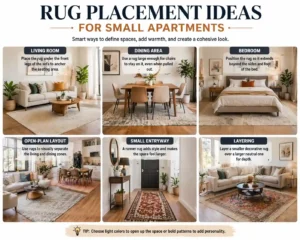
Strategic placement is key to maximizing the benefits of rugs. For a studio apartment, place a rug under the bed to visually separate the sleeping area from the living space. In open-plan living rooms, a rug under the seating area can create a sense of intimacy and organization. Consider layering smaller rugs for added depth and texture. Using rugs to anchor furniture is another effective technique; for example, placing a rug beneath the coffee table and sofa helps define the conversation area. The goal is to use rugs to guide the eye and subtly indicate different zones without breaking the visual flow.
Using rugs to divide small spaces
Open layouts in small apartments can feel cramped without visual boundaries. Rugs are an excellent solution for dividing small spaces naturally. A bold, patterned rug can separate a workspace from a living area without the need for physical dividers. Similarly, a rug can mark a dining area, signaling a change in function without adding walls. Consistency in color palette and texture ensures the space feels cohesive despite the division. Interior design studies suggest that using rugs to divide small spaces improves spatial perception, making the apartment feel larger and more organized.
Small apartment rug layout ideas
Layout planning is crucial for effective rug use. One approach is the linear layout, where rugs create a visual path through the apartment, guiding movement and defining zones. Another method is the cluster layout, which uses multiple rugs to define separate areas within a single room. For example, a small apartment may feature a living area rug, a dining rug, and a bedside rug, each anchoring its respective zone. Consider rug orientation as well; horizontal rugs can widen a narrow space, while vertical rugs elongate a room. Thoughtful rug layout contributes to both aesthetics and functionality.
Color and texture considerations
Color and texture play a significant role in defining zones. Light-colored rugs can make a space feel larger and more open, while darker or patterned rugs add depth and focus to a zone. Textured rugs, such as those with low piles or woven patterns, introduce tactile interest and create visual separation. Combining textures and subtle color contrasts helps delineate areas without overwhelming the small apartment. Designers recommend sticking to a harmonious color palette across different rugs to maintain cohesion while still highlighting individual zones.
Common mistakes to avoid
Several mistakes can diminish the effectiveness of rugs in small apartments. Using oversized rugs that cover the entire floor can eliminate the sense of separate zones. Placing rugs haphazardly without alignment to furniture can make spaces feel disjointed. Overly busy patterns or clashing colors may overwhelm a compact area. Avoid stacking too many rugs unless layering purposefully for texture and depth. Finally, neglecting rug maintenance, such as regular cleaning, can affect both the appearance and longevity of small living space rugs.
Tips for selecting rugs for small apartments
When shopping for rugs, consider material, durability, and maintenance alongside size and style. Natural fibers like wool or jute offer durability and texture, while synthetic blends can provide stain resistance. Opt for rugs that are easy to clean, especially in high-traffic areas. Evaluate the rug’s thickness relative to furniture legs to ensure stability. Additionally, consider versatile rugs that can be moved and repurposed as your layout evolves. Rugs for small apartments should combine functionality with design to maximize both style and practicality.
Long-term benefits of well-placed rugs
Well-chosen rugs for small apartments provide long-term benefits beyond aesthetics. They help reduce noise in compact spaces, prevent furniture scratches on floors, and offer comfort underfoot. Rugs also enhance the overall flow of the apartment, making small spaces feel more organized and welcoming. Studies in environmental psychology suggest that defined zones contribute to better spatial orientation and reduced stress in tight living quarters. Investing time in selecting the right rugs and layouts ensures that your apartment remains functional and visually appealing for years.
Design insights for compact homes
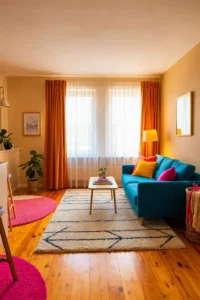
Interior designers often emphasize that Smart rug placement in small apartments works best when it aligns with broader spatial planning. For example, Studio apartment rugs can help establish apartment zoning ideas in homes that lack walls. In open layouts, open-plan apartment rugs contribute to compact space design by creating visual separation in small homes without adding bulky partitions. Thoughtful choices also support small living space décor while improving apartment furniture anchoring so sofas, tables, and chairs feel grounded. Many interior layout tips highlight that rugs assist with small space organization and can inspire creative tiny home rug ideas. When homeowners focus on defining zones with rugs and maintain balance in compact apartment aesthetics, the result supports multi-functional living spaces. Successful layouts also depend on careful furniture and rug coordination along with thoughtful small apartment floor planning.
Also Read: Mixing patterns and textures for interior spaces that feel warm, stylish, and inviting
Conclusion
Rugs for small apartments are a powerful design tool that balances style and functionality. By carefully selecting rug size, color, texture, and placement, you can define zones, guide movement, and create a cohesive, comfortable living space. Incorporating rug placement ideas for small apartments, using area rugs to divide small spaces, and small apartment rug layout ideas ensures a smart, visually appealing solution for compact living. With thoughtful planning, rugs can transform tiny apartments into organized, inviting homes.
Sources
- American Society of Interior Designers – Space Planning in Small Homes,
- Environmental Psychology Research – Effects of Defined Zones on Perceived Space,
- Harvard Design Magazine – Visual Cues in Compact Living,
FAQs
1. What are the best rug placement ideas for small apartments?
Use rugs under furniture clusters, at entryways, or in sleeping areas to define spaces. Layering small rugs can add depth without clutter.
2. How can I use rugs to divide small spaces effectively?
Select rugs with contrasting colors or patterns to mark different zones, such as workspaces, living areas, and dining corners, maintaining cohesion with similar textures.
3. What small apartment rug layout ideas enhance space perception?
Linear layouts create pathways, while clustered rugs anchor zones like seating and dining areas, making the apartment feel organized and expansive.
4. Which rug textures work best for compact apartments?
Low-pile or flat-weave rugs provide texture without adding bulk, while woven or natural fiber rugs add warmth and subtle visual separation.
5. Can color choice in rugs impact perceived space?
Yes, light and neutral rugs enlarge visual space, while darker or patterned rugs define zones and create cozy focal areas within compact apartments.
6. How do I maintain rugs in small apartments?
Regular vacuuming, prompt stain removal, and occasional professional cleaning keep rugs looking fresh and preserve their ability to define zones effectively.
7. Are layered rugs suitable for tiny apartments?
Yes, layering smaller rugs adds texture and depth, but ensure harmony in colors and patterns to avoid overwhelming the space. Using rugs to divide small spaces ensure spaciousness in compact homes