Living in a small home often feels like playing a daily game of space management. You clean up, step back, and somehow the room still feels tight. The truth is, space is not just about square footage. It is about how well the space works for you.
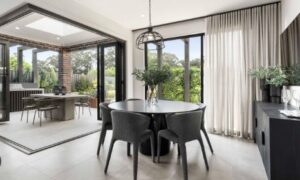
Interior designers and architects agree that thoughtful design can make even compact homes feel open, calm, and comfortable. With the right approach, a small home can be easier to live in than a large one. This guide shares practical and proven small home design tips for maximum space, focusing on real design logic rather than unrealistic hacks.
Why small homes need smarter design
Modern homes are becoming smaller, especially in cities. This shift has pushed designers to focus more on efficiency and usability rather than size. A well designed small home reduces wasted space and improves daily comfort.
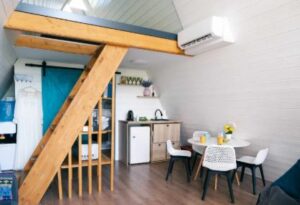
Smaller homes also offer advantages. They are easier to maintain, cost less to furnish, and encourage intentional living. The challenge lies in planning the space correctly from the start.
Good design guides movement, improves light flow, and reduces visual noise. When these elements work together, a small home stops feeling restrictive.
Plan the layout before buying furniture
One of the biggest mistakes people make is buying furniture first and figuring out placement later. In small homes, this approach almost always leads to cluttered rooms and blocked pathways.
Start by understanding how you move through the space. Identify walking paths, seating zones, and work areas. Make sure doors and windows open freely and that natural light reaches as many areas as possible.
Open layouts work especially well in small homes. When walls cannot be removed, visual zoning helps. Rugs, lighting, and furniture placement can define areas without breaking the space into boxes.
Choose furniture with purpose
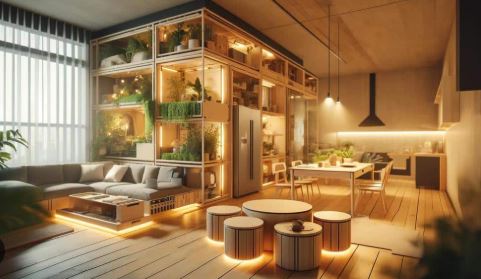
In a small home, every piece of furniture should justify its presence. Items that serve more than one function help save space and reduce clutter.
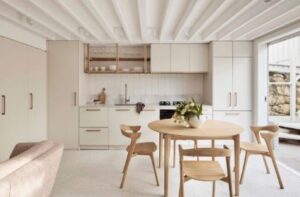
Some furniture choices work particularly well in compact homes:
• Beds with built-in storage
• Ottomans that double as seating and storage
• Foldable or wall-mounted tables
• Sofa beds with clean lines
Avoid bulky furniture with thick arms or heavy frames. Slim designs with raised legs allow the floor to remain visible, which makes rooms feel larger. If a piece looks oversized, it probably is.
Use vertical space wisely
When floor space is limited, walls become valuable real estate. Vertical storage solutions help maximize space without crowding the room.
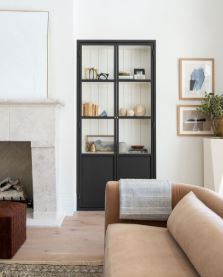
Tall shelving units draw the eye upward, creating a sense of height. Wall-mounted cabinets and floating shelves free up floor space and improve movement.
That said, restraint matters. Overloading walls can make rooms feel heavy. Balance storage with open areas to maintain visual breathing room.
Let colour work in your favour
Colour plays a powerful role in how we perceive space. Light and neutral shades reflect more light, which helps rooms feel open and airy.
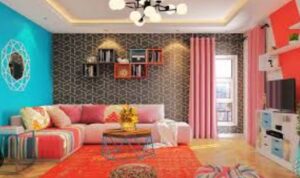
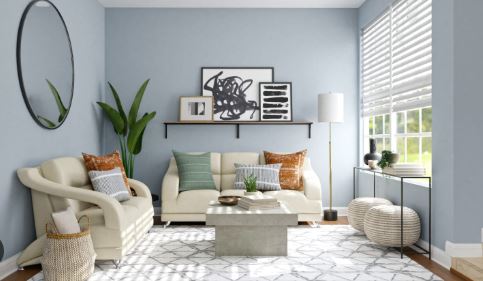
Soft whites, light greys, and warm beige tones work especially well in small homes. These shades create a calm background and allow furniture and décor to stand out without overwhelming the space.
This does not mean avoiding colour entirely. Adding contrast through cushions, artwork, or plants brings life into the room without shrinking it visually.
Mirrors and visual depth
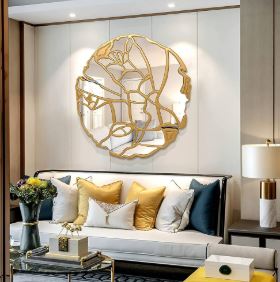
Mirrors are a simple yet effective way to enhance space perception. When placed thoughtfully, they reflect light and extend sightlines. Large mirrors work better than multiple small ones. Positioning a mirror opposite a window increases natural brightness and makes the room feel more expansive. Avoid overly decorative frames in tight spaces. Simple designs blend better and keep the focus on openness.
Storage should stay subtle
Clutter makes small homes feel even smaller. The goal is not to eliminate belongings but to store them in a way that keeps the space visually calm.
Hidden storage solutions work best. Built-in cabinets, under-bed storage, and closed shelves help reduce visual noise. Items that do not have a designated place often end up creating unnecessary mess.
Open shelves can look appealing, but they require discipline. If organization feels like a constant struggle, closed storage is the smarter choice.
Lighting changes everything
Lighting has a bigger impact on small homes than most people realize. Relying on a single ceiling light often leaves rooms flat and cramped.
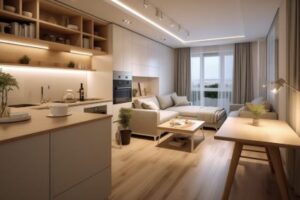
Layered lighting improves both function and atmosphere. A combination of ambient, task, and accent lighting creates depth and flexibility. Wall sconces and pendant lights also help free up surface space.
Warm lighting works well in living areas and bedrooms, while cooler lighting suits kitchens and workspaces. Balanced lighting makes rooms feel intentional rather than accidental.
Keep flooring simple and continuous
Flooring affects how the eye moves through a home. Using the same flooring across rooms creates visual continuity, which makes the space feel larger.
Light wood tones and large-format tiles work well in small homes. Busy patterns and frequent flooring changes break the flow and visually shrink the space. Area rugs should be used sparingly. One well-placed rug can define a zone without interrupting the overall layout.
Decluttering is part of design
Decluttering is not about minimalism as a trend. It is about functionality. When items serve no purpose or have no home, they steal both physical and mental space. Ask yourself simple questions when organizing. Do you use the item regularly? Does it add value to your daily life? If not, it may not belong in a limited space. Design works best when it supports how you actually live, not how a showroom looks.
Smart kitchen planning
Small kitchens demand efficiency. A clear layout improves movement and reduces frustration. Keeping frequently used items within easy reach saves time and space.
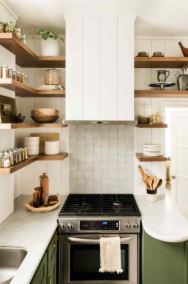
Pull-out drawers, wall-mounted storage, and integrated appliances help keep surfaces clear. Countertops should remain as open as possible to maintain a clean and spacious look.
A kitchen that functions well will always feel larger than one filled with decorative clutter.
Making small bathrooms feel bigger
Bathrooms are often the tightest spaces in a home, which makes design choices even more important. Wall-mounted fixtures, glass shower enclosures, and light-coloured tiles help reduce visual bulk. Large mirrors and proper lighting also improve the sense of space.
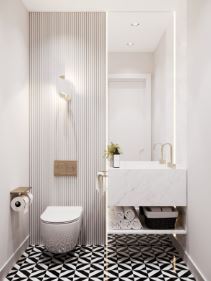
Dark colours can work, but only when the bathroom has sufficient light. Otherwise, lighter finishes remain the safer choice.
Personality belongs in small homes too
A small home does not need to feel plain. Personality comes from thoughtful choices, not excess decoration. One statement piece, a textured fabric, or a touch of greenery can add character without overwhelming the space. The key is balance. Your home should reflect you, even if it is compact.
Also Read: Budget Home Decor Ideas for Small Apartments
Final thoughts
Small home designing does not need more space. They need better decisions.
When layout, lighting, storage, and furniture work together, even the smallest homes can feel open and welcoming. The most effective small home design tips for maximum space focus on clarity, purpose, and flow.
Design with intention, remove what does not serve you, and let your space work smarter. A well-designed small home often feels better than a poorly planned large one.