Small rooms have a talent for feeling cramped just when you want them to feel calm, comfortable, and welcoming. Whether it is a compact bedroom, a narrow living room, or a tiny apartment kitchen, limited space often creates visual stress rather than physical inconvenience. The good news is that learning how to make a small room look bigger has far more to do with perception than square footage. With thoughtful choices around colour, layout, lighting, and furniture, even the tightest spaces can feel open and balanced.
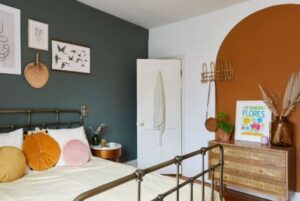
This article draws on established interior design principles, environmental psychology research, and guidance from respected academic and institutional sources. The goal is not decoration for decoration’s sake but practical, evidence-based methods that help rooms breathe visually. You will find realistic strategies, not trends that fade in six months, and ideas that work for real homes, not staged showrooms.
Why small rooms feel smaller than they actually are
A room’s perceived size depends less on its dimensions and more on how the eye moves within it. Research in spatial perception shows that clutter, dark surfaces, visual interruptions, and poor lighting compress perceived space. According to environmental design studies published by academic institutions, people judge room size based on visible floor area, uninterrupted sightlines, and contrast levels rather than actual measurements.
When furniture blocks views, walls absorb light, or décor competes for attention, the brain interprets the space as crowded and here’s where space-saving ideas for small rooms play a big role. Understanding th psychological response is the foundation of how to make a small room look bigger, because every design decision should support clarity, continuity, and light flow rather than fragmentation.
Colour psychology and visual expansion
Choosing the right shades without playing it safe
Colour remains one of the most powerful tools in spatial design. Light colours reflect more light, making walls appear farther apart. This principle is widely supported by colour theory research referenced by design departments at institutions such as Cornell University. Soft whites, warm creams, pale greys, and muted pastels help surfaces recede visually.
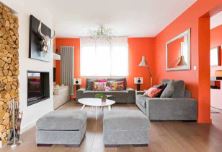
However, white alone does not guarantee spaciousness. Rooms painted entirely in stark white can feel flat or clinical. The key is tonal consistency. Walls, trim, and ceilings painted within the same colour family reduce visual breaks, allowing the eye to travel smoothly around the room. This approach is central to make a room look bigger with paint, especially in spaces with limited natural light.
Ceiling colour matters more than you think
Ceilings painted slightly lighter than walls appear higher, a concept supported by architectural perception studies and small room decorating ideas. Avoid sharp contrast between ceiling and walls, as it creates a boxed effect. A subtle shift in tone maintains openness without drawing attention upward in a jarring way.
Lighting as a space multiplier
Natural light and reflective balance
Natural light expands perceived space by revealing depth and reducing shadow density. Research from building science and daylighting studies shows that evenly distributed light increases perceived room volume. Heavy curtains, dark blinds, or cluttered windows interrupt this effect.
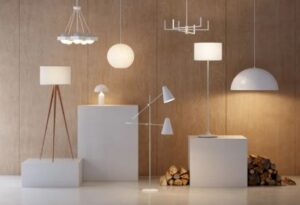
Sheer window treatments or adjustable blinds allow daylight to spread across surfaces. Mirrors placed opposite or adjacent to windows amplify this effect by reflecting light deeper into the room. This strategy supports small room design tips focused on visual continuity rather than decoration overload.
Layered lighting for depth
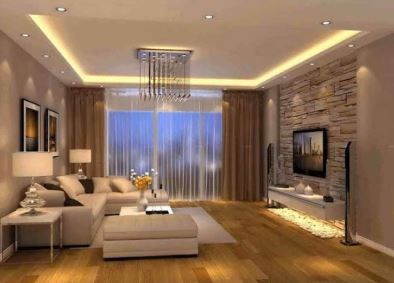
A single overhead light flattens a room. Layered lighting, which combines ambient, task, and accent lighting, creates depth and visual interest. Floor lamps, wall-mounted fixtures, and under-shelf lighting prevent harsh shadows and make corners visible. When corners disappear into darkness, rooms feel smaller. Illuminating them restores balance and openness.
Furniture scale and placement principles
Why size and proportion matter
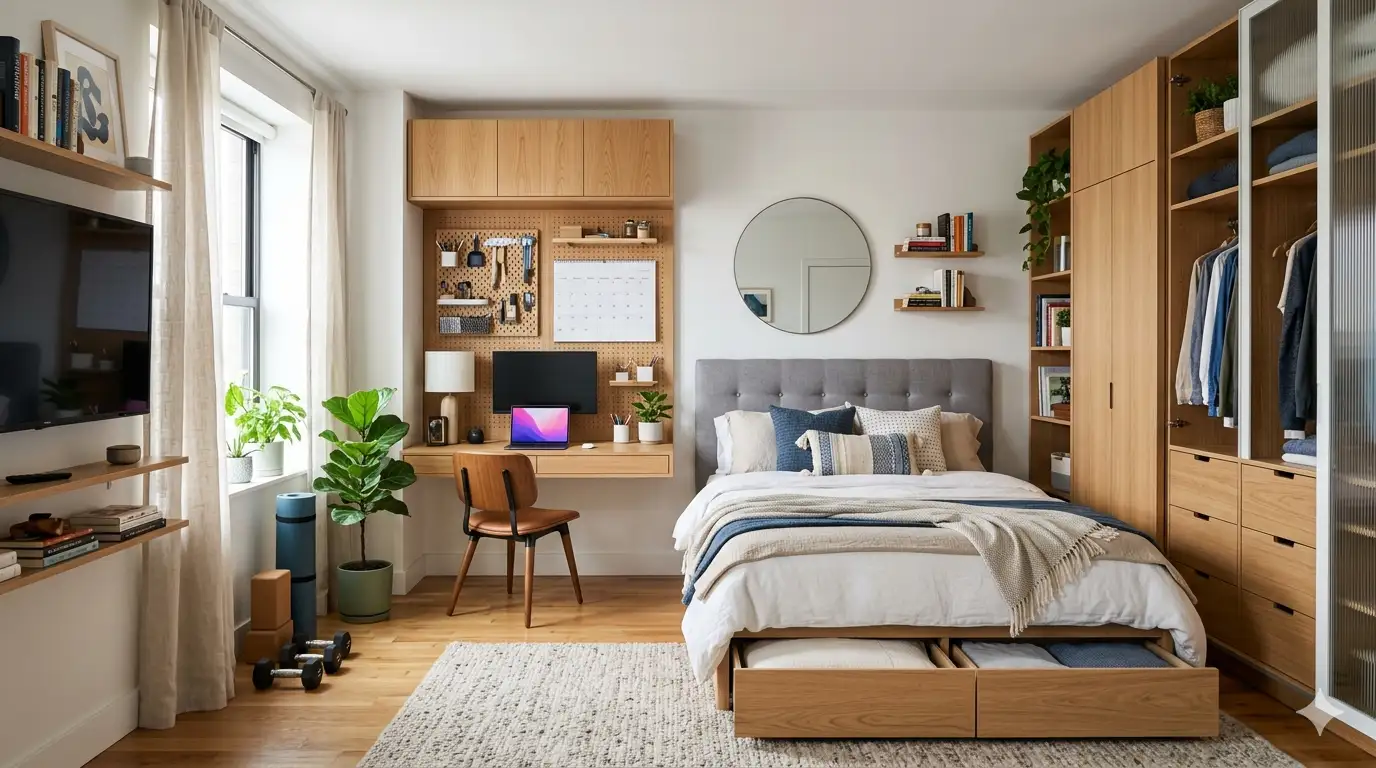
Oversized furniture dominates small rooms, while too many small pieces create clutter. Design research emphasizes proportional balance. Furniture should occupy space efficiently without blocking sightlines. Low-profile sofas, armless chairs, and open-leg designs expose more floor area, which increases perceived room size.
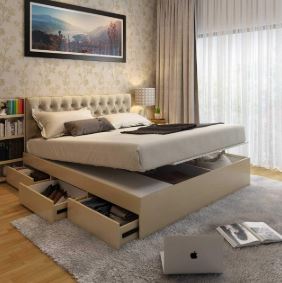
This principle aligns closely with space-saving ideas for small rooms, where functionality and visual lightness work together. Furniture that serves multiple purposes, such as storage ottomans or beds with built-in drawers, reduces the need for additional pieces.
Floating furniture instead of pushing it all against walls
Contrary to popular belief, pushing all furniture against walls does not always make rooms feel larger. Leaving small gaps allows light and air to circulate visually. Floating a sofa slightly away from the wall can improve depth perception, especially in narrow rooms.
Layout and flow over decoration
Decluttering is not optional
Clutter competes for visual attention and fragments space. Studies in environmental psychology link cluttered environments with increased cognitive load and stress. Reducing visual noise helps the brain process space more efficiently.
Built-in storage, concealed shelves, and closed cabinetry keep everyday items accessible without constant visual interruption. This approach complements small room decorating ideas that prioritise calm over abundance.
Creating clear visual pathways
Clear pathways guide the eye through a room. Avoid blocking doorways, windows, or main circulation routes. When the eye can travel uninterrupted from one end of a room to another, the space feels longer and wider. This principle appears consistently in architectural design research related to spatial legibility.
Vertical space and height illusion
Using walls wisely without overcrowding
Vertical storage draws the eye upward, increasing perceived height. Tall shelving units, vertical artwork arrangements, and floor-to-ceiling curtains emphasize vertical lines. According to spatial design studies, vertical emphasis counteracts the horizontal compression common in small rooms.
However, restraint matters. Overloading walls with décor creates visual clutter. Select a few vertical elements rather than many small items scattered randomly.
Curtains that lift the ceiling visually
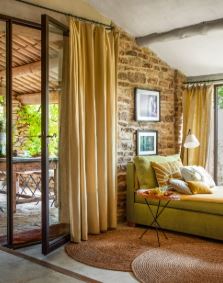
Mount curtain rods closer to the ceiling rather than just above the window frame. This classic design technique elongates walls and visually raises ceilings. Use lightweight fabrics that allow light to pass through while still providing privacy.
Materials, textures, and finishes that open space
Reflective surfaces and subtle textures
Glossy finishes reflect light and add depth. Glass tables, polished metals, and lacquered surfaces contribute to visual expansion without adding bulk. Academic material studies note that reflective surfaces enhance brightness perception and spatial clarity.
Textures should remain subtle. Heavy patterns or rough textures absorb light and add visual weight. Smooth surfaces support how to make a small room look bigger by keeping attention on space rather than surface complexity.
Flooring continuity and direction
Using the same flooring throughout connected spaces creates visual continuity. Changes in flooring break space into segments, making areas feel smaller. Direction also matters. Laying floorboards lengthwise along the longest wall enhances room proportions, a technique supported by architectural layout research.
Strategic décor choices that do not overwhelm
Artwork placement and scale
Large artwork can work better than multiple small pieces. A single, well-proportioned piece creates a focal point without clutter. Research in visual perception shows that fewer focal points reduce spatial fragmentation.
Avoid overcrowding walls. White space around décor allows the room to breathe visually and improves overall balance.
Mirrors used with intention
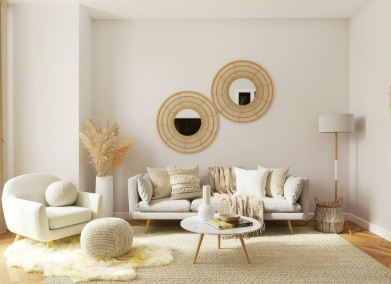
Mirrors double visual space when placed thoughtfully. Position them to reflect light or open views, not clutter. A mirror reflecting a window or a simple wall enhances openness. Reflecting busy shelves or crowded corners only amplifies visual chaos.
Long-term design thinking over quick fixes
Design choices should support daily life, not just visual tricks. Rooms that function well naturally feel more spacious because movement becomes easier and less stressful. This philosophy underpins enduring small room design tips found in academic interior architecture programs.
Also Read: Wall decor without nails that actually works for real homes
Focus on adaptability. Furniture that can move, fold, or serve multiple purposes allows rooms to evolve with changing needs without sacrificing openness.
Conclusion
Understanding how to make a small room look bigger is ultimately about respecting how humans perceive space. Light, continuity, proportion, and clarity matter more than trends or expensive upgrades. Make a room look bigger with paint by applying thoughtful colour choices, balanced lighting, smart furniture placement, and restrained décor, even modest rooms can feel open and comfortable. When design decisions align with human perception rather than decoration excess, small spaces stop feeling like limitations and start feeling intentional.
Sources and references
National Institute of Building Sciences
Cornell University Department of Design and Environmental Analysis
National Library of Medicine environmental psychology studies
American Society of Interior Designers research resources
U.S. Department of Energy lighting and daylighting studies
Frequently asked questions
What are the most overlooked small room decorating ideas that actually work long term
Many people focus on décor rather than layout. One overlooked approach is reducing visual interruptions by keeping colour palettes consistent across walls, furniture, and flooring. This continuity allows the eye to move freely. Another underrated tactic is choosing furniture with visible legs, which exposes floor space and improves spatial perception over time.
Can you make a room look bigger with paint even if there is no natural light
Yes, but the strategy must change. In rooms without windows, reflective light colours and layered artificial lighting work together. Soft warm neutrals prevent the space from feeling cold, while evenly distributed light eliminates harsh shadows that compress space visually.
How do space-saving ideas for small rooms affect comfort
When done thoughtfully, they improve comfort rather than reduce it. Multi-functional furniture reduces clutter, which lowers cognitive stress. Built-in storage keeps essentials accessible without visual overload. Comfort increases when movement feels effortless and surfaces feel open.
Which small room design tips help narrow rooms feel wider
Horizontal emphasis helps narrow rooms. Using wide furniture with low profiles, horizontal artwork placement, and flooring laid perpendicular to the longest wall visually expands width. Avoid strong vertical stripes, as they exaggerate narrowness rather than balance it.
Are mirrors always effective in small spaces
Mirrors work only when they reflect light or open views. Poor placement can amplify clutter and make rooms feel chaotic. The most effective mirrors are positioned opposite windows or simple walls, not storage-heavy or visually busy areas.
How does lighting placement influence perceived room size
Lighting placed at different heights creates depth. Wall lights and floor lamps prevent ceiling-only illumination that flattens space. Illuminating corners is especially important, as dark corners visually shrink rooms by hiding boundaries.
Do minimal interiors always make small rooms look bigger
Minimalism helps, but only when it supports function. Removing too much furniture can make rooms feel impractical and uncomfortable. The goal is balance, where every item earns its place without crowding the space visually or physically.