Decorating a narrow room often feels like solving a puzzle with missing pieces. Furniture never seems to fit quite right, walls feel too close, and even well chosen decor can make the space feel cramped. Yet narrow rooms are incredibly common in modern homes, apartments, and older buildings where layouts followed different architectural priorities.
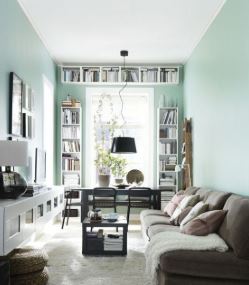
The good news is that narrow spaces do not need structural changes to feel balanced and comfortable. With the right narrow room decorating ideas, thoughtful planning can transform long or tight rooms into spaces that feel open, functional, and visually calm. Interior design research consistently shows that perception matters as much as square footage when it comes to comfort.
This guide breaks down what works and what does not when decorating narrow rooms. Instead of trends or guesswork, it focuses on proven principles rooted in spatial psychology, lighting science, and furniture planning. The goal is simple. Help narrow rooms feel intentional rather than compromised.
Why narrow room decorating ideas feel challenging in the first place
Narrow rooms challenge how the human eye reads space. When walls sit close together, depth becomes harder to perceive. According to environmental psychology research, people assess comfort partly by visual openness and movement flow. Narrow rooms often interrupt both.
Long sightlines exaggerate length while minimizing width. Furniture placement can further restrict movement, making rooms feel tight even when they meet standard size requirements. Poor lighting or heavy colors intensify this effect, creating a tunnel like experience.
Understanding these issues matters because solutions work best when they address perception, not just layout. Good design does not fight the room’s shape. It works with it.
Do start with proportion and flow
Before choosing colors or decor, evaluate how the room functions. Ask how people move through the space and where the eye naturally travels. Clear pathways improve comfort more than decorative elements.
Design studies from architectural planning institutions emphasize that uninterrupted circulation reduces visual stress. In narrow rooms, this means resisting the urge to fill every wall. Empty space is not wasted space. It allows the room to breathe.
Placing furniture along one wall often works better than symmetrical layouts. Asymmetry creates visual relief and improves flow, especially in long living rooms or corridors.
Do use color strategically to expand visual width
Color plays a critical role in spatial perception. Light reflective shades visually push walls outward, while darker tones pull them inward. This principle underpins most advice on how to make a narrow room look wider.
Walls in soft whites, warm greige, pale beige, or muted pastels reflect light evenly. Research from color perception studies shows that low contrast palettes reduce edge definition, which helps walls appear farther apart.
Ceilings should remain lighter than walls whenever possible. A bright ceiling lifts the vertical plane, reducing the boxed in feeling narrow rooms often create. Floors in mid tone finishes help anchor the space without overwhelming it.
Do not use high contrast color blocks
One of the most common mistakes in narrow room decorating ideas involve bold contrast. Dark feature walls at the short ends of the room can shorten length visually, but they also emphasize width limitations when overused.
Interior color research confirms that sharp contrast increases visual boundaries. In narrow spaces, this makes walls feel closer. Instead of stark contrast, use subtle tonal variation within the same color family.
If contrast feels necessary, apply it through texture rather than color. Fabric variation, wood grain, and matte finishes introduce depth without compressing the room.
Best furniture for narrow rooms prioritizes scale and legibility
Furniture size matters more than style in narrow rooms. Oversized pieces dominate visual space and block circulation. The best furniture for narrow rooms shares a few key traits. It sits low, shows legs, and maintains visual lightness.
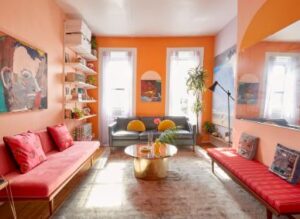
Design research consistently finds that furniture with visible floor beneath it makes rooms feel larger. Raised legs allow the eye to travel uninterrupted, which increases perceived width.
Avoid bulky armrests and deep profiles. Slim sofas, armless chairs, and wall mounted storage reduce visual weight. Modular furniture also adapts better to tight layouts, especially in multipurpose rooms.
Do not push furniture flush against every wall
It seems logical to push furniture against walls in narrow rooms, but this often backfires. A small gap between furniture and wall creates depth shadows that increase spatial perception.
According to Environmental Psychology and interior design, negative space around objects improves spatial legibility. Even a few inches can change how the room reads.
Instead of filling both long walls, choose one side for primary furniture and keep the opposite wall lighter with minimal decor or floating elements.
Mirror placement in narrow rooms should follow purpose not symmetry
Mirrors play a powerful role in altering spatial perception, but placement matters more than size. Strategic mirror placement in narrow rooms reflects light and extends sightlines, which helps counteract tight proportions.
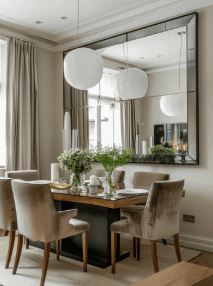
Mirrors work best when they reflect windows, open doorways, or light sources. Environmental lighting research confirms that reflected light increases brightness without adding fixtures.
Avoid placing mirrors directly opposite long blank walls. This creates a visual corridor that exaggerates narrowness. Instead, angle mirrors or place them on shorter walls to expand width visually.
Do not rely on mirrors alone
Mirrors amplify what already exists. If the room lacks light or feels cluttered, mirrors double the problem. Always address lighting and layout first.
Use mirrors as a supporting element, not a primary fix. When combined with thoughtful lighting and clear pathways, they enhance the room’s strengths rather than exposing weaknesses.
Lighting ideas for narrow rooms should layer function and warmth
Lighting shapes how narrow rooms feel at different times of day. Single overhead fixtures often create harsh shadows that emphasize walls. Effective lighting ideas for narrow rooms rely on layers.
Ambient lighting provides general illumination. Wall sconces or linear ceiling lights distribute light evenly across width. Task lighting supports specific functions without overpowering the space.
Research from lighting engineering institutions shows that layered lighting improves comfort and spatial perception. Warm light temperatures also soften edges, which helps narrow room decorating ideas feel more inviting.
Do use wall washing techniques
Wall washing involves directing light across vertical surfaces. This reduces contrast between walls and corners, making rooms appear wider.
Track lighting or adjustable sconces work well for this purpose. The key is even distribution. Avoid spotlighting that draws attention to narrow dimensions.
Do not use heavy central fixtures
Large chandeliers or pendant lights visually crowd narrow rooms. They also disrupt sightlines and lower perceived ceiling height.
Instead, choose flush mounts or recessed lighting that blends into the architecture. Visual simplicity helps the room feel more expansive.
How to make a narrow room look wider with layout tricks
Layout decisions shape perception as much as color or lighting. Horizontal emphasis stretches width visually. Rugs, shelving, and artwork aligned horizontally encourage the eye to move side to side.
Interior design theory by supports this approach. Horizontal lines counteract vertical compression by shifting visual focus.
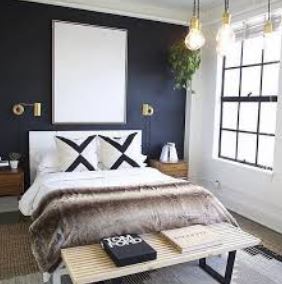
Furniture orientation also matters. Placing seating perpendicular to length shortens the room visually while increasing width perception. Even slight adjustments can change how space feels.
Use vertical elements carefully
Vertical elements can either help or harm narrow rooms. Tall shelving draws the eye upward, which improves ceiling perception. However, when overused, vertical repetition exaggerates narrowness.
Balance vertical storage with horizontal breaks. This creates rhythm without reinforcing constraints.
Best furniture ideas for narrow rooms in multipurpose spaces
Many narrow rooms serve multiple functions, such as living and dining or sleeping and working. The best furniture for narrow rooms in these cases prioritizes flexibility.
Foldable tables, nesting stools, and wall mounted desks support changing needs without clutter. Research on small space design highlights adaptability as a key factor in long term comfort.
Avoid fixed layouts that lock the room into a single purpose. Flexibility reduces visual congestion and improves daily usability.
Storage choices that protect openness
Storage solves clutter, but poor storage worsens narrowness. Floor to ceiling cabinets on both walls overwhelm the room.
Instead, use vertical storage on one side only. Floating shelves or recessed storage maintain floor visibility and reduce bulk.
Clear or open shelving also helps because the eye reads depth through it rather than stopping abruptly.
Mirror placement in narrow rooms for bedrooms and hallways
Bedrooms and hallways pose unique challenges. In bedrooms, mirrors should support light without disrupting rest. Place mirrors where they catch daylight rather than reflecting the bed directly.
In hallways, mirrors widen perception and improve safety by increasing visibility. Long hallways benefit from staggered mirror placement rather than one continuous surface.
Studies in residential design show that distributed visual interest improves comfort more than repetition.
Lighting ideas for narrow rooms that lack windows
Windowless narrow rooms require careful lighting design. Use layered artificial lighting to mimic daylight distribution.
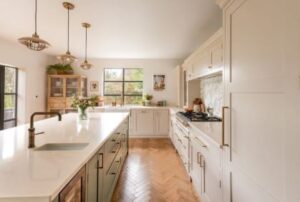
Wall mounted fixtures paired with indirect ceiling lighting create softness. Avoid harsh directional lights that cast long shadows.
Lighting research shows that evenly diffused light improves spatial comfort in enclosed rooms. Warm neutral temperatures also prevent clinical feeling.
Common mistakes that make narrow rooms worse
Several habits repeatedly undermine narrow spaces. Over decorating ranks high. Too many objects break visual flow and reduce perceived width.
Ignoring scale causes imbalance. Furniture that fits square footage may still feel oversized due to room shape.
Poor lighting creates shadows that emphasize tightness. Correcting lighting often delivers the biggest improvement with minimal effort.
Also Read: Creative accent wall ideas without paint that add depth and character
How to combine all elements without overdesigning
The most successful narrow rooms feel effortless. This happens when color, furniture, lighting, and layout work together rather than compete.
Start with light neutral walls. Add furniture scaled to the room. Layer lighting thoughtfully. Introduce mirrors carefully.
Avoid chasing trends. Research on interior longevity shows that restrained design ages better and remains comfortable longer.
The psychological benefit of well designed narrow spaces
When narrow rooms function well, they feel intentional rather than limiting. Environmental psychology confirms that spatial comfort affects mood, productivity, and relaxation.
A well designed narrow room supports focus and ease. It does not constantly remind occupants of its constraints.
This matters because homes should reduce stress, not add to it.
Conclusion
Decorating narrow spaces requires strategy, not compromise. With thoughtful planning, narrow room decorating ideas can turn tight layouts into balanced, comfortable environments.
Understanding how to make a narrow room look wider through color, layout, and lighting changes perception dramatically. Choosing the best furniture for narrow rooms improves function without crowding. Strategic mirror placement in narrow rooms enhances light and depth, while layered lighting ideas for narrow rooms soften boundaries and improve comfort.
Narrow rooms do not fail because of size. They fail when design ignores proportion. When handled with care, even the narrowest room can feel open, calm, and purposeful.
Frequently asked questions
1. What are the biggest decorating mistakes people make in narrow rooms
The most common mistake is overcrowding the space with oversized or bulky furniture that restricts movement and blocks sightlines. Many people also choose dark or high contrast wall colors, which visually compress narrow layouts instead of expanding them. Poor lighting placement is another issue, especially relying on a single ceiling fixture that creates harsh shadows along walls. Ignoring circulation flow makes rooms feel uncomfortable to use. Successful narrow room decorating ideas focus on scale, spacing, and light rather than filling every available surface with decor.
2. How can I make a narrow room look wider without remodeling
You can apply proven visual techniques that influence perception rather than structure. Light reflective paint colors, especially soft neutrals, help walls recede visually. Horizontal design elements such as wide rugs, low profile seating, and elongated artwork guide the eye side to side instead of down the length of the room. These strategies frequently appear in expert advice on how to make a narrow room look wider because they improve spatial balance. Even small layout adjustments can dramatically change how narrow rooms feel.
3. What is the best furniture choice for narrow rooms and tight layouts
The best furniture for narrow rooms emphasizes slim proportions, raised legs, and multifunctional design. Pieces with visible floor space underneath improve visual flow and reduce heaviness. Space saving furniture such as modular sofas, nesting tables, and wall mounted storage works especially well in long or tight rooms. Research in interior planning shows that furniture legibility improves comfort and usability. Choosing fewer but well scaled items creates openness and prevents the room from feeling visually crowded or restrictive.
4. Where should mirrors be placed in narrow rooms for the best effect
Effective mirror placement in narrow rooms depends on reflection rather than symmetry. Mirrors should reflect natural light sources, windows, or visually open areas to enhance brightness and depth. Placing mirrors along shorter walls or slightly offset from long walls helps widen the room visually. Avoid positioning mirrors directly at the end of long corridors, as this exaggerates tunnel like proportions. When combined with thoughtful lighting and layout, mirrors support visual width tricks without overwhelming the space.
5. What lighting ideas work best for narrow rooms with limited windows
Layered lighting provides the most effective results in narrow spaces. Ambient lighting establishes general brightness, while wall mounted fixtures help distribute light evenly across vertical surfaces. Task lighting adds function without visual clutter. Lighting ideas for narrow rooms often focus on warm light temperatures because they soften edges and reduce contrast. Lighting research shows that evenly diffused light improves spatial comfort, especially in windowless or low light rooms where shadows can make walls feel closer together.
6. Can narrow rooms still feel stylish and comfortable long term
Yes, narrow rooms can remain comfortable and visually appealing when design decisions prioritize longevity over trends. Neutral color palettes, adaptable furniture, and restrained decor age better and allow flexibility as needs change. Interior psychology research shows that visually calm environments reduce stress and improve daily comfort. Narrow room decorating ideas that focus on layout, lighting, and proportion help spaces feel intentional rather than compromised. When function and perception align, even narrow rooms support long term livability.