Open apartments are popular for a reason. They create a sense of spaciousness, encourage natural light, and allow flexible living areas. However, without thoughtful planning, the openness can quickly turn chaotic. That is where a well planned open floor plan furniture layout becomes essential.
When furniture sits randomly in a large open space, rooms lose definition and traffic flow suffers. Research from the National Association of Home Builders shows that open concept living spaces remain one of the most requested design features in modern homes because they improve visual connectivity and usability. But these layouts require careful apartment space planning and thoughtful interior layout strategy to function well.
A strategic furniture layout plan helps define zones, maintain balance, and support everyday living activities without walls. Whether you live in a studio apartment or a large loft, thoughtful placement can transform a confusing space into a comfortable and visually organized home. This approach also reflects the principles of open concept interior design, where visual continuity and functional separation coexist.
This guide explains practical and research backed ways to plan furniture layout in open apartments so that every area feels purposeful, comfortable, and visually connected.
Understanding the challenges of open concept apartment layouts
Open spaces offer flexibility, but they also create design challenges. Without clear boundaries, living areas may feel undefined or cluttered. Interior design studies from Cornell University emphasize that humans naturally rely on spatial cues such as furniture grouping, lighting, and visual anchors to interpret functional zones in a space.
Many residents struggle with three common problems in open layouts.
First, the lack of clear activity zones makes rooms feel disorganized. Second, poor room flow design can interrupt daily movement between areas. Third, oversized furniture can visually overwhelm a compact apartment.
To solve these problems, thoughtful furniture placement for open concept living room areas becomes essential. Strategic positioning allows residents to create distinct zones for relaxing, dining, working, and entertaining without building physical walls.
Instead of treating the apartment as one large room, designers recommend dividing the space visually using furniture groupings, rugs, lighting, and sight lines. This process improves spatial organization and encourages effective living room zoning, helping the apartment feel structured yet open.
Start with clear functional zones
The most important step when deciding how to arrange furniture in open floor plan homes is defining functional zones. These zones represent the activities that occur in the space, such as relaxing, cooking, eating, or working.
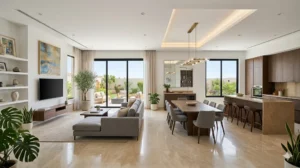
According to research from the American Institute of Architects, homes that clearly organize activity areas improve daily efficiency and reduce visual clutter. This principle is particularly important in open apartments.
Start by identifying the main functions your apartment must support. Typical zones include:
Living or relaxation area
Dining space
Work or study corner
Entertainment zone
Entry transition area
Once these zones are identified, thoughtful furniture layout can visually separate them.
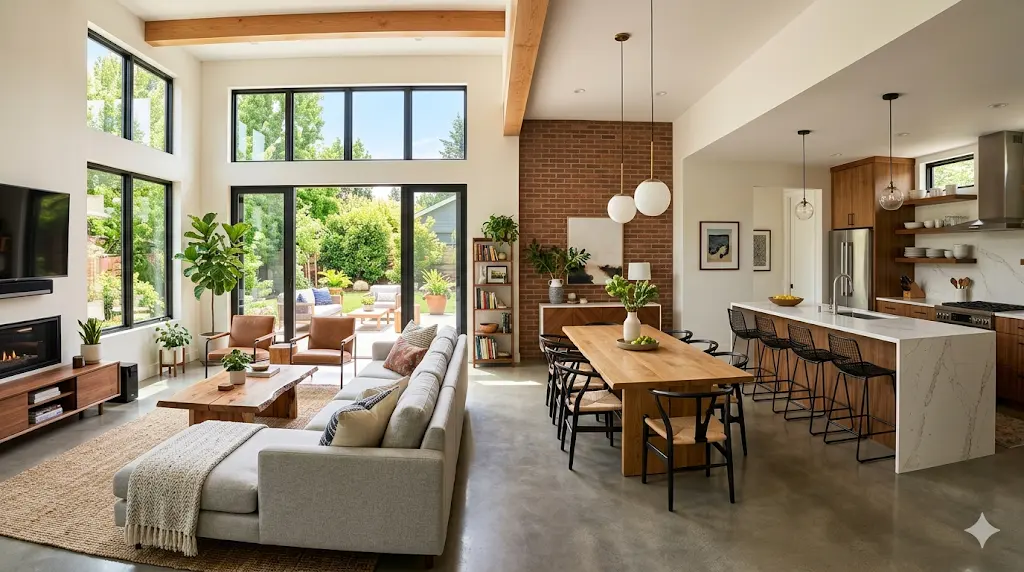
For example, a sofa facing inward toward a coffee table naturally forms the center of a living zone. A dining table placed under a pendant light visually defines the dining area. Even small apartments can benefit from these subtle separations that support effective home layout planning and thoughtful living area arrangement.
Many modern open concept apartment layout ideas rely on visual cues rather than physical barriers. Furniture acts as the primary organizing element within the overall home design layout.
plan furniture layout to create visual boundaries
Walls traditionally separate rooms, but open apartments rely on furniture instead. Sofas, shelving units, and consoles can act as invisible dividers.
Interior design research from the University of Minnesota Extension highlights that visual boundaries help the brain interpret space more efficiently, making rooms feel more organized and comfortable.
A sofa placed with its back facing another area creates a clear division between zones. Similarly, an open shelving unit can separate a workspace from a living area while maintaining light flow.
This approach improves open layout living room furniture design areas because it creates structure without blocking sightlines. Designers often describe this method as visual room division, which supports natural interior harmony throughout the apartment.
Popular zoning furniture includes:
Sectional sofas
Bookshelves or open shelving
Console tables
Low storage cabinets
Large indoor plants
These elements guide movement and visually organize the room while keeping the apartment open and airy.
Balance scale and proportion carefully
Large open spaces often tempt people to buy oversized furniture, but proportion still matters. The Smithsonian Design Museum explains that furniture scale should relate to both the room size and the human body to maintain visual harmony.
In open apartments, scale becomes even more important because oversized pieces can dominate the entire view.
When planning how to arrange furniture in an open plan layout in apartments, consider these design principles.
Choose medium sized sofas instead of bulky sectionals unless the room is large. Use multiple smaller seating pieces rather than one oversized couch. Select coffee tables that leave comfortable walking paths around them.
Designers also recommend leaving at least 30 to 36 inches of walking space between major furniture pieces. This ensures smooth movement across the apartment and improves interior traffic flow, which is essential for maintaining a comfortable functional living space.
Proper proportion supports functionality and keeps the apartment visually balanced, contributing to better interior design balance overall.
Anchor spaces with rugs and lighting
Area rugs and lighting fixtures act as invisible room markers in open layouts. The Environmental Psychology research published through the American Psychological Association explains that visual anchors help humans identify spatial zones within large open environments.
Rugs are especially useful because they define the footprint of each functional area. A rug under the sofa and chairs clearly signals the living area. A separate rug under the dining table distinguishes the eating zone.
Lighting plays a similar role. Pendant lights over dining tables, floor lamps beside sofas, and desk lamps in work areas help separate activities visually.
Many open concept apartment design ideas rely heavily on this layered approach. Each zone has its own lighting and flooring identity while remaining visually connected to the rest of the apartment. Designers frequently use these space zoning techniques when creating small apartment furniture zoning ideas that make compact homes feel organized.
Together, rugs and lighting create structure without sacrificing openness.
Plan traffic flow early in the open floor plan furniture layout
One of the biggest mistakes people make when designing open spaces is ignoring traffic flow. A poorly planned layout forces people to walk around furniture awkwardly or disrupts functional zones.
A well designed open floor plan furniture layout ensures that movement between areas feels natural and unobstructed.
The National Institute of Building Sciences recommends maintaining clear circulation paths in residential design to support comfort and safety.
To achieve this, designers typically map out walking paths before placing large furniture pieces.
Common paths include:
Entrance to living area
Living room to kitchen
Kitchen to dining space
Dining area to balcony or window
Furniture layout plan should never block these natural pathways. Instead, pieces should guide movement gently around functional zones. This thoughtful approach reflects professional apartment furniture planning and supports an efficient apartment design strategy.
When done correctly, the apartment feels intuitive and comfortable to navigate.
Use vertical space and multifunctional furniture
Open apartments often have limited square footage, which makes multifunctional furniture extremely valuable. According to housing research published by the U.S. Department of Housing and Urban Development, flexible furniture layout improves space efficiency in compact homes.
Instead of filling the floor with too many pieces, vertical storage solutions help maintain openness. Tall bookshelves, wall mounted shelves, and floating cabinets maximize storage while preserving floor area.
When deciding how to arrange furniture in open floor plan apartments, multifunctional pieces provide major advantages.
Examples include:
Storage ottomans that double as seating
Extendable dining tables
Sofa beds for guest accommodations
Nesting tables for flexible use
Wall mounted desks for compact workspaces
These pieces maintain functionality while keeping the space uncluttered. Designers often describe them as multi functional furniture, which is especially valuable in compact apartment design.
Create visual harmony with consistent design elements
An open apartment should feel cohesive rather than fragmented. Even though zones serve different purposes, consistent design elements unify the space.
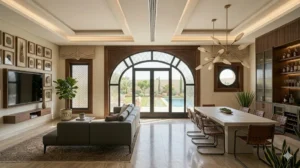
Color palettes, materials, and textures play a significant role in this process. Design guidance from the Getty Conservation Institute emphasizes that visual harmony reduces cognitive overload and improves spatial comfort.
When planning furniture placement for open concept living room zones, repeating certain materials or colors across spaces creates cohesion.
For example, the same wood tone can appear in a dining table, shelving unit, and coffee table. Accent colors from the living room cushions can appear again in dining chairs or decorative accessories.
These subtle connections help the apartment feel intentional and professionally designed, reflecting principles commonly used in modern apartment design.
Practical open concept apartment layout ideas for small spaces
Smaller apartments require even more thoughtful design strategies. Efficient furniture layouts can make compact homes feel surprisingly spacious.
Popular open plan apartment layout ideas include placing the sofa slightly away from the wall to create a subtle boundary. Another approach uses a narrow console table behind the sofa to form a visual transition between living and dining zones.
Also Read: Home decor for renters: a practical and stylish buying guide for first time renters
A round dining table can also improve circulation because it eliminates sharp corners. Interior space planning research from the University of Illinois notes that circular furniture and circular furniture layout often improves movement flow in tight areas.
Mirrors and reflective materials can further expand the perception of space by bouncing natural light across the apartment. These techniques are often recommended when designers search for the best furniture arrangement for open concept apartments.
Conclusion
Designing an open apartment requires more planning than planning furniture layout in separate rooms. However, the rewards are significant when done correctly. A well organized open floor plan furniture layout creates clear zones, improves movement, and enhances everyday comfort.
By defining functional areas, balancing furniture scale, anchoring spaces with rugs and lighting, and maintaining natural traffic flow, even compact apartments can feel structured and welcoming. Multifunctional furniture and consistent design elements further strengthen the layout while keeping the space visually calm.
Open homes are designed to bring people and activities together. Thoughtful planning ensures that the openness remains beautiful, functional, and easy to live in.
Sources
National Association of Home Builders
Cornell University Human Environment Research
American Institute of Architects housing research
University of Minnesota Extension interior design guidance
Smithsonian Design Museum design principles
National Institute of Building Sciences residential planning guidance
U.S. Department of Housing and Urban Development housing research
American Psychological Association environmental psychology resources
University of Illinois housing and interior design research
FAQs
What are the most common mistakes in furniture placement for open concept living room spaces?
One of the most common mistakes is placing all furniture against the walls. This approach often creates empty space in the middle and reduces the sense of intimacy in the living area. Instead, furniture should form conversation zones. Another mistake involves ignoring traffic flow, which leads to awkward walking paths. Successful smart furniture arrangement for open living rooms spaces requires defining seating areas, leaving comfortable walking paths, and using rugs or lighting to visually anchor the room.
What is the easiest way to learn furniture arrangement for open floor plan homes and apartments?
The easiest method is to start by mapping functional zones before moving furniture. Identify where relaxation, dining, and work activities should occur. Once zones are clear, arrange seating to face focal points such as windows or media centers. When learning ways to arrange furniture in open concept spaces homes, designers often recommend starting with the largest furniture piece first and then building the rest of the layout around it.
Which open concept apartment layout ideas help small apartments feel larger?
Several strategies make compact homes feel bigger. Using lightweight furniture with visible legs creates a sense of openness. Mirrors and reflective surfaces also expand the visual depth of a room. Many open living apartment layout ideas also emphasize multipurpose furniture, vertical storage, and minimal clutter to maintain spaciousness.
Why do designers recommend rugs in open concept living room furniture arrangement areas?
Rugs visually define functional zones in open spaces. Without them, the living area can blend into surrounding zones like the dining space or kitchen. Rugs anchor seating arrangements and create a clear boundary for the living area. Interior designers widely use this strategy when planning furniture layout for open plan living room layouts because it improves both comfort and visual organization.
What factors matter most when deciding how to arrange furniture in open floor plan homes?
Several factors influence a successful layout. Traffic flow, furniture scale, and natural lighting are the most important. When planning how to place furniture in an open concept room, designers also consider focal points such as windows or entertainment units. These elements guide the direction of furniture and ensure that the layout supports both function and aesthetics.
Which open layout apartment planning ideas work best for studio apartments?
Studio apartments benefit from furniture that acts as subtle room dividers. A sofa placed between the bed and living area can create separation without blocking light. Bookshelves and folding screens also work well. Many stylish layout solutions for open concept apartment spaces for studios use modular furniture that can be rearranged easily to support multiple activities in a limited space.
How can lighting improve organizing furniture in an open living room designs?
Lighting helps define zones and improve visual balance. Pendant lights can highlight dining areas while floor lamps create cozy reading corners. Strategic lighting also prevents certain areas from feeling dark or disconnected. Effective open living room furniture layout often includes layered lighting to support different activities while maintaining overall harmony in the apartment.