A narrow corridor often becomes the most neglected part of a home. Shoes pile up near the entrance, bags hang from door handles, and random household items slowly take over valuable walking space. Yet with the right hallway storage ideas, even the slimmest passageway can become functional, organised, and visually appealing without feeling cramped.
Modern homes, especially apartments and compact urban houses, rarely include generous hallway dimensions. According to research from the University of Minnesota’s Center for Sustainable Building Research, cluttered transitional spaces can increase visual stress and reduce perceived comfort inside homes. Thoughtful storage design helps improve both movement and mental clarity within living environments.
In many urban homes, effective compact hallway storage has become essential because limited square footage leaves little room for wasted space. A carefully planned corridor can support better entryway organisation while still maintaining visual openness and comfort.
The key lies in choosing storage that works vertically, blends into the architecture, and serves multiple purposes. From recessed shelving to slim benches with hidden compartments, smart design can transform overlooked corridors into efficient extensions of the home. This guide explores practical solutions, layout strategies, and expert backed organisation methods that help narrow spaces stay clean and functional.
Why narrow corridors become clutter magnets
Hallways naturally attract items that people use daily. Keys, coats, shoes, backpacks, umbrellas, and delivery packages often land there because corridors connect multiple rooms. In smaller homes, the lack of dedicated storage areas makes the problem worse.
Interior layout studies published by the American Institute of Architects show that circulation spaces work best when they remain visually open and easy to navigate. When clutter blocks movement, narrow corridors feel even tighter and darker.
This is where carefully planned narrow hallway storage solutions can make a significant difference. Instead of adding bulky cabinets, the goal should be to use overlooked vertical surfaces, hidden compartments, and shallow depth furniture that preserves walking space.
Start with a corridor assessment before adding storage
Before installing shelves or buying cabinets, evaluate how the hallway functions every day. Observe what items consistently gather there and identify which objects truly belong in the space.
Ask practical questions such as:
What causes the most clutter?
Families with children may struggle with backpacks and shoes, while apartment residents may need better coat storage near the entrance.
How much walking clearance exists?
The International Residential Code recommends comfortable circulation widths for safe movement. Overcrowding corridors with oversized furniture creates safety and accessibility problems.
Which walls remain unused?
Many narrow hallways have empty vertical surfaces that can support hooks, floating shelves, or recessed storage units.
A thoughtful assessment prevents unnecessary purchases and helps create more effective small corridor storage ideas tailored to actual daily habits.
Use vertical wall storage to free floor space
One of the smartest ways to organise slim corridors involves shifting storage upward instead of outward. Vertical storage preserves walking clearance while maximising capacity.
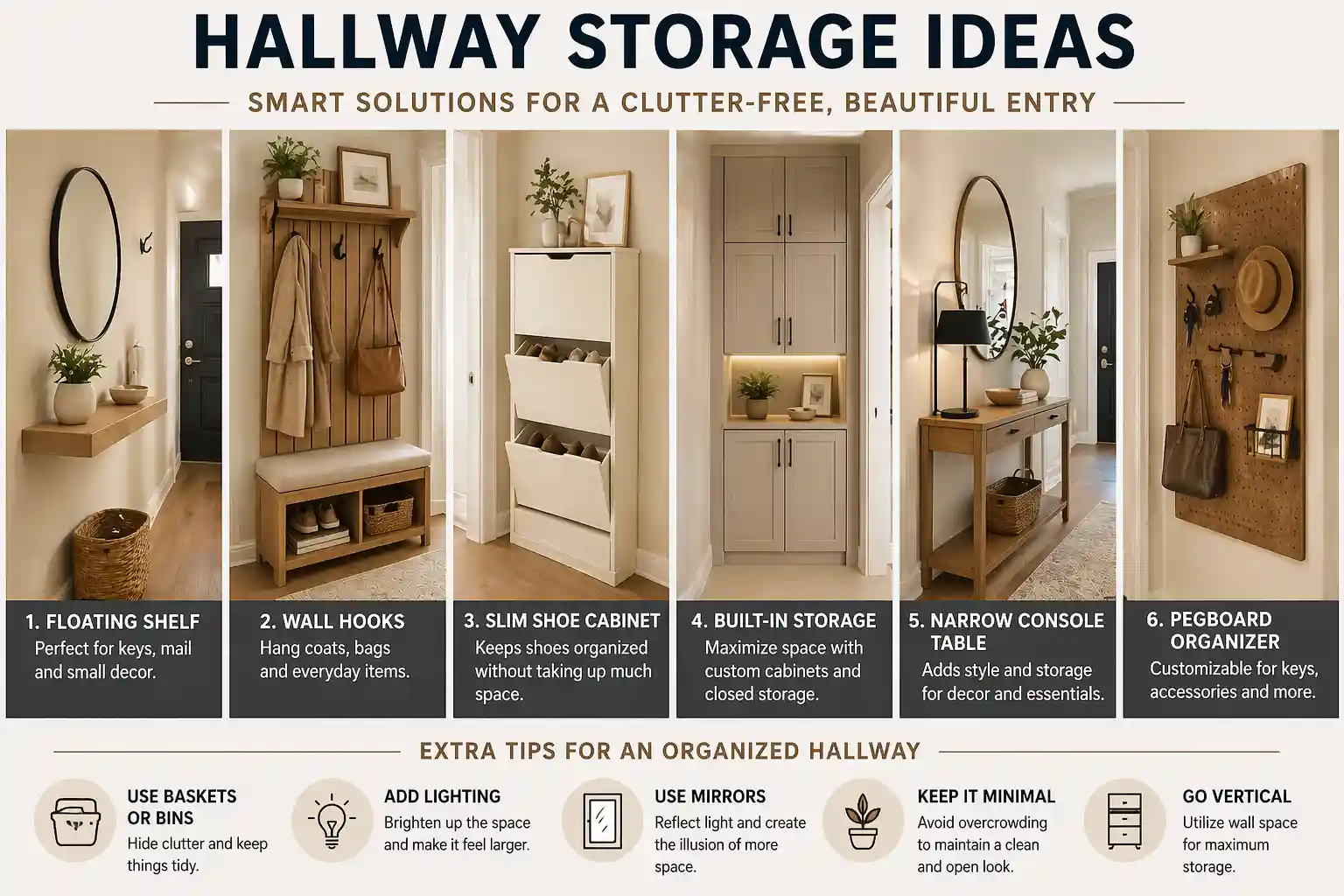
Modern wall mounted storage systems help homeowners keep everyday essentials accessible without sacrificing walking space. Combining hooks with floating shelves can create a clean and balanced arrangement that feels practical rather than overcrowded.
Install slim floating shelves
Floating shelves with shallow depths work well for keys, decorative baskets, mail organisers, and small accessories. Choosing shelves under six inches deep prevents visual heaviness in tight areas.
Add staggered wall hooks
Hooks installed at varying heights create flexible storage for coats, umbrellas, tote bags, and scarves. This simple approach supports effective space saving hallway organization without overwhelming narrow walkways.
Use pegboard systems
Modern pegboards allow flexible arrangement of baskets, hooks, and mini shelves. They adapt easily as household storage needs change over time.
Vertical systems also encourage better organisation habits because frequently used items remain visible and accessible.
Hidden bench seating creates double function
Benches with concealed compartments combine seating and storage in one compact footprint. They work especially well near entrances where people remove shoes or place bags.
Many homeowners now prefer benches with hidden compartments because they keep clutter out of sight while maintaining a streamlined appearance. This type of storage bench seating works especially well for busy families managing shoes, bags, and seasonal accessories.
Storage benches can hold:
- Seasonal shoes
- Pet accessories
- Sports gear
- Cleaning supplies
- Reusable shopping bags
For especially narrow corridors, choose benches with lift up lids rather than pull out drawers since drawers require additional clearance space.
Built in bench seating also contributes to streamlined hallway storage ideas because it blends storage into the architecture rather than adding bulky standalone furniture.
Recessed wall niches maximise unused depth
Recessed storage offers one of the most efficient small hallway storage solutions for homes with suitable wall structures. Instead of projecting into the corridor, recessed shelves fit inside wall cavities.
Thoughtfully designed recessed shelving can transform empty wall cavities into useful display and storage areas that do not intrude into walking space. These solutions are particularly valuable as hidden storage for narrow hallways where floor clearance remains a priority.
These niches can display decorative objects or hold everyday essentials such as books, baskets, or charging stations.
However, homeowners should consult qualified professionals before cutting into walls because plumbing, wiring, or structural components may be present.
The National Association of Home Builders recommends professional evaluation before modifying interior wall structures in residential spaces.
Use ceiling height strategically
Many homeowners overlook the upper portion of hallway walls. Ceiling level storage can hold rarely used items without affecting daily movement.
Homes with limited square footage benefit greatly from vertical storage systems because they maximise unused upper wall areas while preserving comfortable circulation space below.
Install high mounted cabinets
Slim overhead cabinets work well for seasonal decorations, luggage, or archived paperwork.
Add picture ledges near the ceiling
These narrow ledges can store lightweight baskets or decorative containers while maintaining visual openness.
Combine storage with lighting
Integrated lighting beneath upper cabinets helps corridors feel brighter and larger while improving functionality.
This strategy supports efficient space saving hallway organization by using underutilised vertical volume instead of sacrificing floor area.
Multi functional furniture works best in tight spaces
In narrow corridors, every piece of furniture should serve more than one purpose whenever possible.
The best multifunctional furniture combines practicality and flexibility, allowing compact corridors to serve several purposes without feeling cluttered or restrictive.
Mirror cabinets
Mirrors visually enlarge confined spaces while hidden compartments behind them provide discreet storage for keys, chargers, or small accessories.
Fold down desks
Compact foldable surfaces can create temporary workstations in wider corridor sections without permanent bulk.
Shoe cabinets with slim profiles
Tilt out shoe cabinets store footwear vertically while occupying minimal floor depth.
These practical small corridor storage ideas help narrow spaces remain functional without feeling overcrowded.
Built in cabinetry creates a seamless appearance
Custom built in units often outperform freestanding furniture in difficult layouts because they can match exact corridor dimensions.
Well designed built in cabinetry allows awkward corners and narrow walls to become useful storage zones without interrupting movement flow. Compared to oversized cabinets, slim storage furniture often performs better in restricted layouts where every inch matters.
Built ins can include:
- Hidden drawers
- Concealed shoe compartments
- Integrated lighting
- Open shelving combinations
- Pull out vertical organisers
Although custom cabinetry costs more initially, it often provides superior long term functionality in challenging spaces.
According to housing design research from the Royal Institute of British Architects, fitted storage solutions improve spatial efficiency in compact homes by reducing wasted gaps around furniture.
Hallway storage ideas for renters without renovations
Renters often need flexible options that avoid permanent construction changes. Fortunately, several renter friendly approaches still provide effective organisation.
Renters living in smaller homes often need adaptable systems that support compact home organisation without requiring permanent structural changes. Flexible options also work well for improving small apartment storage in narrow shared spaces.
Adhesive wall hooks
Modern removable hooks can hold coats and lightweight bags without damaging walls.
Narrow rolling carts
Slim carts fit against walls and can move easily when extra space is needed.
Over the door organisers
These systems work well for cleaning supplies, accessories, or shoes.
Stackable storage cubes
Modular cubes adapt to changing storage needs and can relocate easily during moves.
These adaptable corridor storage ideas help renters stay organised without violating lease agreements.
Use colour and lighting to reduce visual heaviness
Storage alone cannot solve hallway problems if the space still feels dark and oppressive. Colour and lighting strongly influence spatial perception.
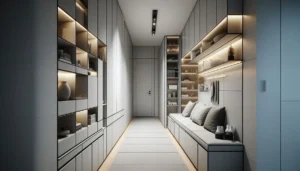
Choose lighter wall colours
Research from environmental psychology studies suggests lighter tones can increase perceived spaciousness.
Use reflective materials
Mirrors and glossy finishes bounce light throughout narrow spaces.
Install layered lighting
Wall sconces, recessed ceiling lights, and under shelf illumination improve visibility and reduce tunnel like effects.
Better lighting enhances both organisation and safety within compact corridors.
Smart shoe storage prevents entryway chaos
Shoes create some of the biggest organisational problems in tight hallways. Without proper systems, footwear spreads quickly across walking paths.
Effective shoe storage solutions reduce visual mess and prevent footwear from spreading across narrow walking paths, especially in busy family homes.
Effective options include:
- Vertical shoe racks
- Under bench compartments
- Wall mounted shoe holders
- Slim tilt cabinets
- Pull out drawer systems
Well planned shoe storage contributes significantly to successful space saving corridor organization because footwear often consumes disproportionate floor space.
Create hidden storage behind decorative panels
Some modern homes integrate concealed storage behind wall panels that blend seamlessly with surrounding finishes.
Modern interiors increasingly use concealed storage units that blend into surrounding walls, creating cleaner sightlines and reducing visual clutter in tight passageways.
Push latch doors without visible handles help maintain clean visual lines while hiding storage areas for:
- Utility items
- Vacuum cleaners
- Cleaning products
- Foldable furniture
- Seasonal accessories
This approach works especially well in minimalist interiors where visible clutter disrupts design harmony.
Basket systems simplify everyday organisation
Baskets offer flexible storage that works across many corridor layouts.
Labelled baskets improve efficiency
Clearly labelled containers help households maintain organisation consistently.
Soft woven baskets reduce visual harshness
Natural textures soften narrow spaces and add warmth.
Wall mounted basket systems save floor space
Mounted wire or woven baskets can store mail, gloves, or reusable shopping bags.
These practical small entryway storage ideas help organise small items that otherwise create visual clutter.
Sliding doors work better than swinging doors
Traditional cabinet doors require clearance space that narrow corridors often cannot provide comfortably.
Sliding mechanisms allow storage access without obstructing movement paths. Pocket doors, barn style systems, and sliding panels work especially well in tight layouts.
Architectural accessibility studies frequently recommend reducing obstruction points in circulation areas to improve movement flow.
This makes sliding systems particularly valuable for efficient narrow hallway storage solutions in compact homes.
Minimalism improves corridor functionality
Sometimes the best storage strategy involves reducing what gets stored in the hallway altogether.
Good corridor organisation often depends on limiting unnecessary items and choosing thoughtful layouts that encourage daily tidiness. A minimalist storage approach can make even tight hallways feel calmer and easier to maintain.
Professional organisers often recommend limiting hallway contents to frequently used essentials only. Seasonal items and infrequently used belongings should move elsewhere whenever possible.
A minimalist approach helps corridors feel calmer, brighter, and easier to maintain daily.
Maintenance habits matter as much as storage design
Even the smartest systems fail without consistent organisation habits.
Consistent hallway decluttering prevents narrow corridors from becoming overloaded and helps storage systems remain functional over time.
Create daily reset routines
Spending five minutes each evening returning items to designated places prevents clutter accumulation.
Rotate seasonal items
Store winter coats or summer accessories elsewhere when not in use.
Avoid overflow storage
When hallway systems become overloaded, reassess what truly belongs there.
Long term organisation depends on sustainable habits rather than storage products alone.
Future trends in compact hallway organisation
As urban homes continue shrinking globally, designers increasingly focus on multifunctional storage innovation.
Emerging trends include:
- Modular wall systems
- Smart hidden compartments
- Flexible movable storage units
- Integrated charging stations
- Sustainable recycled materials
These evolving concepts continue improving how people approach narrow corridor storage ideas in smaller living environments.
Conclusion
Narrow corridors do not need to remain frustrating clutter zones. With thoughtful planning, strategic vertical storage, hidden compartments, and multifunctional furniture, even the tightest hallway can become organised and visually inviting.
Also Read: 21 smart small space coffee table styling ideas that transform tight living areas beautifully
The most successful hallway storage ideas focus on preserving movement space while making everyday items accessible and easy to manage. Whether using benches, shelving, or space efficient furniture, the goal should always be to improve functionality without compromising movement or comfort. Many homeowners also find that smart storage ideas for small entry corridors help create a more welcoming atmosphere while improving daily routines. Proper planning for narrow entryway storage can significantly improve both organisation and visual balance in compact homes.
By combining practical design choices with consistent organisation habits, homeowners and renters alike can transform overlooked hallways into efficient, calm, and attractive spaces that improve the overall flow of the home.
Sources and section mapping
- University of Minnesota Center for Sustainable Building Research
- American Institute of Architects
- International Residential Code
- National Association of Home Builders
- Royal Institute of British Architects
- Environmental psychology spatial perception research published through academic housing studies
FAQs
How can vertical wall organizers improve narrow entryway storage?
Vertical organisers use unused wall height instead of valuable floor space, which makes them one of the most effective narrow hallway storage solutions for compact homes. Wall mounted hooks, floating shelves, and pegboard systems keep daily essentials accessible while maintaining comfortable walking clearance. This approach prevents overcrowding near entrances and helps corridors feel more open and functional. Vertical storage also makes it easier to organise frequently used items without adding bulky cabinets that may visually shrink already tight spaces.
What are the best hidden cabinet options for compact passageways?
Recessed wall cabinets and sliding door compartments work particularly well because they minimise obstruction in tight walkways. Built in storage with push latch doors also creates a cleaner visual appearance while hiding household clutter effectively. Many homeowners looking for practical small corridor storage ideas prefer concealed cabinets because they keep items accessible without disrupting movement flow. Hidden storage behind decorative wall panels can also reduce visual distractions and help narrow corridors feel calmer and more organised throughout the day.
Why do slim profile shoe racks work better in tight corridors?
Slim shoe storage systems reduce floor intrusion while keeping footwear organised vertically. Tilt out cabinets and wall mounted shoe holders help maintain clear walking paths and reduce visual mess near entrances. In smaller homes where every inch matters, narrow shoe organisers support better space saving hallway organization by preventing footwear from spreading across busy walkways. These compact systems also create a tidier first impression for guests while helping households maintain cleaner and more manageable entry spaces daily.
How does layered lighting support compact hallway organisation?
Layered lighting improves visibility and helps narrow spaces feel larger. Under shelf lighting, wall sconces, and reflective surfaces reduce shadows that can make corridors appear more cramped and cluttered. Good lighting also improves safety when moving through tight hallways during early mornings or evenings. By distributing light evenly across walls and ceilings, layered lighting can visually expand compact spaces and make storage systems easier to access without creating dark corners that feel visually heavy or confined.
Are modular storage systems useful for apartment hallways?
Modular systems adapt easily to changing needs and limited layouts. Stackable cubes, movable carts, and adjustable wall organisers provide flexibility for renters and small apartment residents without requiring permanent renovations. These adaptable systems allow homeowners to rearrange storage as household needs evolve over time. Modular options also work especially well in compact hallways because they can fit awkward layouts while maintaining better circulation and preventing overcrowding in narrow passageways where flexibility becomes especially important.
What materials work best for minimalist corridor storage furniture?
Light wood finishes, reflective materials, and slim metal frames help narrow spaces feel more open. Bulky dark furniture can visually shrink already compact corridors and create a heavier appearance. Materials with smooth finishes and lighter tones reflect more light, which improves the overall sense of openness in restricted spaces. Choosing streamlined materials also supports cleaner visual lines, making hallways feel calmer and more organised while maintaining practicality for daily household storage needs.
How can concealed storage improve visual calm in busy hallways?
Hidden compartments reduce visible clutter, which helps create a calmer environment. Concealed storage behind panels or inside multifunctional furniture keeps essential items accessible without overwhelming narrow spaces visually. This approach works particularly well in busy households where shoes, bags, and accessories can quickly create visual chaos. By hiding everyday items behind seamless surfaces, concealed storage helps corridors feel cleaner, quieter, and more spacious while still supporting practical organisation for daily routines.