A kitchen often contains more plastic than we realize. Food containers, wrap, packaging, and disposable storage products quietly accumulate over time. Many households now want practical ways to reduce this dependency while still keeping their kitchens efficient and organized. This is where plastic free kitchen organization becomes both useful and meaningful.
A well organized kitchen built around reusable materials can reduce waste, simplify storage, and make daily cooking more enjoyable. Glass jars, metal containers, wooden organizers, and fabric alternatives help eliminate unnecessary plastic while keeping ingredients accessible and fresh. Many households are now trying to understand how to organize a kitchen without plastic while still maintaining convenience and efficiency.
Environmental research highlights the urgency of this shift. According to the United Nations Environment Programme, plastic waste production has increased dramatically worldwide, with large volumes entering landfills and ecosystems every year. Small household changes, including how kitchens are organized and managed, can significantly reduce this waste stream and support the development of an eco conscious kitchen.
This guide explores practical sustainable kitchen organization tips, easy eco friendly kitchen organization tips, and realistic eco-friendly kitchen storage solutions that anyone can adopt. The goal is not perfection. It is simply creating a kitchen that works better for both people and the planet while encouraging long term sustainable kitchen habits.
Why reducing plastic in kitchen storage matters
Plastic products have become common because they are inexpensive and lightweight. However, they come with long term environmental costs. Many plastics take hundreds of years to decompose, and large amounts end up in landfills or natural ecosystems.
The Environmental Protection Agency explains that containers and packaging represent a major portion of municipal waste. A significant share of this waste originates from kitchens, including food packaging, disposable storage containers, and plastic wrap.
Reducing plastic in food storage also helps limit exposure to microplastics and chemical additives that may migrate into food under certain conditions, particularly when heated. The National Institutes of Health notes that some plastic additives can leach into food when containers are exposed to heat or prolonged storage.
Moving toward reusable food containers and safer materials allows households to reduce waste while improving kitchen efficiency. Simple green kitchen organization ideas such as replacing disposable wrap with reusable covers or using refillable jars can make a measurable difference over time. These choices also encourage better plastic alternative storage solutions for everyday cooking.
Start with a kitchen decluttering reset
Before introducing new storage solutions, the first step is removing unnecessary plastic items already in the kitchen.
Many kitchens accumulate unused containers, broken lids, single use packaging, and mismatched storage boxes. These items occupy valuable space and complicate organization.
A thoughtful decluttering process allows homeowners to evaluate what they truly need. Reusable glass containers, stainless steel boxes, and ceramic bowls can often replace multiple plastic items and support a minimal waste kitchen.
During this reset, consider sorting items into three groups:
Use regularly
Donate or repurpose
Recycle responsibly
The Environmental Protection Agency recommends checking local recycling guidelines since not all plastic items are accepted in curbside recycling programs.
Decluttering creates space for better storage systems and lays the foundation for practical zero waste kitchen organization ideas and an efficient zero waste pantry.
Use glass jars for bulk storage
Glass jars remain one of the most versatile storage tools in a plastic free kitchen. They work well for dry goods such as grains, pasta, beans, flour, and spices.
Glass containers offer several advantages:
They do not absorb odors
They allow easy visibility of contents
They can be reused for years
Research from the Food and Agriculture Organization highlights that proper dry food storage improves shelf life and reduces food waste. Transparent containers help households monitor ingredient levels and use food before it expires.
Large glass jars work well for pantry staples, while smaller jars organize spices, herbs, and baking ingredients. Labeling jars further improves kitchen efficiency and supports effective glass jar pantry storage.
These practices also support practical minimal waste kitchen storage solutions because they rely on durable materials rather than disposable packaging. Many households now explore plastic free pantry storage ideas that revolve around reusable glass containers.
Choose stainless steel containers for everyday storage
Stainless steel containers provide another reliable plastic alternative. They are durable, lightweight, and resistant to stains or odors.
These containers work well for storing leftovers, prepared meals, chopped vegetables, and snacks. Many designs include airtight lids that help preserve freshness.
According to the U.S. Department of Agriculture, proper storage conditions play a key role in maintaining food safety and quality. Stainless steel containers help maintain stable storage environments without introducing plastic chemicals into food.
They are particularly useful for:
Lunch storage
Meal preparation
Refrigerator organization
Integrating these containers into everyday routines represents one of the most practical plastic-free kitchen tips available today and supports efficient reusable kitchen storage systems.
Create a natural pantry system
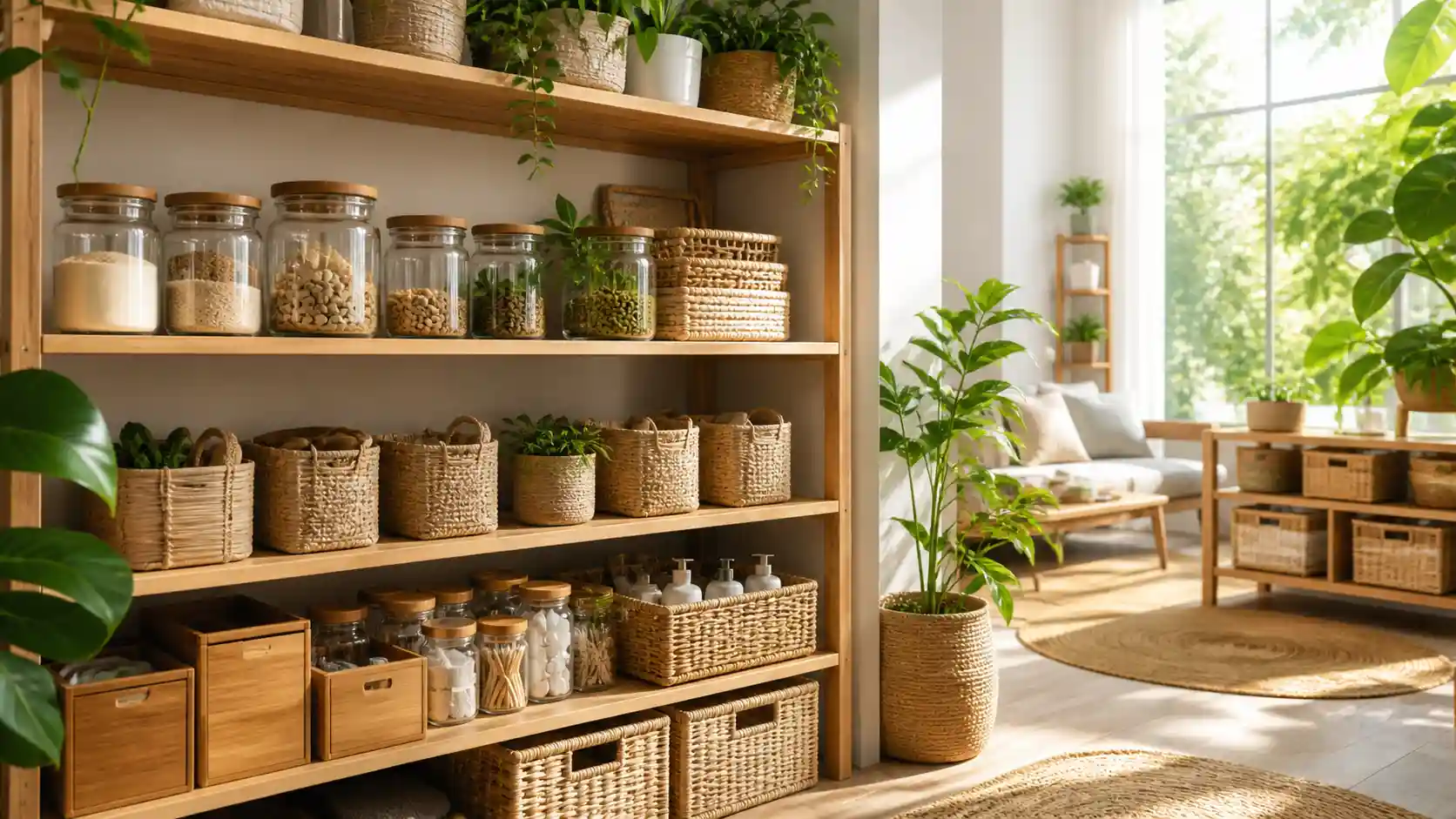
A natural pantry focuses on simple materials that improve both storage and accessibility.
Instead of plastic baskets or bins, consider:
Wooden crates
Bamboo organizers
Metal wire racks
Glass storage jars
These natural kitchen materials are durable, easy to clean, and visually appealing. They also encourage more mindful food storage practices.
The Food and Agriculture Organization emphasizes that well organized pantries help reduce food waste by ensuring ingredients remain visible and accessible.
A structured pantry system can include zones for grains, spices, canned foods, and baking ingredients. This approach supports efficient cooking and reinforces plastic-free kitchen storage concepts that reduce reliance on disposable packaging while building a green kitchen organization system.
Replace disposable wrap with reusable alternatives
Plastic wrap is one of the most commonly used kitchen plastics. Unfortunately, it is rarely recyclable and typically ends up in landfills.
Reusable alternatives offer practical solutions. These include:
Beeswax food wraps
Silicone stretch lids
Reusable fabric bowl covers
The Natural Resources Defense Council highlights reusable food storage as an effective way to reduce household waste.
Beeswax wraps, for example, conform to bowls and containers when warmed slightly by hand. They can be washed and reused for months and support practical low waste food storage methods.
Switching to reusable food covers represents a simple yet impactful change within low-waste kitchen storage tips.
Use fabric produce bags for ingredient storage
Reusable produce bags serve multiple purposes in a plastic free kitchen.
Originally designed for grocery shopping, these bags also help store vegetables, fruits, and dry ingredients at home. Cotton or mesh bags allow airflow, which helps preserve fresh produce.
The United States Department of Agriculture notes that proper ventilation improves produce storage conditions and helps prevent premature spoilage.
Keeping reusable bags near the pantry or refrigerator encourages consistent use. Over time, this habit significantly reduces single use plastic packaging while improving reusable produce storage.
These practical swaps reinforce everyday energy and waste saving kitchen organization tips and help create a more environmentally friendly kitchen setup.
Plastic free kitchen organization for modern homes
A modern kitchen can remain stylish, efficient, and sustainable at the same time. Achieving plastic free kitchen organization does not require expensive equipment or a complete kitchen renovation.
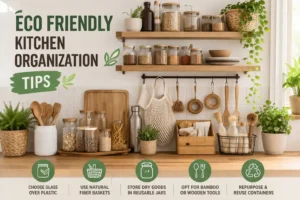
Instead, the process focuses on replacing disposable products with durable alternatives and organizing food storage more intentionally.
Key principles include:
Choosing reusable containers
Buying food in bulk where possible
Organizing ingredients for visibility
Avoiding single use packaging
Research from the United Nations Environment Programme shows that reducing single use plastic consumption at household level contributes to broader environmental waste reduction goals.
By applying practical zero waste kitchen organization ideas, homeowners create kitchens that support both sustainability and convenience while implementing a reliable bulk food storage system.
Organize drawers with bamboo dividers
Kitchen drawers often become cluttered with utensils, gadgets, and miscellaneous items.
Plastic dividers frequently break or wear out quickly. Bamboo dividers provide a stronger and more sustainable alternative.
Bamboo grows rapidly and requires fewer agricultural resources compared with many wood species. The Food and Agriculture Organization recognizes bamboo as a highly renewable material suitable for household products.
Drawer dividers help categorize utensils, measuring tools, and cooking accessories. This improves workflow during meal preparation while supporting sustainable kitchen storage ideas that avoid unnecessary plastic and promote better waste reducing kitchen storage.
Store cleaning supplies in refillable containers
Kitchen organization also includes cleaning products. Many commercial cleaners come in single use plastic bottles.
Refillable glass or metal spray bottles offer a more sustainable solution. Some households prepare simple cleaning mixtures using ingredients like vinegar and baking soda.
The Centers for Disease Control and Prevention confirms that certain household solutions can effectively clean surfaces when used correctly.
Using refillable containers reduces plastic waste while maintaining hygienic kitchen environments. This strategy fits naturally within eco friendly kitchen organization tips and strengthens sustainable home kitchen practices.
Adopt bulk food purchasing habits
Buying food in bulk supports both organization and waste reduction. Bulk purchasing reduces packaging while allowing households to store ingredients in reusable containers.
Also Read: Small bathroom storage ideas to transform tiny spaces
Many grocery stores now offer refill stations for grains, nuts, coffee, and spices.
The Environmental Protection Agency encourages waste reduction strategies that minimize packaging at the source. Bulk purchasing aligns closely with this recommendation.
Bulk ingredients stored in labeled glass jars create an organized pantry while reinforcing practical environmentally friendly kitchen organization and forming a reliable eco conscious pantry system.
Conclusion
Creating a more sustainable kitchen does not require drastic changes. Small adjustments in storage habits, materials, and organization systems can gradually reduce plastic waste while improving daily efficiency.
Practical solutions such as glass jars, stainless steel containers, reusable wraps, bamboo organizers, and bulk storage systems allow households to maintain clean and functional kitchens without relying on disposable plastics.
By applying thoughtful eco-smart kitchen storage solutions, experimenting with sustainable pantry and kitchen organization, and investing in durable sustainable kitchen storage ideas, anyone can build a kitchen that supports healthier living and environmental responsibility.
Over time, consistent habits make plastic free kitchen organization not just achievable but surprisingly simple while encouraging long term plastic reduction kitchen tips.
Sources
United Nations Environment Programme
Environmental Protection Agency
Food and Agriculture Organization of the United Nations
National Institutes of Health
United States Department of Agriculture
Natural Resources Defense Council
Centers for Disease Control and Prevention
Frequently asked questions
How can zero waste pantry systems reduce food waste?
Zero waste pantry systems rely on transparent containers, proper labeling, and categorized storage zones. When ingredients remain visible, households remember to use them before they expire. This improves meal planning and reduces unnecessary grocery purchases. Organized pantries also prevent duplicate purchases of items already stored in cabinets.
What are the most practical eco friendly kitchen organization tips for small kitchens?
Small kitchens benefit from vertical storage systems, stackable glass containers, and wall mounted racks. These solutions maximize available space while avoiding plastic bins or disposable organizers. Compact bamboo drawer dividers and labeled glass jars help maintain order without creating clutter.
Are sustainable kitchen storage ideas more expensive?
Many sustainable storage options actually save money over time. Glass jars from pantry items can be reused, stainless steel containers last for years, and reusable wraps replace continuous purchases of disposable plastic wrap. Durable materials reduce long term replacement costs.
How does bulk pantry storage improve kitchen organization?
Bulk pantry storage reduces packaging waste and simplifies ingredient management. Buying grains, beans, and spices in bulk allows them to be stored in reusable containers that fit neatly on shelves. Organized bulk storage also helps households monitor inventory more effectively.
What natural materials work best for eco friendly kitchen storage?
Common natural materials for zero Waste Kitchen Organization Ideas include glass, stainless steel, bamboo, ceramic, and cotton fabric. These materials are durable, reusable, and widely used for food safe storage solutions. Many also resist odors and stains better than plastic containers.
How can reusable produce bags help maintain a sustainable kitchen?
Reusable produce bags reduce single use packaging when buying fruits and vegetables. At home, they also provide breathable storage for certain produce items. Cotton or mesh bags allow airflow, helping vegetables stay fresh longer in refrigerators or pantries.
What habits support long term sustainable pantry management?
Simple routines help maintain a sustainable pantry system. These include rotating older ingredients forward, labeling containers with purchase dates, planning meals around available ingredients, and refilling reusable containers instead of buying packaged products.