Every home has forgotten fabrics hiding in cupboards, storage boxes, or old wardrobes. Worn out sarees, faded curtains, unused bedsheets, and leftover textile scraps often sit untouched for years. Instead of throwing them away, many homeowners now use creative fabric upcycling ideas to transform old materials into beautiful and functional home pieces.
This shift is not only about creativity. It also supports sustainable living. According to the United Nations Environment Programme, textile waste has become one of the fastest growing waste streams globally. Reusing fabric at home reduces landfill waste and encourages mindful consumption. At the same time, homemade décor creates a personal touch that mass produced items rarely offer.
The best part is that you do not need advanced sewing skills or expensive tools to begin. A few simple techniques can turn unwanted cloth into elegant cushion covers, storage baskets, table runners, and many other handmade home décor that look surprisingly professional. Whether you enjoy crafting on weekends or simply want budget friendly décor solutions, fabric reuse offers endless possibilities.
In this guide, you will discover practical methods, expert backed sustainability insights, and easy projects that combine creativity with function. These projects also help you explore fabric reuse projects that give sentimental textiles a second life while making your living space more comfortable and visually appealing.
Why fabric upcycling matters more today
Modern households generate large amounts of textile waste every year. Research from the Environmental Protection Agency shows that millions of tons of textiles are discarded annually, with only a small percentage being recycled. Fabrics made from synthetic fibres can take decades to decompose, creating long term environmental concerns.
Upcycling helps reduce this impact by extending the lifespan of existing materials. Unlike traditional recycling, which often breaks down fibres and reduces quality, upcycling keeps fabrics usable in their current form. This process supports textile recycling while saving energy, water, and raw materials.
There is also a financial advantage. Home décor items can be expensive, especially handmade or designer products. Repurposing existing fabrics allows homeowners to create customised decorations at minimal cost. Many people now prefer upcycled home decor because it reflects personality instead of following generic trends.
Another important factor is emotional value. Old family quilts, vintage clothing, or inherited fabrics often carry memories. Transforming them into practical household items preserves sentimental connections while keeping the material useful.
Choosing the right fabrics for home projects
Not every fabric behaves the same way during crafting. Selecting suitable materials improves durability and appearance.
Cotton fabrics
Cotton works best for beginners because it is easy to cut, sew, wash, and shape. Old shirts, bedsheets, and pillowcases are excellent sources for DIY home accessories. These materials are also ideal for sewing for beginners because they are forgiving and simple to manage.
Linen materials
Linen provides a textured and elegant finish. It is ideal for table runners, storage bags, and decorative covers. Linen also becomes softer over time without losing strength.
Denim textiles
Old jeans are perfect for sturdy projects like organisers, baskets, and floor cushions. Denim handles wear and tear better than lighter fabrics.
Silk and delicate fabrics
Silk requires careful handling but creates luxurious decorative pieces. Many people use vintage sarees or scarves to make wall hangings or accent pillow covers.
Mixed fabric scraps
Even small leftover pieces have value. Scrap fabrics work well for patchwork sewing, coasters, bookmarks, and layered decorations. Combining different textures often creates more visually interesting, recycled home décor.
Essential tools for beginners
Starting fabric projects does not require a professional workshop. Most basic tools are affordable and easy to find.
Fabric scissors
Sharp scissors prevent uneven cuts and fabric fraying. Dedicated fabric scissors usually last longer than general household scissors.
Measuring tape and ruler
Accurate measurements help maintain symmetry, especially for cushion covers and table linens.
Needles and thread
Basic hand sewing tools are enough for many beginner projects. A sewing machine can speed up larger tasks but is not mandatory.
Fabric glue
Glue helps with no sew projects and quick decorative fixes. It is useful for beginners who want fast results.
Pins and clips
Pins keep fabric layers aligned while sewing or gluing.
Simple tools combined with patience can produce impressive old fabric craft ideas that look professionally made. Many people start with sustainable fabric crafts for beginners because these projects are affordable and relaxing.
Cushion covers that instantly refresh rooms
One of the easiest ways to begin using fabric upcycling ideas is by making cushion covers. Cushions change the mood of a room quickly without requiring expensive renovations.
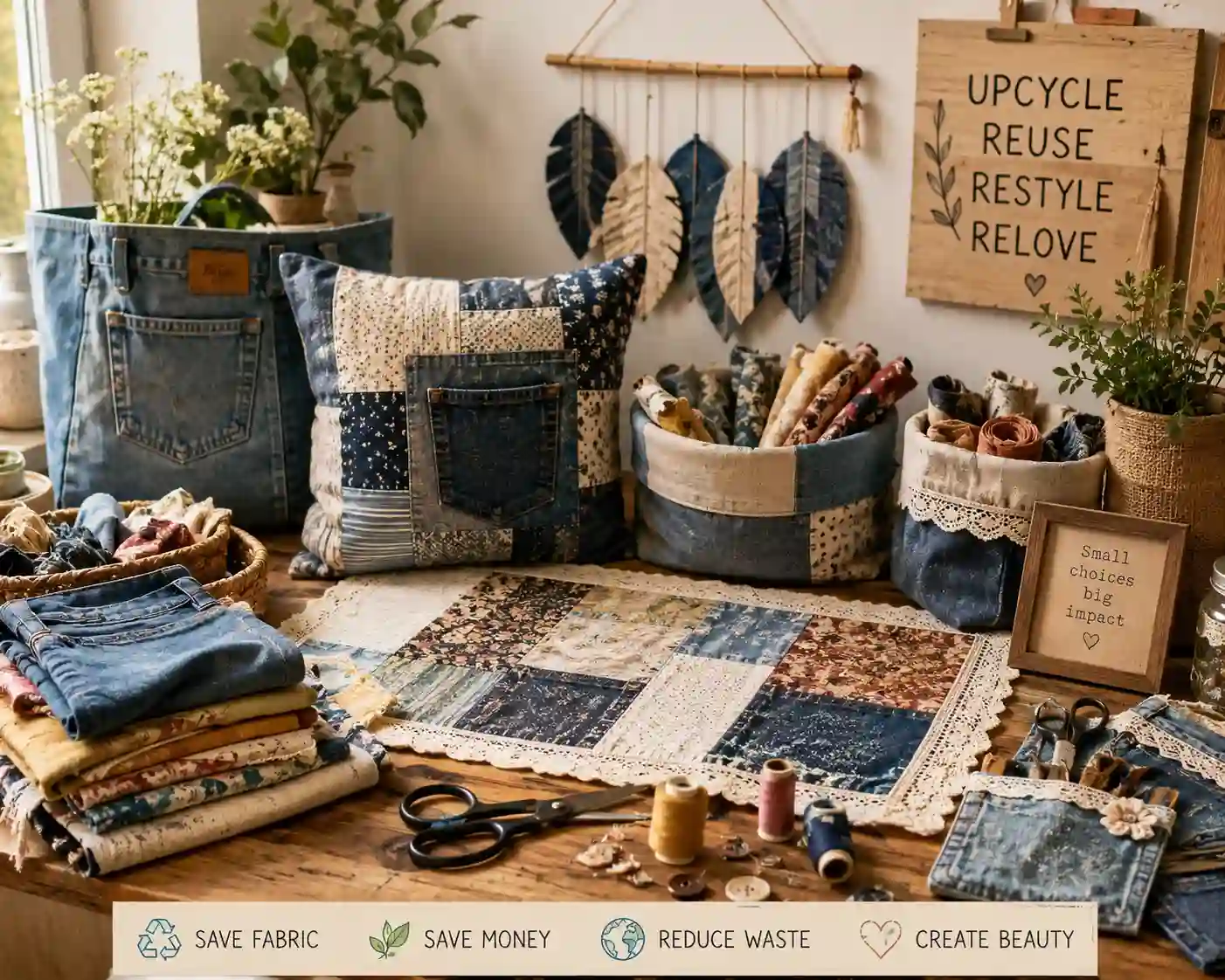
Old cotton shirts, sarees, or curtains can become stylish covers within a few hours. Mixing patterns creates a layered interior style that feels warm and personal. Many homeowners use fabric scrap projects to combine multiple fabric pieces into one unique design.
Adding buttons, lace, or embroidery gives extra character. Seasonal cushion covers are also practical because they allow easy décor updates throughout the year.
Neutral fabrics create minimalist interiors, while colourful textiles add energy to living spaces. Denim cushion covers work especially well in casual rooms because they are durable and easy to clean.
Creative table runners and placemats
Dining spaces often feel incomplete without soft decorative elements. Table runners and placemats are among the simplest personalised home accessories that can dramatically improve presentation.
Vintage fabric pieces with floral prints work beautifully for rustic interiors. Neutral linen runners suit modern minimalist homes. Layering multiple fabrics creates texture and depth without overwhelming the table.
Fabric placemats also protect surfaces from heat and stains. Quilted versions provide extra durability and can be washed repeatedly.
Many crafters use reversible designs to create two different looks using the same material. This practical approach maximises versatility while encouraging textile waste reduction.
Stylish wall art from leftover textiles
Wall décor does not always need expensive frames or paintings. Fabric art can introduce colour, softness, and texture into plain interiors.
Stretching patterned cloth over wooden frames creates affordable artwork. Embroidery hoops also make excellent display pieces for small fabric designs. Some people combine fabric pieces with hand stitching to create abstract wall compositions.
Traditional textiles such as block prints, woven fabrics, or embroidered materials often become statement pieces in living rooms. These decorative fabric crafts preserve cultural artistry while supporting sustainable decorating practices.
Fabric banners and hanging organisers also combine decoration with functionality. This balance makes them popular choices for modern sustainable home décor enthusiasts.
Storage baskets and organisers from denim
Old denim is incredibly versatile because of its strength and structure. Instead of discarding worn jeans, many homeowners convert them into practical storage solutions.
Denim baskets can hold books, toys, magazines, or craft supplies. Reinforcing the structure with cardboard or rope helps maintain shape. Exterior pockets from jeans can also become attached organisers for remote controls or stationery.
These homemade storage solutions are especially useful in small apartments where storage space is limited. Functional projects like this prove that repurposed fabric ideas can solve everyday household problems creatively.
Kitchen accessories with practical value
Kitchen décor often focuses on function, making it ideal for beginner upcycling projects.
Reusable cloth napkins
Reusable napkins reduce paper waste and add elegance to meals. Cotton fabrics work best because they absorb moisture well and wash easily.
Pot holders and oven mitts
Layered fabric scraps combined with heat resistant padding create durable kitchen tools.
Aprons from old clothing
Large shirts or dresses can become adjustable aprons with minimal sewing.
Hanging kitchen organisers
Fabric organisers help store spoons, towels, and utensils neatly while adding decorative charm.
Practical kitchen projects encourage more sustainable daily habits while keeping costs low. Many of these reusable fabric projects also help households reduce disposable kitchen products.
Transforming old fabrics into bedroom décor
Bedrooms benefit greatly from soft textures and layered textiles. Repurposed fabrics can create calming and comfortable spaces without major expenses.
Headboard covers made from quilted fabric add warmth and style. Matching curtains and cushion sets provide visual consistency throughout the room. Fabric garlands and hanging decorations create softer aesthetics than plastic décor items.
Many people also repurpose old blankets into bed throws or layered quilts. This technique preserves sentimental fabrics while giving them practical use again.
The growing popularity of fabric upcycling ideas in bedroom design reflects a broader movement toward cosy and personalised home décor. It also encourages sustainable interior styling without requiring costly makeovers.
Pet accessories from fabric scraps
Pet owners often spend significant amounts on beds, toys, and feeding mats. Repurposed fabric provides a budget friendly alternative.
Soft cotton or fleece materials can become pet cushions and blankets. Braided fabric strips create chew toys for dogs. Waterproof fabric remnants work well as feeding mats beneath bowls.
Because pets frequently damage or stain accessories, reusable homemade options are especially practical. These DIY home accessories also allow owners to customise colours and sizes according to their pets’ needs.
Seasonal decorations with reusable fabrics
Holiday decorations often create unnecessary waste because many items are discarded after short use. Reusable fabric décor offers a more sustainable alternative.
Fabric pumpkins, festive bunting, Christmas stockings, and reusable gift wraps reduce disposable packaging and plastic decorations. Seasonal tablecloths and napkins also create celebrations that feel more personal and environmentally responsible.
Many families now include upcycling projects as part of holiday traditions. Children especially enjoy simple crafting activities involving fabric scraps and creative sewing projects.
These projects demonstrate how upcycled home decor can combine sustainability with emotional family experiences.
Beginner mistakes to avoid
Many first time crafters become frustrated because of avoidable errors. Understanding common mistakes improves project outcomes significantly.
Ignoring fabric durability
Thin fabrics may tear quickly if used for heavy duty items like storage baskets.
Skipping fabric cleaning
Old materials should always be washed before crafting to remove dust, odours, and shrinkage risks.
Using dull scissors
Poor cutting tools create uneven edges and messy finishes.
Choosing overly complex projects first
Simple projects build confidence and skills faster than ambitious designs.
Forgetting seam allowances
Leaving extra fabric around edges prevents projects from becoming too small after sewing.
Patience and experimentation are important when exploring textile craft ideas for the first time. Learning simple cloth reuse ideas first usually helps beginners stay motivated.
The role of sustainability in modern home décor
Sustainability has become a major influence in interior design trends. According to the Ellen MacArthur Foundation, extending clothing and textile use even slightly can significantly reduce environmental impact.
Consumers increasingly seek décor choices that minimise waste and encourage responsible consumption. Handmade fabric projects align perfectly with this shift because they reuse existing materials instead of demanding new production resources.
Social media platforms have also helped popularise sustainable crafting communities. People now share tutorials, restoration techniques, and creative ways to reuse old clothes for home décor through global online communities.
This growing interest explains why fabric recycling ideas continue gaining attention among environmentally conscious homeowners. Many people also view it as part of a broader circular economy living approach.
Combining aesthetics with functionality
Successful fabric projects balance beauty and practical use. Decorative items should also serve real household purposes whenever possible.
For example, a stylish storage basket reduces clutter while improving room aesthetics. Quilted table runners protect furniture while adding visual warmth. Reusable shopping bags made from old curtains reduce plastic waste while remaining fashionable.
Combining form and function creates longer lasting household items because people continue using them regularly instead of treating them as temporary decorations.
This practical mindset is one reason why handmade interior accessories remain highly popular across different interior design styles. Many homeowners appreciate how repurposed textiles combine usefulness with creativity.
Budget friendly decorating without sacrificing style
Many homeowners believe stylish interiors require expensive purchases. In reality, creativity often matters more than budget.
Repurposed fabrics provide access to unique textures, colours, and patterns without additional shopping costs. Vintage fabrics especially add character that newer mass produced materials sometimes lack.
Mixing handmade elements with existing furniture also creates more authentic interiors. Perfectly matched showroom décor can sometimes feel impersonal, while handcrafted details introduce warmth and individuality.
People who enjoy eco-friendly home décor often discover that guests appreciate originality more than luxury labels. This growing interest has also increased awareness of recycled fabric crafts among younger homeowners.
How fabric crafting supports mental wellbeing
Crafting activities can positively affect emotional health and stress management. Research from institutions such as Harvard Health Publishing suggests that creative hobbies may support relaxation and mindfulness.
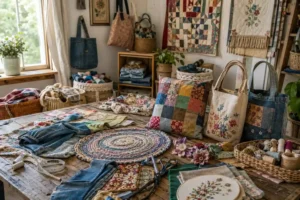
Sewing, cutting, and arranging fabrics require focus and repetitive movement, which many people find calming. Completing a handmade project also creates a sense of achievement.
Fabric projects encourage slower and more intentional living. Instead of purchasing disposable items immediately, people invest time in creating meaningful objects for their homes. This process naturally supports eco friendly crafting habits and more thoughtful consumption choices.
This emotional connection partly explains why old fabric craft ideas continue attracting both younger and older generations.
Future trends in textile upcycling
Textile reuse will likely continue expanding as sustainability concerns increase globally. Designers, environmental organisations, and educational institutions increasingly promote circular economy practices within fashion and home industries.
Future trends may include more community repair workshops, local textile exchanges, and educational crafting programmes. Smart consumers are becoming more aware of environmental costs associated with fast fashion and disposable décor.
Technology may also support sustainable crafting through digital tutorials, pattern sharing, and online upcycling communities. However, the core appeal remains simple: transforming forgotten materials into useful and meaningful household items.
As awareness grows, fabric upcycling tips will probably become a normal part of everyday home improvement rather than a niche hobby. Many experts believe this shift will further encourage zero waste home décor trends across modern households.
Conclusion
Creating beautiful home pieces does not always require expensive materials or professional expertise. With creativity, patience, and basic tools, almost anyone can transform unused textiles into practical and attractive décor. From cushion covers and wall hangings to organisers and seasonal decorations, fabric upcycling ideas help reduce waste while adding personal style to living spaces.
Also Read: 17 creative ways to reuse glass jars & bottles for a stylish sustainable home
These projects also support sustainability, mindful consumption, and emotional wellbeing. More importantly, they encourage people to value what they already own instead of constantly purchasing new products. Whether you start with a simple table runner or a full patchwork project, every small effort contributes to a more thoughtful home environment.
The growing popularity of handcrafted home accents and sustainable decorative pieces proves that sustainable living can still feel stylish, creative, and deeply personal. Even the simplest fabric recycling ideas can turn forgotten materials into something meaningful and beautiful while encouraging more handmade décor choices inside modern homes.
Sources and References
- United Nations Environment Programme
- United States Environmental Protection Agency
- Ellen MacArthur Foundation
- Harvard Health Publishing
FAQs
How can DIY home accessories improve small living spaces?
Small homes benefit greatly from handmade storage solutions because customised designs fit specific spaces better than mass produced products. Fabric organisers, hanging pockets, and foldable baskets reduce clutter while adding texture and colour. Soft textile accessories also make compact rooms feel warmer and more inviting without overcrowding them with bulky furniture. Many people also use small scale decorative fabric crafts to create visual depth inside apartments. Handmade textile items provide flexibility because they can easily be changed, repaired, or updated according to changing storage and decoration needs.
Why is reused fabric décor becoming popular among younger homeowners?
Many younger homeowners prefer sustainable choices that reflect individuality rather than identical showroom interiors. Handmade décor allows people to personalise spaces affordably while reducing waste. Social media tutorials and creative communities have also inspired more people to experiment with textile reuse and sustainable decorating methods. Younger generations are especially attracted to projects that support sustainable living and reduce unnecessary consumption. They often prefer handcrafted home items because they add authenticity and personal expression that factory made décor products sometimes fail to provide.
Which fabrics work best for old fabric craft ideas in kitchens?
Cotton and linen fabrics usually work best in kitchens because they absorb moisture well and tolerate repeated washing. Thick fabrics are ideal for oven mitts and placemats, while lighter materials suit napkins and decorative runners. Durable fabrics help handmade kitchen accessories last much longer. Many homeowners also combine multiple fabric layers for additional strength and insulation. Choosing washable and breathable materials is important because kitchen accessories are exposed to heat, moisture, and frequent cleaning. Proper fabric selection improves both safety and durability in everyday kitchen use.
Can decorative craft projects for home help reduce household expenses?
Homemade décor projects significantly reduce spending on decorative items, especially when using materials already available at home. Repurposing old curtains, bedsheets, or clothing eliminates the need to purchase new fabrics. Many families also repair and refresh existing décor instead of replacing it entirely. Reusing fabric materials helps households save money while still creating visually appealing interiors. Over time, these habits encourage more responsible purchasing decisions and help families focus on practical creativity rather than unnecessary spending on temporary decorative trends.
What makes upcycled home decor feel more personal?
Repurposed fabrics often carry memories connected to family events, travel experiences, or favourite clothing items. Turning sentimental materials into home accessories creates emotional value that store bought décor rarely offers. Handmade items also reflect individual creativity and personal design preferences. Many people enjoy displaying customised décor because it tells stories about their experiences and lifestyle. Personalised home décor often feels warmer and more meaningful because it represents effort, creativity, and emotional connection instead of simply following popular interior trends.
Are used fabric décor projects suitable for children?
Many beginner fabric projects are safe and enjoyable for children when supervised properly. Simple activities like fabric collages, soft toys, or decorative bunting encourage creativity while teaching sustainability. Children also learn the importance of reusing materials instead of wasting them. Fabric crafting activities can improve patience, hand coordination, and creative thinking skills. Parents often use these projects to introduce environmental awareness in a fun and practical way. Starting with easy recycled fabric crafts usually helps children develop confidence while enjoying hands on learning experiences.
How do custom decorative accessories support sustainable living?
Reusable textile products reduce dependence on disposable household items and minimise textile waste. Handmade accessories also encourage mindful consumption because people value items they create themselves. Small sustainable habits inside homes collectively contribute to broader environmental responsibility. Projects involving reused fabrics also help reduce demand for newly manufactured decorative products. This lowers resource consumption and supports long term environmental goals. Many people who begin creating fabric based home accessories gradually adopt more eco conscious habits in other areas of daily life as well.