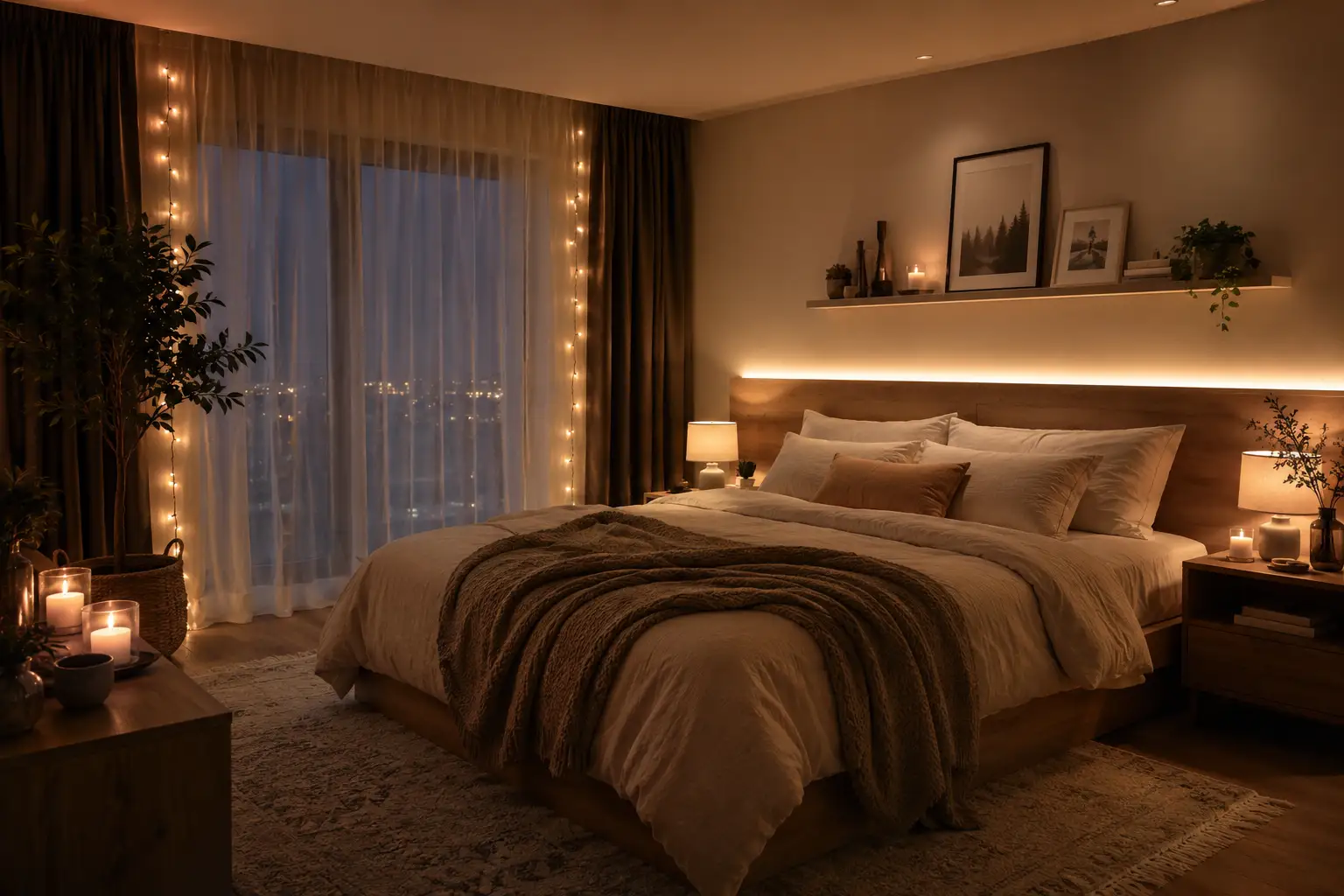
Creating a bedroom that feels calm at the end of a long day often starts with lighting. The right glow can change how a room looks, feels, and functions within seconds. Many people spend time choosing furniture, bedding, and wall colors, yet overlook how much lighting affects mood, relaxation, and sleep quality. Thoughtful lighting choices can make a compact room feel inviting, soften harsh corners, and encourage the body to wind down naturally.
These cozy bedroom lighting ideas focus on comfort, warmth, and practicality without making the room feel overly dark or crowded. A layered lighting setup also improves flexibility because it allows the room to shift from a bright morning environment to a restful nighttime sanctuary. According to Johns Hopkins Medicine and Harvard Health Publishing, bright blue toned lighting in the evening may interfere with melatonin production and affect sleep quality. Soft, warm lighting supports a calmer nighttime atmosphere and can help the brain prepare for rest.
Whether you enjoy reading before bed, relaxing with music, or simply want a more peaceful atmosphere, the right lighting strategy can completely reshape your space. This guide explores practical ways to improve comfort using layered lighting, warm tones, smart placement, and modern design approaches that work in both large and small bedrooms.
Why bedroom lighting matters more than most people think
Lighting affects more than visibility. It influences mood, mental comfort, productivity, and sleep patterns. A bright overhead bulb may feel practical during the day, but harsh white lighting at night can make a bedroom feel cold and overstimulating. In contrast, softer lighting encourages relaxation and creates a sense of emotional comfort.
Modern sleep experts frequently discuss the connection between light exposure and circadian rhythm. The body naturally responds to darkness by increasing melatonin production, which supports sleep readiness. Warm low intensity lighting helps maintain that transition into nighttime rest. The Sleep Foundation notes that dim lighting and warm color temperatures are generally more supportive of better sleep habits than cool bright lighting.
Beyond health considerations, lighting also shapes interior design. Strategic illumination highlights textures, softens architectural flaws, and adds depth to a room. Even simple lamps can elevate cozy bedroom decor when paired with warm textiles and calming colors.
Start with layered lighting for a balanced atmosphere
One of the most effective bed room lighting ideas is using layers instead of relying on a single overhead fixture. Layered lighting creates flexibility and prevents the room from feeling flat or overly bright.
Ambient lighting
Ambient lighting provides overall illumination for the room. Ceiling fixtures, recessed lights, flush mounts, and pendant lights commonly serve this purpose. Instead of choosing extremely bright bulbs, select warm white options that create a soft glow.
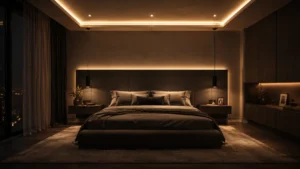
Dimmable ambient lights work especially well because brightness can be adjusted depending on the time of day. Morning routines may require brighter lighting, while evenings benefit from reduced intensity. Warm bulbs around 2700K are often preferred for a relaxing environment because they create a gentle golden tone rather than a clinical white appearance.
Task lighting
Task lighting focuses on specific activities such as reading, journaling, or getting dressed. Bedside lamps, adjustable sconces, and reading lights are ideal solutions. These focused fixtures reduce eye strain without flooding the entire room with brightness.
Many people now prefer wall mounted sconces beside the bed because they free up nightstand space while adding a boutique hotel style appearance. Adjustable reading lights are particularly useful for couples because one person can read comfortably without disturbing the other.
Accent lighting
Accent lighting adds atmosphere and decorative warmth. String lights, LED strips, candles, salt lamps, and small decorative lamps all fall into this category. Accent lighting often delivers the strongest emotional effect because it creates visual softness and depth.
A combination of ambient lighting for bedroom comfort and subtle accent lighting creates a welcoming environment that feels calm rather than overwhelming.
Choose warm bulbs instead of harsh white light
The color temperature of a bulb dramatically changes the mood of a room. Cooler bulbs with blue or white tones may feel energizing in offices and kitchens, but they rarely create a restful bedroom environment.
Warm bulbs with lower Kelvin ratings produce a softer glow that feels comfortable and calming. Many interior designers recommend bulbs between 2200K and 3000K for bedrooms. These warmer tones complement wood textures, soft fabrics, and neutral color palettes often found in comfortable bedroom styling.
Harvard Health Publishing explains that blue light exposure during evening hours can suppress melatonin production and disrupt the body’s internal clock. Warm lighting reduces this effect and encourages a more natural nighttime transition.
When selecting bulbs, frosted finishes generally create softer illumination than clear glass bulbs. Smart bulbs also provide flexibility because users can shift brightness and warmth levels depending on mood and time of day.
Cozy bedroom lighting ideas for small bedrooms
Smaller rooms require thoughtful placement because oversized fixtures or excessive brightness can make the space feel cramped. Fortunately, several space saving strategies help smaller bedrooms feel warm and open at the same time.
Use wall sconces instead of bulky lamps
Wall sconces eliminate the need for large bedside lamps and create a cleaner appearance. Slim designs add elegance without taking up valuable surface space.
Add mirrors to reflect warm light
Mirrors amplify lighting and help distribute warmth throughout the room. Positioning a mirror opposite a lamp or window can make a bedroom appear brighter and larger without additional fixtures.
Install LED strip lighting behind furniture
Hidden LED strips behind headboards, shelves, or mirrors create subtle indirect lighting. This technique adds visual depth while maintaining a soft atmosphere.
Choose floating shelves with integrated lighting
Floating shelves with built in LED lighting combine storage and ambiance efficiently. They also reduce clutter, which helps maintain a calming environment.
These small bed room lighting ideas prove that limited space does not prevent a room from feeling stylish and relaxing.
Use bedside lighting to improve comfort and function
Bedside lighting often becomes the most frequently used lighting source in a bedroom. Choosing the right fixtures improves both comfort and practicality.
Table lamps remain popular because they are versatile and easy to replace. Fabric lampshades soften brightness and distribute light more evenly throughout the room. Ceramic, linen, and matte finishes work especially well in cozy spaces because they avoid glare.
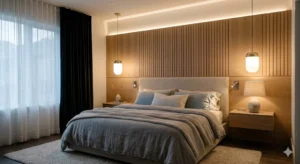
Pendant lights suspended beside the bed have also become increasingly popular in modern interior design. Hanging fixtures create a polished look while freeing nightstand space for books, plants, or decorative items.
For readers, adjustable bedside lighting is essential. Flexible neck lamps or pivoting sconces provide targeted illumination without overwhelming the room. This approach supports ambient lighting for bedroom relaxation while maintaining practical usability.
Incorporate natural light during the daytime
A cozy atmosphere does not mean keeping the room dark all day. Natural light plays an important role in regulating mood, energy levels, and sleep patterns.
According to sleep researchers referenced by the Sleep Foundation, exposure to daylight helps support healthy circadian rhythms. Bedrooms should ideally allow natural sunlight during the morning while still offering privacy and light control at night.
Layered window treatments work especially well. Sheer curtains allow gentle daytime light to enter while blackout curtains help create darkness during sleep hours. This combination balances brightness and relaxation effectively.
Natural textures such as linen curtains, woven shades, and wooden blinds also complement cozy bedroom decor beautifully. They soften the room visually while maintaining practical light control.
Cozy bedroom lighting ideas using decorative accents
Decorative lighting transforms ordinary bedrooms into visually inviting spaces. The goal is not excessive decoration but subtle warmth that makes the room feel personal and comforting.
String lights for soft ambiance
String lights remain one of the easiest ways to create warmth without expensive renovations. Draped around headboards, mirrors, shelves, or curtain rods, they provide a gentle glow that feels relaxing and intimate.
Warm white string lights work better in bedrooms than cool blue toned options because they create a more restful appearance.
Candles and flameless alternatives
Candles instantly create atmosphere, though safety should always come first. Flameless LED candles provide a similar effect with less risk and longer usability.
Grouping candles in clusters of varying heights creates visual interest while maintaining a calm aesthetic.
Salt lamps and diffused lighting
Salt lamps are popular for their warm amber glow and decorative appeal. While scientific claims about air purification remain debated, many people enjoy the calming atmosphere these lamps create.
Diffused lighting through frosted glass or fabric shades also helps eliminate harsh shadows and contributes to a softer environment.
Smart lighting can improve convenience and atmosphere
Modern smart lighting systems make it easier to customize a bedroom environment. Smart bulbs allow users to adjust brightness, color temperature, and schedules using mobile apps or voice assistants.
For example, lights can gradually dim at night to mimic sunset conditions. Morning routines can also feel gentler when lights slowly brighten instead of switching on abruptly.
Some smart systems include preset relaxation modes with warm low intensity lighting specifically designed for winding down before sleep. These features combine convenience with improved comfort.
Smart lighting also supports energy efficiency because schedules prevent lights from remaining on unnecessarily. LED smart bulbs generally consume less electricity and last longer than traditional incandescent bulbs.
Match lighting with your bedroom style
Different interior styles benefit from different lighting choices. Matching fixtures to the room’s aesthetic creates a more cohesive environment.
Modern minimalist bedrooms
Minimalist bedrooms often feature clean lines and neutral palettes. Slim sconces, hidden LED strips, and simple pendant lights maintain visual simplicity while providing warmth.
Rustic and farmhouse spaces
Rustic bedrooms benefit from lantern inspired fixtures, wooden lamps, and warm Edison bulbs. These elements create a welcoming atmosphere with natural texture.
Scandinavian inspired interiors
Scandinavian bedrooms focus heavily on comfort and softness. White walls paired with warm layered lighting help maintain brightness while preserving coziness.
Bohemian bedrooms
Bohemian spaces frequently use woven lampshades, rattan pendants, and decorative string lights. Layered textures and soft illumination work together to create a relaxed environment.
Matching fixtures thoughtfully ensures that bedroom illumination ideas support both function and design consistency.
Reduce clutter to make lighting more effective
Lighting works best in organized spaces. Clutter competes visually with lighting and can make even beautifully illuminated rooms feel stressful.
Johns Hopkins Medicine notes that clutter may contribute to stress and reduced relaxation. Keeping surfaces relatively clear allows lighting to stand out more naturally and creates a calmer visual experience.
Simple storage solutions such as under bed containers, floating shelves, and storage benches help maintain order without sacrificing style. When combined with warm lighting, an organized room immediately feels more peaceful.
Create a sleep friendly nighttime routine with lighting
Lighting can support healthy nighttime habits when used intentionally. Gradually reducing brightness during the evening signals the body that bedtime is approaching.
Sleep experts commonly recommend limiting bright screen exposure before sleep because blue light may interfere with melatonin production. Harvard Health Publishing and the Sleep Foundation both highlight the importance of reducing evening blue light exposure.
Replacing harsh overhead lighting with bedside lamps during evening hours creates a calmer atmosphere. Dim lighting paired with relaxing activities such as reading or stretching can improve the transition into sleep.
Motion activated nightlights are also useful for nighttime visibility without exposing the eyes to bright light. Warm low intensity lighting minimizes sleep disruption while improving safety.
Common bedroom lighting mistakes to avoid
Even well designed bedrooms can feel uncomfortable when lighting mistakes go unnoticed.
Using only one overhead light
Single overhead fixtures often create harsh shadows and uneven brightness. Layering multiple light sources produces a softer and more balanced environment.
Choosing bulbs that are too cool
Bright white bulbs may feel sterile rather than relaxing. Warm lighting creates a more inviting atmosphere suitable for bedrooms.
Ignoring dimmer switches
Dimmers provide flexibility and improve mood control. Installing dimmer switches is often one of the simplest upgrades with the biggest visual impact.
Placing lights at eye level
Bulbs positioned directly at eye level can create glare and discomfort. Lampshades, frosted bulbs, and indirect lighting reduce harshness.
Overdecorating with excessive lighting
Too many decorative lights can make a room feel visually chaotic instead of relaxing. Balance is essential for achieving genuine comfort.
Final thoughts on cozy bedroom lighting tips
The best cozy bedroom lighting ideas combine comfort, functionality, and visual warmth in a way that supports relaxation every day. Instead of relying on one bright ceiling fixture, a layered lighting strategy creates flexibility and emotional comfort throughout the room.
Warm bulbs, dimmable fixtures, bedside lamps, decorative accents, and natural daylight all contribute to a healthier and more inviting environment. Small adjustments such as switching bulb temperatures, adding soft accent lights, or reducing nighttime brightness can dramatically improve how a bedroom feels.
A thoughtfully illuminated bedroom does more than look beautiful. It supports better rest, reduces visual stress, and transforms the room into a genuine retreat from daily pressure. Whether your style is modern, rustic, minimalist, or bohemian, carefully chosen lighting helps create a peaceful atmosphere that feels warm and welcoming every night.
Also Read: 17 creative ways to reuse glass jars & bottles for a stylish sustainable home
A relaxing bedroom lighting setup often combines multiple light sources rather than relying on one central fixture. This approach helps the room transition smoothly from daytime functionality to nighttime comfort. Soft bedside lamps, layered accent lighting, and carefully placed wall sconces can all contribute to a peaceful environment that feels calm without becoming too dark. Many interior designers recommend balancing decorative lighting with practical visibility so the room remains both beautiful and functional.
Another important factor involves selecting warm lighting ideas for small bedrooms that maximize comfort without overwhelming limited space. Hidden LED strips, floating shelves with integrated lighting, and compact pendant fixtures help smaller rooms feel larger while maintaining warmth and intimacy. Pairing these solutions with blackout curtains and natural textures can further enhance the room’s overall atmosphere.
Sources and section mapping
- Johns Hopkins Medicine
- Harvard Health Publishing
- Sleep Foundation
- Sleep Foundation
- Healthline
FAQs
How can ambient lighting for bedroom comfort improve sleep quality?
Soft ambient lighting helps the brain transition into a more relaxed state before bedtime. Bright cool toned lighting may increase alertness, while warm dim lighting supports a calmer atmosphere that encourages the body to prepare for sleep naturally. Using layered lighting instead of harsh overhead bulbs creates a more soothing environment with reduced visual stress. Many people also find that softer evening lighting encourages healthier nighttime habits because the room feels naturally calming. Combining bedside lamps with dimmable lighting can further improve comfort by allowing gradual brightness adjustments before sleep.
What are the best bed room lighting ideas for apartments with limited space?
Wall sconces, hanging pendant lights, and hidden LED strips work especially well in compact bedrooms because they save surface space while adding warmth. Mirrors can also reflect soft lighting throughout the room, making smaller areas appear brighter and more open without increasing clutter. Floating shelves with integrated lights can provide both storage and illumination, which is especially useful in apartments where every inch matters. Choosing lighter wall colors and using warm white bulbs also helps compact bedrooms feel more welcoming without relying on extremely bright lighting.
Why does cozy bedroom decor feel incomplete without proper lighting?
Lighting affects how colors, textures, and furniture appear inside a room. Even beautiful bedding and furniture may feel cold or flat under harsh lighting. Warm layered lighting enhances fabrics, softens shadows, and creates the inviting atmosphere most people associate with comfort. Decorative lighting also helps define the emotional tone of the room by creating depth and visual softness. Without balanced lighting, even carefully designed interiors may fail to feel relaxing because harsh brightness can overpower the warmth created by textures and decor choices.
How do warm light bulbs support a relaxing bedroom atmosphere?
Warm bulbs produce softer yellow and amber tones that feel gentler on the eyes than bright white lighting. Many people find these tones more calming because they mimic the softer appearance of evening sunlight and candlelight rather than the intense brightness of office lighting. Lower lighting color temperature settings are often preferred in bedrooms because they reduce visual harshness and support a calmer environment. When paired with mood lighting and layered fixtures, warm bulbs can make the room feel more restful and emotionally comfortable throughout the evening.
Are dimmable fixtures better than standard bedroom lights?
Dimmable fixtures offer more flexibility because brightness can change depending on mood, activity, and time of day. Brighter settings work well for cleaning and organizing, while dim lighting creates a more restful environment during the evening. Many homeowners appreciate dimmers because they allow the bedroom ambiance to shift naturally from productive daytime use to nighttime relaxation. Dimmable lighting also supports energy efficiency by reducing unnecessary brightness when full illumination is not required. This flexibility makes bedrooms feel more comfortable and adaptable for different routines.
What lighting color temperature works best for relaxation?
Many interior designers and sleep specialists recommend warm lighting between 2200K and 3000K for bedrooms. These softer tones help create a comfortable atmosphere without the harshness often associated with cooler blue toned bulbs. Warm lighting works particularly well when combined with soft lighting techniques such as shaded lamps, indirect illumination, and diffused accent fixtures. Bedrooms designed with warmer tones often feel calmer because the lighting appears more natural and less visually stimulating during nighttime hours.
Can decorative lights make a bedroom feel more comfortable?
Decorative lighting such as string lights, lanterns, candles, and diffused lamps adds emotional warmth and visual softness to a room. When used carefully, these accents create depth and intimacy that standard ceiling fixtures often fail to achieve. Many people prefer decorative lighting because it creates a warm glow that feels welcoming after a busy day. Combining decorative accents with practical task lighting also helps maintain functionality while preserving comfort. This balance allows the bedroom to feel stylish, calming, and suitable for relaxation without becoming visually overwhelming.