Mixing sleek modern interiors with warm rustic elements sounds easy until a room starts looking confused instead of cohesive. One side feels like a luxury apartment while the other resembles a countryside cabin from another century. The real challenge is balance. When done correctly, modern rustic decor creates spaces that feel warm, practical, elegant, and timeless without becoming overly trendy or cluttered.
Homeowners increasingly prefer interiors that combine comfort with simplicity. According to research from the National Endowment for the Arts, people respond positively to environments that feel visually calming and emotionally familiar. Rustic textures often create warmth and nostalgia, while modern design improves functionality and openness. Together, they create a living environment that feels inviting instead of staged.
The good news is that balancing these two styles does not require a professional designer or a massive renovation budget. Small choices involving materials, colour palettes, furniture proportions, and lighting can dramatically improve harmony inside a home. Whether you live in a compact apartment or a spacious house, combining contemporary and rustic elements thoughtfully can completely transform your interiors.
This guide explains how to combine textures, colours, furniture, and layout choices without overwhelming your space. You will also learn how earthy home decor style and modern functionality can work together naturally while exploring practical styling methods inspired by real interior design principles. Many homeowners searching for how to blend rustic and contemporary interiors often discover that simplicity creates the strongest visual impact.
Why modern and rustic styles work well together
Modern interiors focus on simplicity, clean lines, and uncluttered spaces. Rustic interiors highlight natural materials, texture, and warmth. At first glance, these styles may appear opposite, but they actually complement each other surprisingly well.
Modern design prevents rustic interiors from feeling outdated or heavy. Rustic elements soften modern rooms that might otherwise feel cold or overly polished. Together, they create visual contrast that feels balanced rather than extreme.
This balance also reflects changing lifestyle preferences. Many homeowners now want interiors that look refined but still feel comfortable enough for everyday living. Modern rustic decor succeeds because it combines practical layouts with emotional warmth.
Design experts often describe this style as approachable luxury. Instead of focusing only on perfection, it prioritises comfort, texture, and lived in beauty while maintaining strong interior balance throughout the home.
Start with a neutral colour palette
Colour creates the foundation for visual balance. Strong colours from both modern and rustic styles can compete with each other if used carelessly.
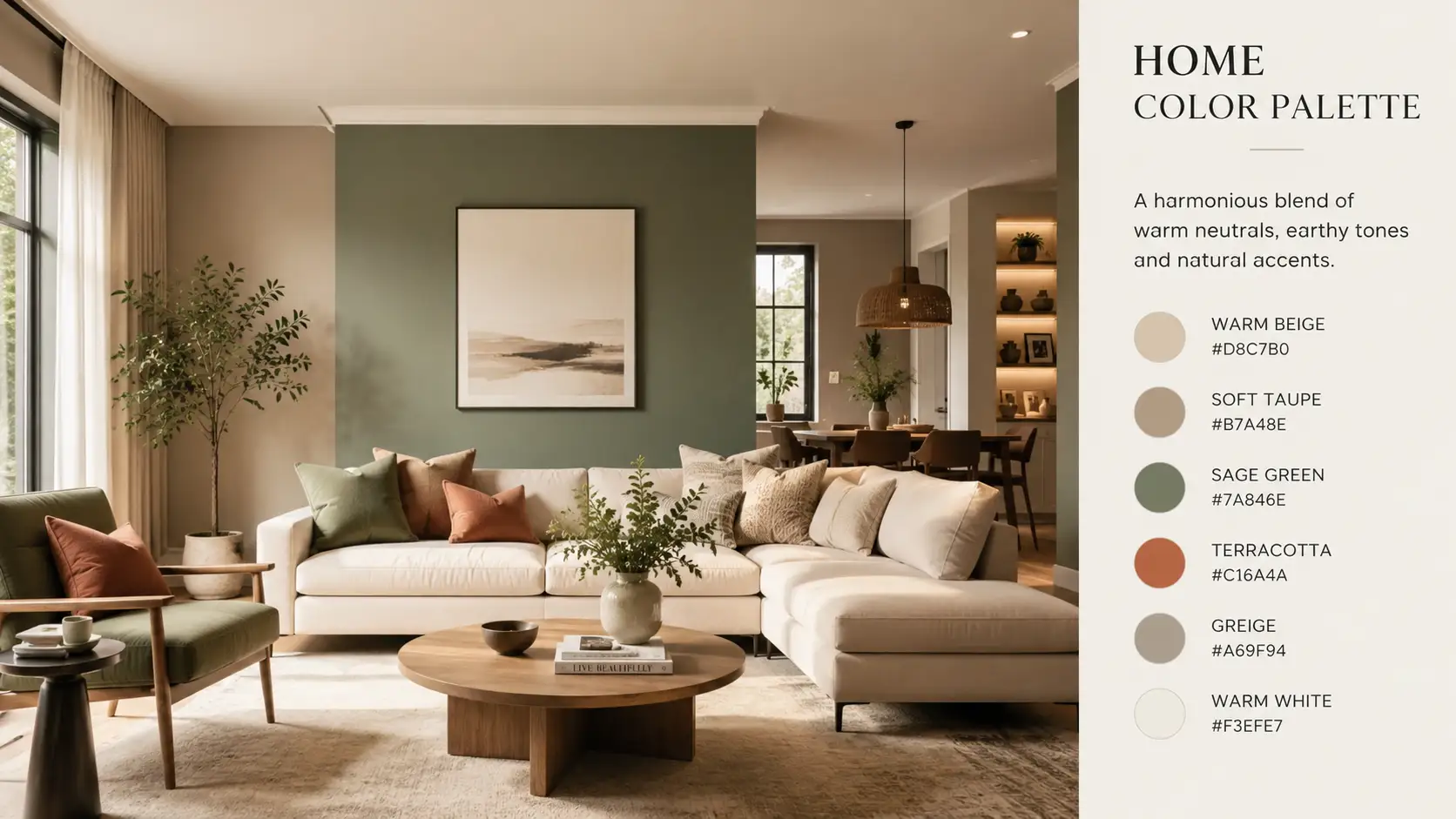
Neutral tones work best because they connect contrasting materials naturally. Shades like beige, cream, white, taupe, charcoal, and soft brown create visual continuity between rustic wood and modern metal or glass. A carefully planned neutral interior palette also helps rooms feel calmer and more cohesive.
Warm neutrals generally work better than very cool shades because they preserve the inviting atmosphere associated with rustic home design. However, adding controlled black accents helps maintain modern sharpness.
Natural colour layering also improves depth. For example, combining soft ivory walls with walnut wood furniture and matte black lighting creates contrast without chaos. These earthy colour tones help interiors feel grounded and welcoming.
Use natural materials strategically
Rustic interiors depend heavily on organic textures and raw finishes. Modern spaces, meanwhile, often feature smooth and polished surfaces. Mixing these materials carefully creates visual richness.
Wood
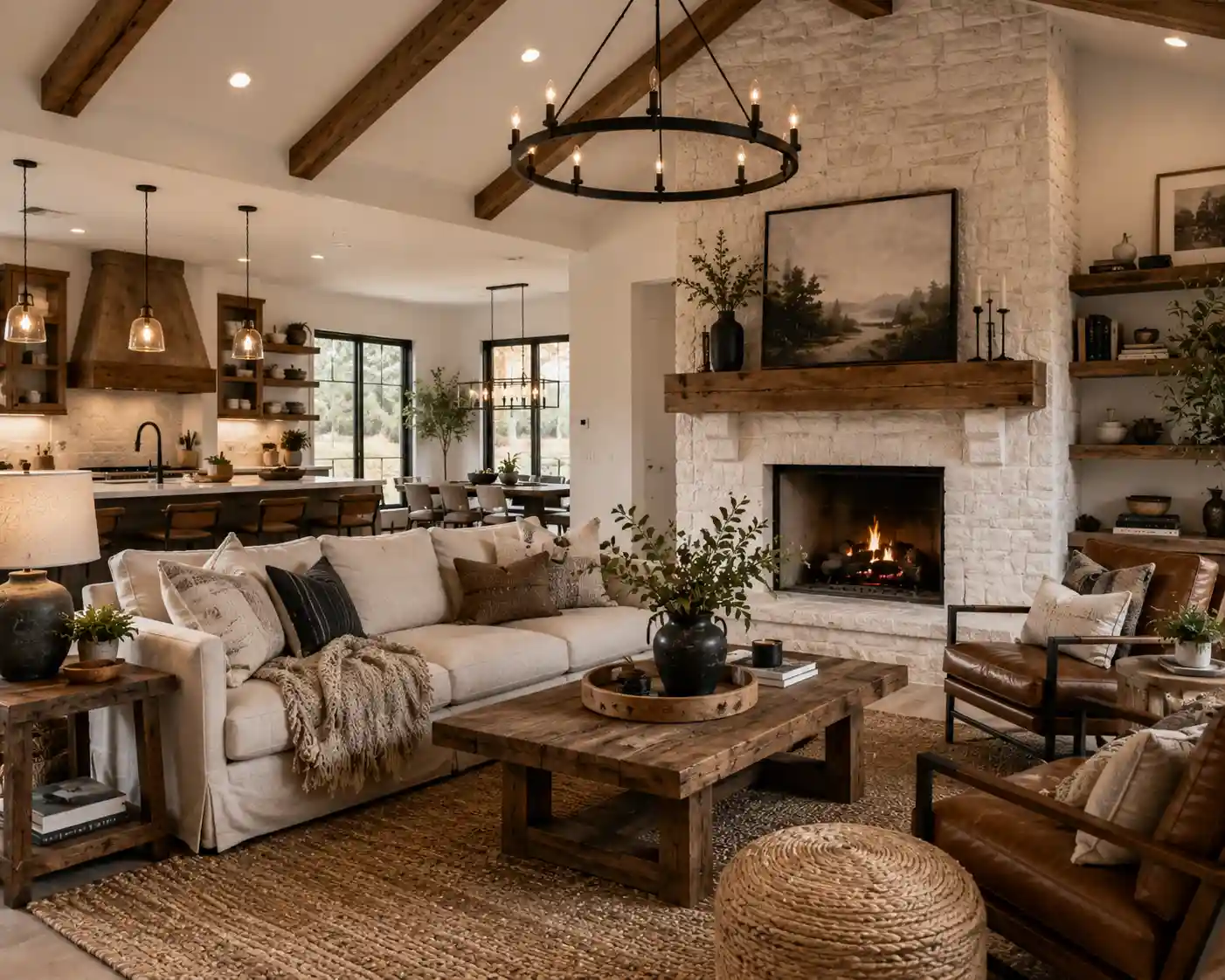
Wood is usually the defining material in earthy home decor style. Reclaimed wood tables, oak flooring, exposed ceiling beams, or walnut shelves instantly add warmth.
Avoid overusing distressed wood everywhere because excessive texture can make rooms feel heavy. One or two major wooden statement pieces usually create enough rustic character. Many designers recommend reclaimed wood furniture because it adds authenticity without overwhelming modern spaces.
Stone
Natural stone works beautifully in fireplaces, kitchen backsplashes, and accent walls. Its irregular texture balances the clean geometry found in modern interiors.
Metal
Modern interiors often use steel, black iron, or brushed brass. These materials create contrast against softer rustic textures.
Linen and cotton
Natural fabrics soften interiors while maintaining simplicity. Neutral linen curtains or cotton upholstery help rooms feel relaxed instead of formal. These textured fabrics also improve warmth without adding visual clutter.
Combining these elements thoughtfully helps modern farmhouse style feel balanced rather than overly themed. Organic materials usually create the strongest connection between rustic and contemporary interiors.
Balance furniture shapes carefully
Furniture often determines whether mixed interiors feel intentional or accidental.
Rustic furniture tends to feel heavier and more textured. Modern furniture usually appears sleek with cleaner silhouettes. Combining both requires proportional balance.
For example, a thick wooden dining table pairs beautifully with minimalist modern chairs. Similarly, a contemporary sofa works well alongside a reclaimed wood coffee table. Many homeowners searching for ways to combine wood and modern furniture naturally often succeed by balancing visual weight carefully.
Avoid filling rooms entirely with oversized rustic furniture because it can overpower modern architectural elements. Likewise, excessive modern furniture may remove warmth completely.
Successful modern rustic decor relies on visual breathing space where each furniture piece complements rather than competes with surrounding elements. This approach is especially important in functional living spaces where comfort matters as much as style.
Lighting changes everything
Lighting influences mood more than many people realise. Poor lighting can make mixed interiors appear disconnected.
Warm lighting generally supports rustic textures better than bright white lighting. Soft ambient light enhances wood grains, woven materials, and stone surfaces naturally.
Modern pendant lights with matte black finishes often work beautifully in rustic kitchens or dining spaces. Wall sconces combining metal and glass also create excellent transitional lighting.
Natural daylight matters too. Large windows and open layouts help rustic textures feel lighter and more contemporary. Layered lighting techniques also improve atmosphere by combining ceiling fixtures, lamps, and wall lights for greater flexibility.
Good lighting is especially important when creating rustic living room ideas because living spaces need both comfort and functionality.
Avoid overcrowding decorative elements
One common mistake in mixed interiors is over decorating. Rustic décor often includes baskets, vintage objects, layered textiles, and handmade accessories. Modern interiors usually favour restraint.
Combining both styles requires editing carefully. Decorative pieces should feel intentional instead of excessive.
For example, a single vintage vase on a sleek console table often looks more elegant than multiple decorative objects crowded together. Similarly, one textured woven rug can add warmth without overwhelming the room.
Minimal styling allows important materials and textures to stand out naturally. This principle is central to updated farmhouse aesthetic because it prevents interiors from feeling cluttered or outdated. Many homeowners now prefer warm minimalist décor because it feels calming yet visually interesting.
Mixing textures creates depth
Texture is often more important than colour when blending design styles successfully.
Rustic interiors naturally include rough surfaces like weathered wood, woven baskets, and natural fibres. Modern interiors introduce smooth finishes such as polished concrete, glass, or metal.
Combining contrasting textures creates dimension and visual interest. A smooth leather chair beside a chunky knitted throw instantly creates balance.
Layered textures also make interiors feel more comfortable and realistic. Perfectly flat surfaces can appear sterile, while too many rough textures may feel chaotic.
Interior designers often use tactile contrast as a key strategy when creating balanced rustic living room tips. Natural wood textures combined with softer textiles usually create the most inviting results.
Open spaces support visual harmony
Modern interiors usually prioritise openness and functionality. Rustic interiors can sometimes feel visually dense due to layered materials and décor.
Maintaining open layouts prevents rustic textures from overwhelming a room. Leave enough negative space around furniture and decorative objects.
Rooms should feel breathable instead of crowded. Open shelving, simple layouts, and uncluttered pathways support this balance effectively.
Even smaller homes benefit from visual openness. Strategic furniture placement and lighter wall colours can make compact spaces feel larger while still preserving warmth. Open concept spaces especially help contemporary rustic interiors feel airy and balanced.
This balance between simplicity and comfort is one reason Modern farmhouse aesthetic continues growing in popularity.
Choosing the right flooring
Flooring affects the atmosphere of an entire room. Natural materials usually work best when combining modern and rustic elements.
Wide plank wooden flooring remains one of the most versatile choices because it complements nearly every variation of rustic home design. Medium toned woods often create the best balance because they neither darken rooms excessively nor feel too cold.
Stone flooring also works beautifully in kitchens and entryways. Layering textured rugs over neutral flooring softens modern architecture while adding warmth.
Avoid overly glossy floors because they can clash with rustic textures. Matte or lightly textured finishes usually appear more natural and balanced while supporting visual harmony across different rooms.
Kitchen design that feels warm and clean
Kitchens are one of the easiest places to combine contrasting styles successfully.
Modern cabinetry with clean lines pairs beautifully with rustic wooden shelves or stone countertops. Matte black fixtures create sharpness without looking overly industrial.
Natural wood stools, ceramic dishes, and woven pendant lights soften sleek kitchen surfaces naturally.
The key is avoiding excessive ornamentation. Simple cabinetry allows rustic materials to stand out without making the space feel visually busy.
Many homeowners now prefer this balanced approach because modern farmhouse style kitchens feel practical, welcoming, and timeless. These cosy modern interiors often combine simplicity with comfort more effectively than highly decorative kitchens.
Layering textiles without creating clutter
Textiles play a major role in making interiors feel comfortable. However, too many layers can quickly overwhelm mixed spaces.
Choose fabrics with subtle texture instead of loud patterns. Linen curtains, wool throws, cotton cushions, and woven rugs work especially well.
Limit colour variation to maintain harmony. Earth tones, muted greys, soft whites, and warm browns generally create the best results.
Textiles also improve acoustics by softening sound reflections inside modern spaces that contain harder surfaces like concrete or glass. Natural fibre décor pieces often provide warmth while preserving a clean and uncluttered appearance.
Careful layering helps rustic living room ideas feel cosy without losing visual simplicity.
The role of greenery in balanced interiors
Plants naturally bridge the gap between rustic and modern design styles.
Modern interiors benefit from the softness and organic shape plants provide. Rustic spaces become fresher and lighter when greenery is introduced thoughtfully.
Large leafy plants work well in open corners, while smaller herbs or ceramic planters suit kitchens and shelves.
Natural greenery also improves emotional comfort inside living spaces. According to studies from environmental psychology research, indoor plants may positively influence relaxation and perceived wellbeing.
Plants work especially well in Contemporary rustic style because they reinforce the connection between nature and contemporary living. They also complement mixed material décor beautifully without overwhelming rooms visually.
How to avoid common styling mistakes
Mixing design styles requires discipline. Without careful choices, interiors can quickly appear inconsistent.
Using too many wood tones
Different woods should complement rather than compete. Limit the number of major wood finishes inside one room.
Following trends too aggressively
Overly trendy rustic pieces may feel outdated quickly. Timeless materials usually create better long term results.
Ignoring proportion
Large rustic furniture inside small rooms can overwhelm the space visually.
Over decorating shelves
Open shelving looks best when styled minimally. Too many decorative objects create clutter.
Forgetting functionality
Beautiful interiors should still support everyday living comfortably.
Avoiding these mistakes helps maintain visual harmony while supporting practical comfort. Many minimalist rustic interiors succeed because they focus on restraint instead of excessive decoration.
Why emotional comfort matters in interior design
Homes influence mood more than many people realise. Comfortable interiors often support relaxation, focus, and emotional wellbeing.
Rustic materials create familiarity because they connect people to natural textures and traditional craftsmanship. Modern layouts improve efficiency and reduce visual stress.
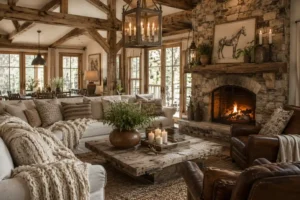
Research from environmental psychology studies suggests that organised and visually balanced environments may support lower stress levels and improved emotional comfort.
This emotional connection partly explains why country-style home design continues evolving instead of disappearing with changing trends. Comfortable home aesthetics often influence emotional wellbeing more strongly than dramatic decorative trends.
Creating a timeless look instead of a trendy one
Many interior trends become outdated quickly because they rely heavily on dramatic styling choices.
Balanced interiors age more gracefully. Neutral palettes, natural materials, and functional furniture remain appealing for decades because they prioritise comfort over novelty.
Timeless design also reduces unnecessary spending because homeowners feel less pressure to redecorate constantly.
This practical approach supports sustainable decorating habits and more intentional purchasing decisions. Timeless interior styling usually focuses on durability, simplicity, and flexibility instead of short term trends.
Many experts believe the lasting popularity of transitional farmhouse style comes from its adaptability rather than temporary trend appeal.
Small space solutions for mixed interiors
Apartments and compact homes can still successfully combine rustic and modern elements.
Lighter colours help small spaces feel open. Multifunctional furniture improves practicality without overcrowding rooms.
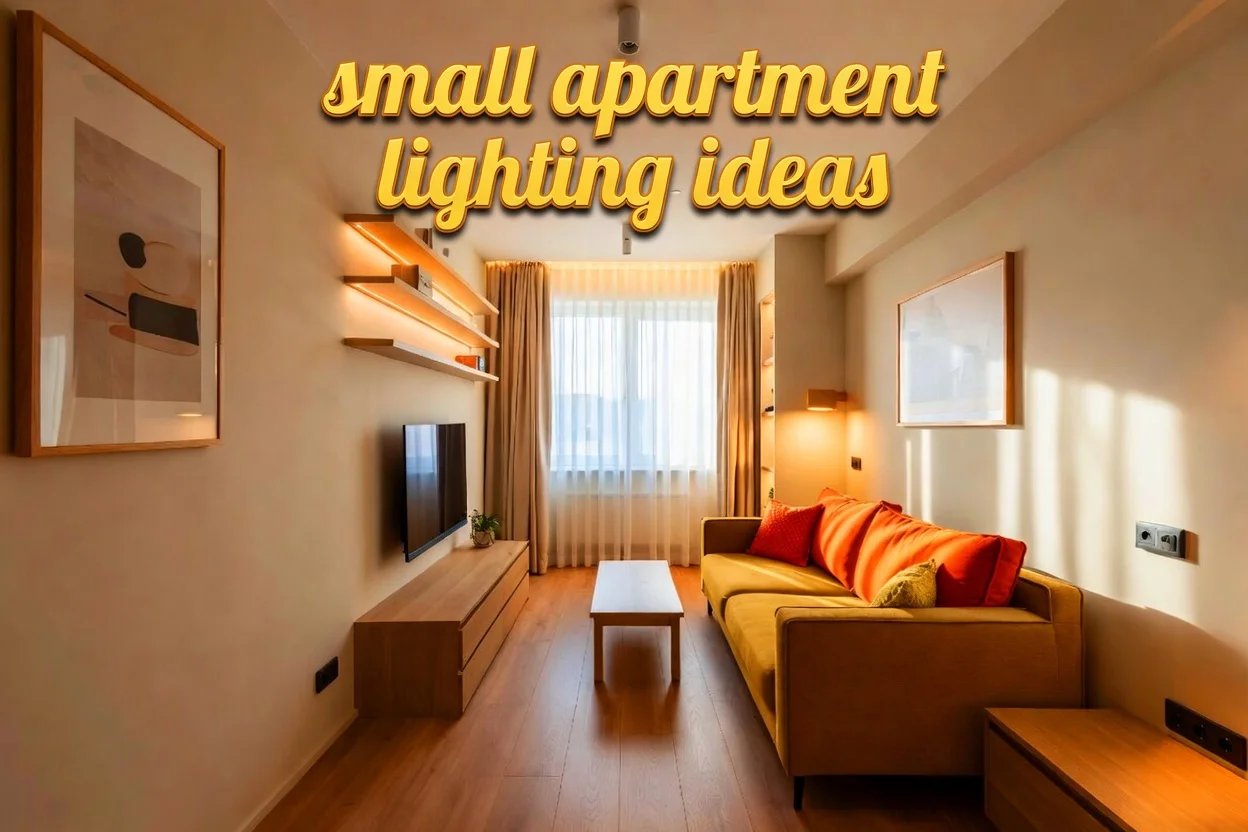
Mirrors reflect light and visually expand interiors. Floating shelves preserve floor space while displaying rustic textures elegantly.
Compact rooms benefit from simplicity. One rustic statement piece often creates stronger impact than multiple smaller decorative items.
Even limited spaces can support beautiful urban rustic interior when layouts remain organised and visually balanced. Balanced home styling helps compact interiors feel intentional instead of overcrowded.
Conclusion
Successfully combining rustic warmth with modern simplicity depends on balance, restraint, and thoughtful material choices. Instead of treating the two styles as opposites, homeowners should view them as complementary design approaches that improve each other naturally. Clean lines prevent rustic interiors from feeling heavy, while organic textures soften modern spaces that might otherwise appear cold.
The most successful interiors focus on comfort, functionality, and timeless appeal rather than chasing temporary trends. From layered textures and neutral palettes to carefully chosen furniture and lighting, every detail contributes to harmony inside a home.
Also Read: Cozy bedroom lighting ideas that instantly create a warm and relaxing retreat
Modern rustic decor continues growing in popularity because it reflects how people genuinely want to live today. Comfortable yet refined spaces support both emotional warmth and practical everyday living. Whether you prefer subtle rustic accents or bold natural textures, balancing modern design with traditional character can create interiors that feel stylish, welcoming, and deeply personal.
Sources
- National Endowment for the Arts
- Environmental psychology research references from American Psychological Association resources
- General sustainable and timeless interior principles referenced from educational architectural resources by Smithsonian Design Museum educational materials
FAQs
How can rustic home design work in small apartments?
Small apartments can still embrace traditional rustic architecture without feeling cramped or overly heavy. The key is using lighter wood tones, simple furniture shapes, and minimal decorative layering. Compact spaces benefit from open shelving, multifunctional furniture, and neutral wall colours that reflect natural light effectively. Instead of adding multiple rustic elements at once, focus on one statement feature such as a reclaimed wood coffee table or textured rug. This approach keeps interiors visually open while still preserving warmth and character inside smaller living environments.
Why does contemporary country home style remain popular for family homes?
Many homeowners appreciate urban farmhouse aesthetic because it balances comfort with practicality. Families often prefer interiors that feel welcoming rather than overly formal, especially in shared spaces like kitchens and living rooms. Natural textures, durable materials, and open layouts support everyday activities while maintaining visual appeal. This design approach also adapts easily over time because homeowners can refresh accessories and textiles without replacing major furniture pieces. Its flexibility and emotional warmth continue attracting people who want timeless interiors instead of short lived design trends.
What materials work best for rustic living room ideas?
Natural materials usually create the strongest results when planning rustic living room inspiration. Wood, stone, linen, cotton, wool, and leather all add texture and warmth without making spaces feel artificial. Combining rough and smooth finishes helps maintain visual balance throughout the room. For example, a sleek sofa paired with a wooden coffee table and woven rug creates depth naturally. Layering textures carefully is important because too many heavy materials can overwhelm a living room and reduce the clean simplicity associated with modern interiors.
How does vintage rustic home style affect emotional comfort?
Many people feel emotionally relaxed in spaces inspired by handmade rustic interiors because natural textures often create familiarity and warmth. Wood grains, woven fabrics, and earthy colours can make interiors feel calmer and more inviting compared to overly polished environments. Research connected to environmental psychology suggests that organised and visually comforting spaces may positively influence mood and stress levels. Rustic inspired interiors also encourage slower and more intentional living habits, which many homeowners appreciate in increasingly fast paced modern lifestyles.
Can modern farmhouse style work without exposed wood beams?
Exposed wood beams are popular, but they are not essential for sleek farmhouse style. Many homes successfully achieve this aesthetic through smaller details such as textured furniture, natural fabrics, matte lighting fixtures, and neutral colour palettes. Reclaimed wood shelves, rustic dining tables, and woven accessories can create warmth without major architectural changes. This flexibility makes the style accessible even for apartments or newer homes that lack traditional farmhouse features. The overall atmosphere matters more than any single decorative element.
What lighting works best for cozy rustic living room inspiration?
Warm layered lighting usually creates the best atmosphere for natural rustic living room inspiration. Soft ambient light highlights natural textures and prevents rooms from feeling cold or overly industrial. Many homeowners combine floor lamps, pendant lights, table lamps, and wall sconces to create balanced illumination throughout the space. Matte black fixtures, aged brass finishes, and woven lamp shades often work particularly well. Natural daylight is equally important because it helps rustic textures feel lighter, fresher, and more connected to modern open interiors.
Why do balanced interiors age better over time?
Balanced interiors often remain visually appealing longer because they rely on timeless materials and functional layouts rather than dramatic trends. Neutral colours, natural textures, and simple furniture shapes rarely feel outdated quickly. Homes designed with balance also adapt more easily to changing preferences because decorative accents can be updated without major renovations. Many people now prioritise sustainable decorating decisions and long lasting quality over constantly replacing furniture or accessories. This practical mindset supports interiors that continue feeling comfortable and relevant for many years.