Decorative pillows are one of the simplest ways to refresh any space without committing to a full redesign. With the rise of personalised interiors and budget friendly styling, DIY decorative pillows have become a popular choice for homeowners and renters alike. They allow you to customise colours, textures, and sizes while adding a personal touch that store bought options often lack.
If you are exploring how to create custom pillow covers at home or simply looking for a step by step pillow making guide for beginners, this article brings together practical instructions and creative direction in one place. These projects are part of a growing interest in creative DIY projects that blend functionality with personal expression.
Whether you are exploring how to craft decorative pillows at home for the first time or searching for fresh unique pillow design ideas, this guide will walk you through every step. From choosing the right fabric to mastering stitching techniques, you will gain practical knowledge rooted in sewing basics and easy to follow processes.
Why making your own pillows is worth it
Creating your own pillows is not just about saving money. It is about control, creativity, and sustainability. According to insights shared by the National Endowment for the Arts, engaging in hands on activities like textile crafts can improve cognitive flexibility and problem solving skills. This makes DIY projects both productive and mentally rewarding.
When you explore no sew throw pillow ideas, you also reduce reliance on mass produced items. This supports sustainable crafting practices that align with recommendations from the United Nations Environment Programme, which promotes reuse and waste reduction in everyday consumption.
Another benefit is the ability to personalise every detail. You can design custom cushion covers that perfectly match your furniture, colour palette, and mood. This level of control makes your living space feel more intentional and aligned with modern interior styling trends.
Essential materials you need
Before starting, gather all necessary materials. Preparation ensures a smoother process and better results.
Fabric selection
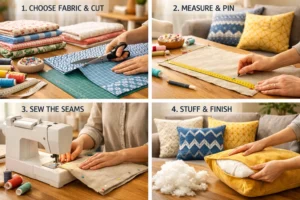
Choosing the right fabric is crucial. Cotton, linen, and canvas are beginner friendly and durable. These materials are widely recommended in fabric selection tips because they are easy to cut and sew. Heavier fabrics like velvet or denim create bold looks but may require more advanced sewing techniques.
Filling options
Selecting the right pillow stuffing materials affects both comfort and durability. Polyester fibre fill is lightweight and easy to maintain, while feather inserts provide a plush feel. Foam inserts are best suited for structured designs. According to the American Cleaning Institute, synthetic fills are easier to clean and maintain compared to natural alternatives.
Basic tools
You will need scissors, measuring tape, pins, thread, and a sewing machine or needle. Tools like rulers and fabric chalk help improve accuracy when working on fabric cutting techniques. These tools are especially important for beginner sewing projects where precision makes a big difference.
Step by step process for beginners
This section acts as a step by step pillow making guide for beginners, breaking down the process into manageable steps.
Measuring and cutting
Start by measuring your insert or desired pillow size. Add an extra inch on all sides for seam allowance. Accurate measurement is essential when learning how to make decorative pillows at home because uneven cuts can lead to misaligned edges. Using proper fabric cutting techniques ensures consistency and a clean finish.
Stitching techniques
Place fabric pieces with the right sides facing each other. Sew along three edges, leaving one side open. Turn the fabric inside out and insert the filling. Close the final edge using a hidden stitch or zipper. Practising basic sewing techniques helps improve both speed and quality over time.
Finishing touches
Iron the pillow for a polished look. Trim loose threads and ensure seams are even. Small details like these elevate the final product and give it a professional appearance.
Creative designs and handmade pillow ideas
This is where your creativity shines. There are countless handmade pillow ideas that can suit different tastes and themes.
Textured pillows
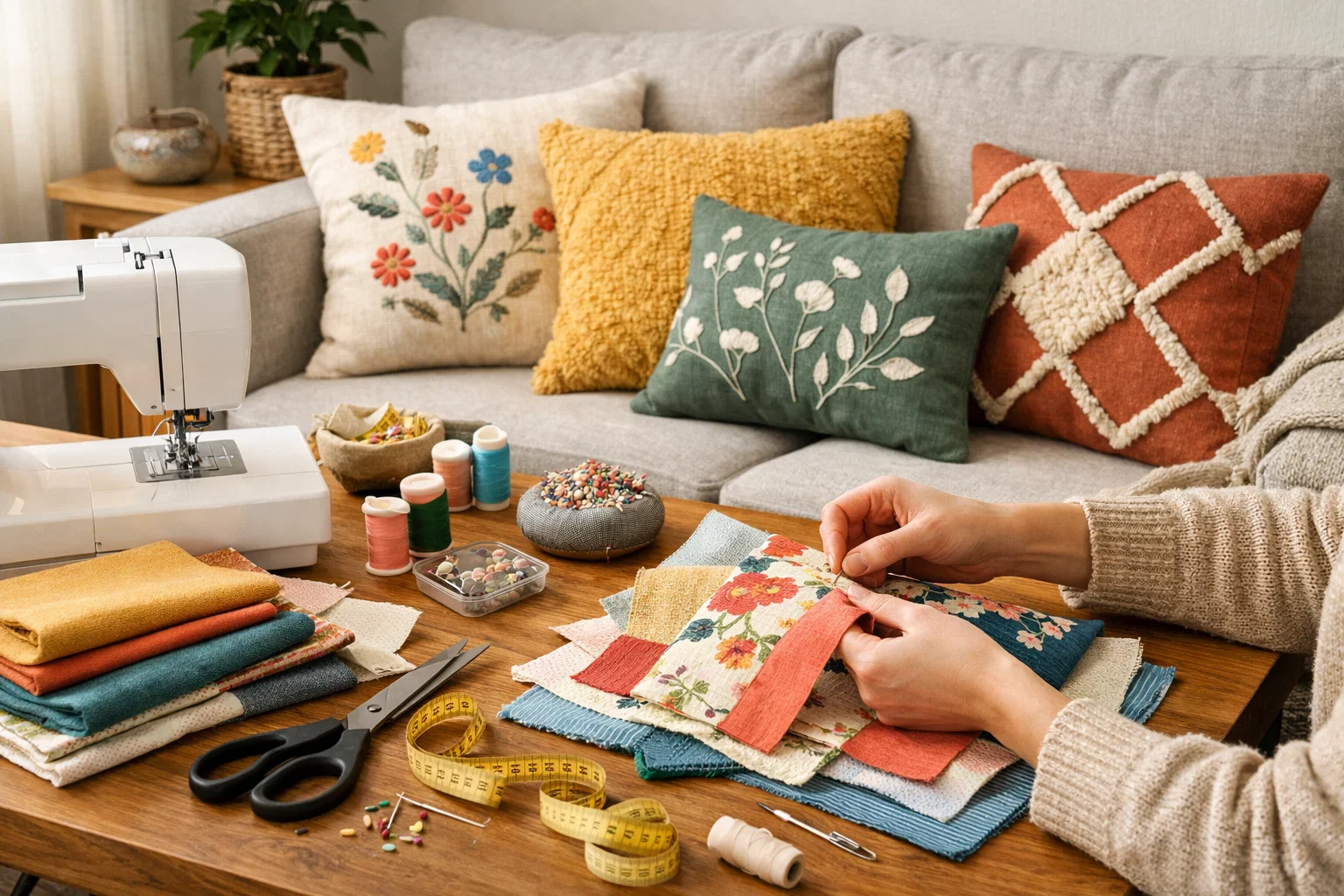
Add layers using embroidery, tufting, or fabric patches. These details create depth and bring visual interest to your soft furnishings. Textured pillows are especially effective in neutral spaces where subtle variation enhances the design.
Pattern mixing
Combine stripes, florals, and geometric prints carefully. This approach draws from interior styling principles where balance is key. Limiting patterns to two or three types helps avoid clutter and keeps the design cohesive.
Seasonal themes
Switch designs based on seasons. Light fabrics and bright colours suit summer, while darker tones and heavier fabrics are ideal for winter. This approach keeps your home décor ideas fresh throughout the year.
Personalised designs
Use initials, quotes, or custom prints. Personalisation adds emotional value and creates meaningful decorative accents that reflect your personality.
Easy DIY throw pillows for quick results
If you are short on time, easy DIY throw pillows offer a practical solution without compromising style.
No sew pillow method
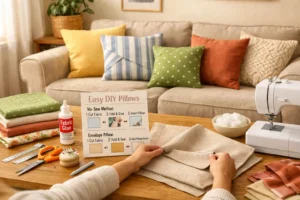
Use fabric glue or adhesive tape instead of stitching. This method is perfect for beginners and works well for quick updates. It is also a great introduction to upcycled home décor when using repurposed materials.
Envelope style pillow covers
This design uses overlapping fabric at the back, eliminating the need for zippers or buttons. It is one of the simplest ways to create removable covers and is widely used in beginner sewing projects.
Upcycled fabric pillows
Repurpose old clothes, curtains, or bedsheets. According to the Environmental Protection Agency, reusing textiles helps reduce landfill waste and supports sustainable crafting practices.
These quick techniques make quick and easy pillow DIY projects accessible to almost anyone, regardless of experience level.
Choosing colours and patterns wisely
Colour selection plays a major role in defining the mood of a room. Neutral shades create calm and balanced spaces, while bold tones add energy and personality.
When experimenting with how to make decorative pillows at home, consider how your designs fit within your overall home styling tips. Matching or complementing existing décor ensures a cohesive look.
Patterns should enhance rather than overpower the space. Mixing prints with solid colours creates harmony and visual balance, which is essential in effective interior styling.
Common mistakes to avoid
Even simple projects can go wrong without proper planning.
Ignoring measurements
Incorrect sizing leads to poorly fitted covers. Always double check dimensions before cutting fabric.
Using unsuitable fabric
Some fabrics stretch or fray easily, making them difficult to handle. Beginners should stick to stable materials recommended in fabric selection tips.
Overstuffing or understuffing
Balanced filling ensures comfort and durability. Proper use of pillow stuffing materials helps maintain shape over time.
Skipping finishing details
Loose threads and uneven seams reduce the overall quality. Paying attention to finishing details improves the final outcome significantly.
Maintenance and care tips
Proper care extends the life of your pillows.
Wash covers regularly based on fabric type. Cotton and polyester blends are usually machine washable, while delicate fabrics may require hand washing. The Centers for Disease Control and Prevention highlights the importance of cleaning soft furnishings to maintain hygiene and reduce allergens.
Rotate pillows occasionally to prevent uneven wear. Store seasonal designs in a clean, dry space to avoid damage. These simple habits help preserve your budget home décor investments.
DIY decorative pillows as a home styling strategy
Incorporating DIY decorative pillows into your home is more than just a creative hobby. It is a practical approach to enhancing visual appeal and comfort.
Research in design education shows that soft furnishings play a key role in shaping the atmosphere of a space. They act as both functional elements and aesthetic highlights.
Using handmade decorative pillows, you can experiment with trends without making permanent changes. This flexibility allows you to refresh your space frequently while maintaining consistency in your interior styling approach.
Budget friendly tips for better results
Creating stylish pillows does not require expensive materials.
Buy fabric remnants or discounted materials whenever possible. Many stores offer leftover pieces at reduced prices.
Also Read: Decorating with Command Strips: smart ways to style your space without wall damage
Reuse old cushions instead of buying new inserts. This approach supports sustainable crafting while reducing costs.
Plan your designs in advance to minimise waste. Careful planning improves efficiency and ensures better results.
These strategies make simple cushion DIY ideas accessible even for those working within tight budgets.
Conclusion
Making your own pillows is a rewarding process that combines creativity, practicality, and sustainability. With the right materials, clear steps, and a bit of patience, anyone can create beautiful and functional home décor pieces.
Whether you are experimenting with decorative pillow craft ideas or mastering DIY decorative pillow making at home, the possibilities are endless. The true value of DIY decorative pillows lies in their ability to reflect your personal style while enhancing your living space in a meaningful way.
Sources
- National Endowment for the Arts
- United Nations Environment Programme
- American Cleaning Institute
- Environmental Protection Agency
- Centers for Disease Control and Prevention
FAQs
How can beginners start with handmade pillow ideas without sewing experience?
Starting with creative cushion ideas does not require advanced stitching skills. Beginners can explore simple no sew techniques using fabric glue or iron on adhesive, which eliminates the need for a sewing machine. Envelope style covers are another practical option that requires minimal stitching and offers flexibility in design. When learning steps to make decorative pillows yourself, it helps to begin with basic shapes and durable fabrics like cotton. Over time, as confidence builds, you can experiment with textures and patterns. These beginner friendly approaches make the entire process approachable and enjoyable.
What fabrics work best for easy DIY throw pillows in daily use?
Choosing the right fabric is essential when creating easy decorative pillow projects for everyday use. Cotton and linen are among the most recommended options because they are breathable, durable, and easy to clean. Polyester blends are also suitable since they resist wrinkles and stains, making them practical for homes with frequent use. When exploring guide to making decorative pillows at home, selecting fabrics that balance comfort and durability ensures long lasting results. Additionally, experimenting with different textures can enhance your overall design, especially when working with creative handmade cushion designs for varied home settings.
Are there eco friendly ways to explore how to make decorative pillows at home?
Yes, there are several sustainable ways to approach making decorative pillows from scratch. One of the most effective methods is using recycled materials such as old clothes, curtains, or bedsheets. This not only reduces waste but also supports environmentally conscious crafting practices. Many pillow making ideas at home now focus on repurposing fabrics to create unique designs. You can also choose natural fibres and eco friendly fillings for better sustainability. Combining these approaches with beginner friendly throw pillow crafts techniques allows you to create stylish and responsible home décor without contributing to excess waste.
How do artistic pillow concepts improve home aesthetics?
Incorporating personalised pillow ideas into your décor enhances visual appeal by adding layers of texture, colour, and personality. These pillows act as decorative elements that tie different parts of a room together. When paired with fast DIY pillow designs, they provide flexibility to update your space without major changes. Exploring home method for decorative pillow making also allows you to match your designs with existing furniture and colour schemes. This level of customisation helps create a cohesive and inviting atmosphere that reflects your personal style and makes your living space feel more curated.
What are the easiest designs for quick hassle free DIY pillows?
The simplest designs for beginner friendly ways to make throw pillows include envelope covers and no sew styles. Envelope covers use overlapping fabric at the back, removing the need for zippers or buttons. No sew options rely on fabric glue, making them perfect for beginners. These methods are often recommended when learning create your own decorative cushions at home because they reduce complexity while still delivering neat results. You can also experiment with basic easy handcrafted pillow ideas for beginners like patchwork or printed fabrics to add visual interest without increasing difficulty. These quick solutions are ideal for fast home updates.
How often should decorative pillows be cleaned and maintained?
Maintaining decorative pillows is important for both hygiene and durability. Regular cleaning every few weeks is recommended, especially for frequently used items like easy handmade throw pillows. Fabric type plays a key role in determining cleaning methods, so always follow care instructions. When learning how to sew decorative pillows at home, choosing washable materials can simplify maintenance. Rotating pillows and fluffing them regularly also helps retain shape. Incorporating durable designs from creative DIY pillow ideas for home décorensures your pillows stay fresh and visually appealing for a longer period without frequent replacements.
Can step by step guide to making decorative pillows at home help save money?
Yes, learning how to make custom decorative pillows can significantly reduce expenses compared to buying ready made options. By using leftover fabrics or repurposing old materials, you can create stylish designs at a fraction of the cost. Many homemade pillow designs focus on budget friendly approaches that maximise available resources. Combining these ideas with quick DIY cushion pillows methods further reduces the need for specialised tools or materials. Over time, this approach not only saves money but also allows you to refresh your home décor regularly without overspending.