The entryway is the first impression of your home and often the most cluttered. Shoes pile up, keys go missing, and bags land wherever there is space. In small homes, this problem becomes more noticeable because every inch matters. That is where smart entryway organization ideas can make a real difference.
A well-planned entryway organization does not just look good. It improves daily routines, reduces stress, and helps maintain cleanliness. According to guidance from the Centers for Disease Control and Prevention, organised environments can support better mental clarity and reduce everyday stress triggers. This makes your entryway more than just a passage. It becomes a functional system that supports your lifestyle and encourages clutter free living.
Why entryway organisation matters in small homes
Small homes demand smarter design decisions. Entryways act as transition zones between outside and inside. When unmanaged, they become clutter hotspots, especially without proper hallway organisation.
Research from the National Institute of Environmental Health Sciences highlights how clutter can impact focus and stress levels. A crowded entryway can subconsciously affect how you start and end your day. It creates unnecessary friction in routines and often leads to misplaced essentials.
An organised entryway improves
- daily efficiency
- cleanliness and hygiene
- visual calm and comfort
It also helps reduce dirt and allergens entering your living space, especially when you create designated storage for shoes and outerwear using smart storage hacks. Over time, this contributes to a healthier and more functional home environment.
Planning your entryway before organising
Before buying storage items, take a step back. Assess your space, lifestyle, and daily habits. Effective entryway organization for small spaces always begins with understanding how the space is used.
Measure and map the area
Take note of wall height, floor space, and door clearance. Even narrow walls can support vertical storage solutions and wall mounted storage. Mapping your space also helps avoid overcrowding and ensures each element has breathing room.
Identify daily essentials
List what you actually use every day. Keys, bags, shoes, and jackets usually top the list. By focusing only on essentials, you reduce unnecessary storage and keep your system efficient.
Remove unnecessary items
Decluttering first makes any storage solution more effective. Studies referenced by Princeton University Neuroscience Institute show that excess visual stimuli can reduce productivity and focus. This is the first step toward decluttering entryway zones effectively and maintaining mental clarity.
Planning ensures that every item you add has a purpose and supports compact home organisation.
17 practical entryway organization ideas for small homes
1. Use vertical wall storage
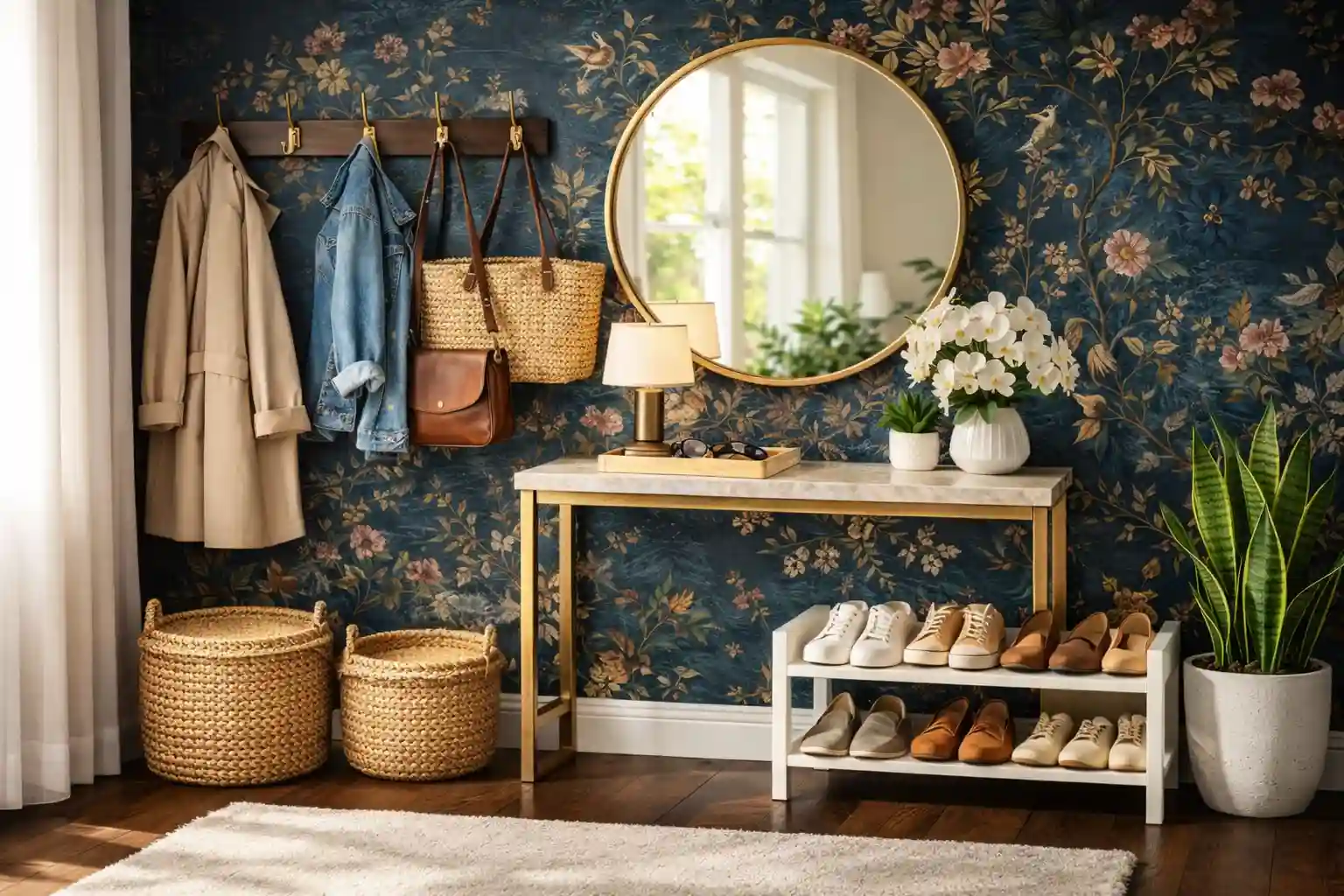
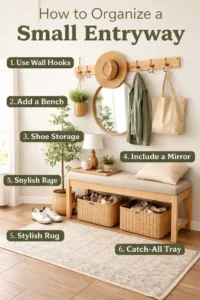
Walls are your biggest asset in small entryways. Install hooks, rails, or pegboards to store bags, hats, and coats. Vertical storage reduces floor clutter and keeps items accessible while enhancing overall functionality.
2. Add a slim console or shelf
A narrow console table or floating shelf provides a landing spot for keys and small items without taking much space. This is one of the most effective small entryway storage solutions for tight layouts and aligns with practical small space storage tips.
3. Install multi purpose furniture
Benches with hidden storage or shoe compartments combine seating and organisation in one piece. These are ideal for managing footwear clutter and represent smart space saving furniture choices.
4. Create a drop zone system
Designate a specific area for everyday items like keys, wallets, and sunglasses. This simple habit supports how to organize a small entryway efficiently and builds organised home habits that last long term.
5. Use labelled baskets and bins
Grouping items into labelled containers keeps things organised and easy to find. It also prevents items from spreading across the space and helps maintain order effortlessly.
6. Add over the door organisers
Doors offer hidden storage opportunities. Hanging organisers can hold shoes, accessories, or cleaning supplies and are great door storage solutions in compact homes.
7. Install a key holder or magnetic strip
A fixed spot for keys prevents daily frustration. Magnetic strips are compact and modern alternatives that fit well into minimalist entryway design.
8. Use mirrors to enhance space
Mirrors reflect light and create an illusion of a larger space. They also support functional home design while serving a practical purpose before heading out.
9. Create zones for each family member
Assign hooks or baskets for each person. This reduces mix ups and keeps the entryway structured, especially in busy households.
10. Opt for stackable shoe racks
Stackable racks maximise vertical space and are ideal small entryway storage solutions for growing households, especially when planning efficient shoe storage ideas.
11. Incorporate hidden storage
Storage ottomans or cabinets hide clutter while maintaining a clean look, aligning well with minimalist entryway design and organised home habits.
12. Use wall mounted mail organisers
Sorting mail at the entry prevents paper clutter from spreading into the home and keeps important documents within reach.
13. Add a small rug or mat
A durable mat traps dirt and defines the entry zone. According to the Environmental Protection Agency, entry mats can significantly reduce dirt and pollutants entering homes, improving indoor air quality.
14. Install floating cabinets
Floating units provide storage without occupying floor space, making them ideal for entryway organization for small spaces and enhancing entryway furniture ideas.
15. Use clear containers for visibility
Transparent bins make it easy to locate items quickly, reducing time spent searching and improving efficiency.
16. Keep seasonal rotation
Store off season items elsewhere. This keeps your entryway relevant and uncluttered while supporting clutter free living.
17. Maintain a daily reset routine
Spend two minutes each day returning items to their place. This habit ensures your entryway organization ideas continue to work long term and prevents clutter from building up again.
Hallway organization ideas for long term efficiency
When thinking about sustainability, it helps to focus on systems that evolve with your needs. The best storage ideas for tiny home entryways often include flexible furniture, modular storage, and habits that adapt over time. Instead of fixed setups, choose solutions that can be rearranged easily as your lifestyle changes.
This is also where smart ways to declutter a small home entrance become important. Regular reassessment of what you actually use ensures your entryway does not slowly return to a cluttered state. Long term efficiency depends more on habits than on products.
How to organise efficiently without overspending
You do not need expensive furniture to achieve effective organisation. Many solutions use affordable or existing items creatively.
Repurpose household items like jars, baskets, or old shelves. Focus on functionality rather than aesthetics first. This practical approach aligns with how to organize a small entryway while staying within budget and following practical home organisation tips.
Studies from Harvard University suggest that functional environments improve decision making and reduce mental fatigue. A simple, organised entryway contributes to smoother daily routines and better time management.
Maintaining your organised entryway
Organisation is not a one time task. It requires small, consistent habits that reinforce the system you create.
- Return items immediately after use
- Review and declutter weekly
- Adjust storage as needs change
A flexible system ensures that your entryway storage ideas adapt over time rather than becoming ineffective. Over time, these habits become automatic and reduce the need for major reorganising efforts.
Common mistakes to avoid
Overcrowding the space
Adding too many storage items defeats the purpose. Keep only what you need and focus on usability rather than quantity.
Ignoring vertical space
Many people focus only on the floor. Walls provide untapped storage potential and should always be considered in small entryways.
Lack of designated zones
Without clear zones, clutter quickly returns. Structure is essential for entryway storage for small spaces and helps maintain order.
Choosing style over function
Also Read: DIY decorative pillows: a complete step by step guide to creating stylish home accents
Aesthetic pieces that lack functionality create frustration. Balance both aspects to achieve long lasting results.
Conclusion
Creating an organised entryway in a small home is not about having more space. It is about using the space wisely. With the right entryway organization ideas, you can transform even the smallest entry into a clean, efficient, and welcoming area.
From vertical storage to daily habits, each strategy works together to simplify your routine. By applying these practical methods and maintaining consistency, your entryway can remain clutter free and functional throughout the year. A well organised entryway sets the tone for the rest of your home.
Sources
Centers for Disease Control and Prevention
National Institute of Environmental Health Sciences
Princeton University Neuroscience Institute
Environmental Protection Agency
Harvard University
FAQs
What are the most effective small entryway storage solutions for busy households
The most effective approach combines vertical storage, multi functional furniture, and clearly defined zones for everyday essentials. Hooks, floating shelves, and stackable shoe racks work together to maximise space without making the area feel crowded. Adding labelled baskets helps maintain structure, especially in households with multiple members. Over time, consistency in using these systems becomes more important than the setup itself, ensuring long term organisation and smoother daily routines.
How does entryway organization for small spaces improve daily routines
An organised entryway reduces the time spent searching for keys, shoes, and bags, which can significantly improve daily efficiency. It creates a structured environment where everything has a designated place, making transitions in and out of the home smoother. Additionally, it helps maintain cleanliness by containing dirt and clutter in one controlled zone, preventing it from spreading to other areas of the house.
What is the first step in how to organize a small entryway
The first step is always decluttering and removing items that are no longer needed or used regularly. This creates a clean starting point and helps you understand what storage solutions are actually required. Once you identify essential items, you can plan practical storage methods that fit your space and lifestyle, ensuring that the system remains sustainable and easy to maintain over time.
Are vertical storage systems better for compact entry areas
Vertical storage systems are highly effective for compact entryways because they make use of wall space instead of occupying valuable floor area. This approach keeps the entryway open and visually spacious while increasing storage capacity. Hooks, pegboards, and floating shelves are simple yet efficient ways to implement vertical storage, making them a preferred solution in small homes.
How can lighting and mirrors support compact entry design
Lighting and mirrors play a significant role in enhancing small entryways. Proper lighting improves visibility and functionality, especially during early mornings or late evenings. Mirrors reflect light and create the illusion of a larger space, making the entryway feel more open and inviting. They also serve a practical purpose by allowing quick appearance checks before leaving the house.
What are simple ways to maintain clutter free entry zones
Maintaining a clutter free entryway requires consistent habits such as returning items to their designated places immediately after use. Weekly reviews help identify unnecessary items that can be removed. Keeping only essential items in the entryway prevents overcrowding, while simple systems like baskets and hooks ensure that everything remains organised with minimal effort.
Can minimal design improve entryway functionality
Minimal design focuses on essential items and removes unnecessary distractions, making the entryway more functional and easier to maintain. By limiting the number of items and choosing practical storage solutions, you create a cleaner and more efficient space. This approach not only improves usability but also reduces the time and effort required to keep the area organised over the long term.