Photos turn plain walls into personal spaces filled with memories, warmth, and character. The challenge starts when you want to decorate without leaving holes, cracks, or chipped paint behind. This problem is especially common for renters, students, and anyone living in temporary spaces. Fortunately, modern decorating methods make damage free photo hanging easier than ever.
Today, people use removable adhesives, lightweight hanging systems, magnetic displays, and creative design tricks to showcase photos safely. Many renters now prefer temporary picture hanging solutions because they allow flexibility without harming painted surfaces. According to guidance from the National Park Service and conservation experts at the Library of Congress, preserving photographs properly also means avoiding methods that can damage both walls and prints over time. Choosing the right display technique protects your living space while extending the life of your photos.
Creative photo display ideas help personalize even the smallest rooms while keeping interiors flexible and functional.
Why people are choosing nail free photo displays
Interior design trends have shifted toward flexible and adaptable spaces. More people now move frequently for work, study, or lifestyle reasons. Because of this, permanent wall damage has become a major concern.
Many landlords restrict drilling into walls because holes may weaken drywall or require repainting later. This has increased interest in renter friendly photo wall ideas that combine convenience with style. Lightweight frames, removable adhesives, and reusable hanging systems allow people to redesign rooms without expensive repairs.
Another important reason involves wall materials. Some modern apartments use delicate drywall, wallpaper, or textured finishes that can crack easily under nail pressure. Removable hanging products reduce that risk while making redecorating simpler.
The growing popularity of minimalist and Scandinavian interiors also encourages temporary wall decor that can evolve with seasons, moods, or life changes instead of fixed wall arrangements.
Understanding the basics of safe photo displays
Before choosing a hanging method, it helps to understand how different wall surfaces react to adhesives and weight.
Painted drywall usually works well with removable strips and hooks when the surface is clean and dry. Textured walls may reduce adhesive strength because less surface area makes contact. Brick and concrete walls often require stronger removable mounting solutions designed for rough surfaces.
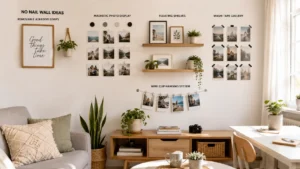
Weight matters too. Lightweight prints, posters, and photo paper can usually hang with adhesive tabs. Heavier framed artwork may need reinforced removable systems or ledge displays.
Humidity also affects performance. Bathrooms and kitchens create moisture that weakens some adhesives over time. Climate controlled rooms generally provide the safest environment for long term displays.
Conservation experts from the Smithsonian Institution recommend avoiding direct sunlight because ultraviolet exposure can fade photographs gradually. Even temporary displays benefit from proper placement away from strong sunlight and heat sources. Following basic photo preservation tips also helps maintain print quality for many years.
Creative grid walls using removable strips
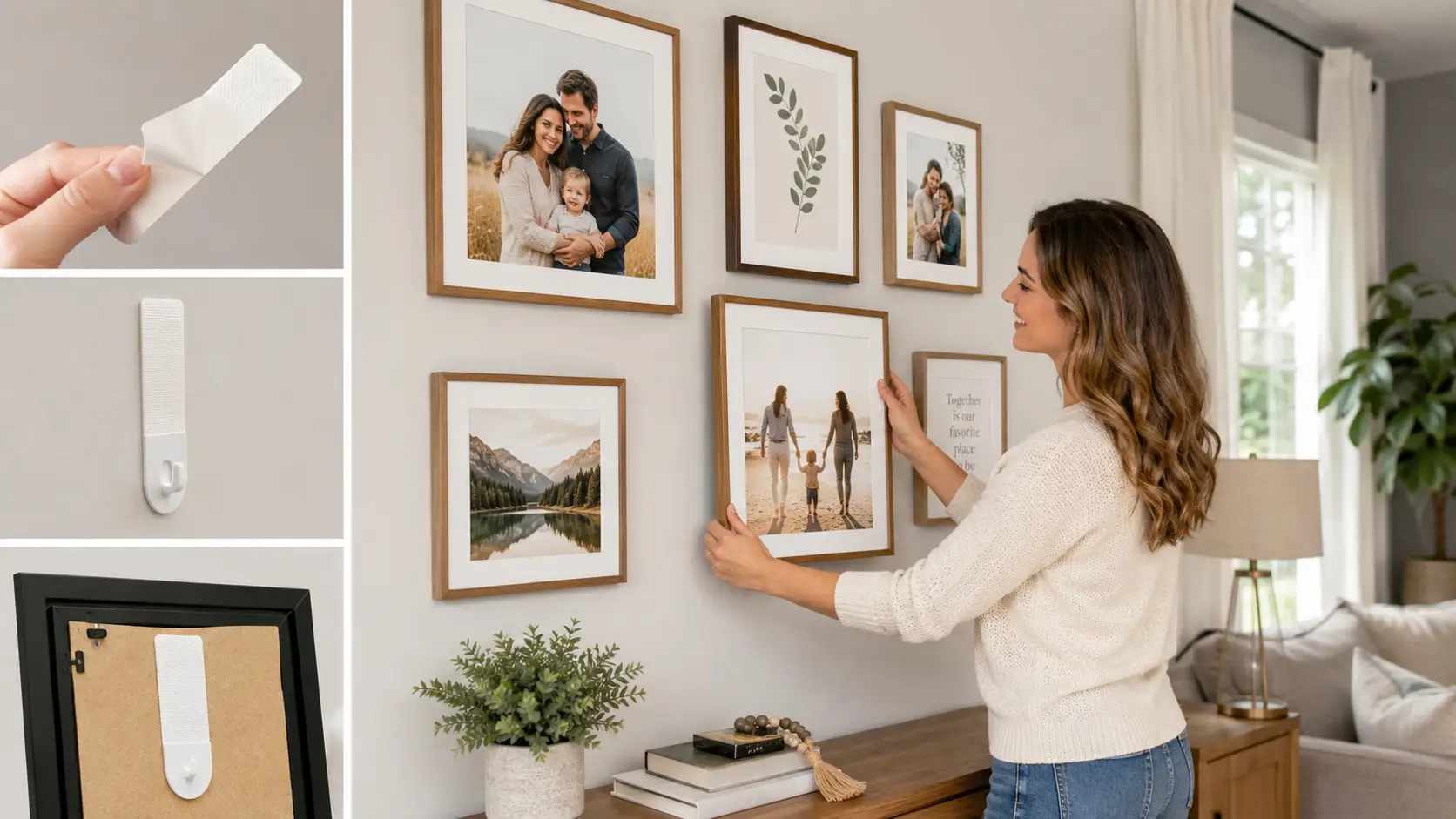
One of the simplest ways to create a polished gallery wall involves removable adhesive strips. These products attach directly to lightweight frames or printed photographs without puncturing walls.
A balanced gallery wall layout helps photos look cleaner and more professional. Start by measuring equal spacing between frames using painter’s tape as a guide. This method reduces mistakes and keeps alignment neat.
For renters wondering how to hang pictures without nails, grid walls provide an ideal solution because they distribute visual weight evenly without damaging paint. Small family portraits, travel photos, and black and white prints work especially well in this arrangement.
You can also mix frame sizes for a more relaxed appearance. A combination of square, portrait, and landscape orientations creates visual interest while maintaining structure.
Another advantage is flexibility. If you want to update photos seasonally, removable picture strips allow quick replacements without wall repairs.
Floating shelf displays for layered decoration
Floating shelves offer one of the most versatile landlord approved photo wall ideas because they eliminate direct wall mounting for individual frames.
Instead of attaching every photo separately, you place multiple frames on a single lightweight shelf. This layered effect creates depth and allows easy rearrangement.
Interior stylists often combine framed photos with candles, books, or small plants to soften the overall appearance. The result feels curated rather than overly formal.
Using lightweight picture frames improves safety and flexibility, especially in small spaces where heavy wall decor may become difficult to manage.
Shelves also protect walls from repeated adhesive removal. If you frequently rotate family pictures or artwork, shelf styling minimizes surface wear over time.
These shelves also support easy home decoration while keeping displays flexible for changing styles and seasons.
Choose lightweight shelves specifically designed for adhesive mounting if drilling is not allowed. Many modern removable shelf systems support enough weight for several medium sized frames.
This approach works especially well in bedrooms, hallways, and home offices where personal touches matter most.
Wire and clip displays for artistic flexibility
Wire displays create a casual and creative atmosphere that suits modern apartments and student spaces. The setup usually includes tension wires, removable hooks, or decorative cords combined with clips or mini clothespins.
This method makes damage free photo hanging feel more artistic and interactive. You can rearrange photos instantly without removing adhesives or changing frame positions.
Travel photography, postcards, instant film prints, and seasonal decorations all work beautifully in clip displays. Some people even add fairy lights for additional warmth.
These displays are ideal for non permanent wall decor in temporary spaces because they are lightweight and easy to update.
For best results, avoid overloading the wire with heavy frames. Lightweight prints maintain better tension and improve safety.
This style works particularly well in small rooms because it adds visual personality without overwhelming the space.
Magnetic photo walls that leave no marks
Magnetic displays have gained popularity because they combine functionality with minimal wall impact. Some systems use removable magnetic paint panels while others rely on adhesive metal strips paired with magnets.
The biggest advantage is adaptability. Photos can move constantly without affecting the wall surface. Families often use magnetic walls to display children’s artwork, event invitations, or rotating travel memories.
People searching for how to hang pictures without drilling often overlook magnetic systems because they seem unconventional. However, they offer one of the cleanest and most reusable options available today.
Magnetic systems are becoming popular as portable wall decor for students and renters because they are simple to install and remove.
Magnets also reduce direct pressure on photo corners compared to tape or pins. This helps preserve delicate prints and prevents curling over time.
For a more decorative effect, choose colorful or geometric magnets that complement your room’s design palette.
Washi tape arrangements for playful interiors
Washi tape adds personality while avoiding permanent damage. Originally inspired by Japanese paper crafting traditions, washi tape comes in hundreds of colors, textures, and patterns.
Instead of framing every photo, you can create faux borders directly around prints using decorative tape. This method works especially well for dorm rooms, children’s bedrooms, and creative workspaces.
Washi tape allows complete freedom for experimentation. Some people create geometric collages while others design oversized frames or artistic patterns around photographs.
This method encourages photo collage inspiration without expensive framing or professional installation.
Although washi tape works best for lightweight prints, combining it with photo paper and cardstock backing improves durability.
People exploring renter friendly photo hanging ideas often appreciate this approach because it remains inexpensive, customizable, and easy to remove.
Another benefit involves creativity. Seasonal themes, holiday displays, and mood boards become easier to design without committing to permanent arrangements.
Pegboards for multifunctional displays
Pegboards have evolved far beyond workshop storage systems. Modern decorative pegboards now appear in stylish homes as flexible wall organizers and photo displays.
Mounted with removable supports or lightweight anchors, pegboards allow users to move shelves, hooks, and clips whenever needed. This flexibility supports changing layouts without additional wall damage.
Pegboards combine wall organization ideas with personalized decoration, making them highly practical for modern living spaces.
You can display framed photos alongside calendars, stationery, plants, or decorative objects. The result feels both practical and artistic.
This option works particularly well for home offices and study areas where organization matters. Students and remote workers often use pegboards to combine productivity with personal decoration.
Because pegboards distribute weight across multiple points, they also support slightly heavier displays compared to simple adhesive strips alone.
Creating a statement wall with adhesive wall hooks for photos
Large statement walls no longer require complicated drilling projects. Modern adhesive wall hooks to hang photos support many lightweight and medium weight frames while remaining removable.
The key to success lies in preparation. Clean the wall carefully with mild soap and allow it to dry completely before attaching hooks. Dust or moisture weakens adhesion significantly.
When planning a gallery wall, place paper templates first. This prevents unnecessary repositioning and helps maintain symmetry.
People using adhesive wall hooks for photos should also pay attention to weight ratings. Overloading hooks creates the highest risk of accidental falls.
Choosing removable picture strips with proper weight ratings prevents accidents and helps maintain safer wall displays.
A layered gallery wall often looks more natural than perfect symmetry. Mixing frame textures, art prints, and candid photography creates warmth and personality.
This method remains especially popular among renters because removal typically leaves minimal residue when instructions are followed correctly.
Cork boards and fabric panels for changing collections
Cork boards provide a classic yet effective display option for people who update photos regularly. Modern versions include decorative fabric coverings that blend more naturally with contemporary interiors.
Instead of pinning photos directly to walls, you use one mounted panel as a flexible display surface. This protects paint while making rearrangement simple.
Fabric covered boards also reduce visual clutter because they create a unified background behind varied photos and notes.
Students, artists, and creative professionals often prefer this method because it supports inspiration boards alongside personal photography.
If you want to avoid puncturing prints entirely, use mini clips or decorative corners instead of push pins.
Leaning frames for effortless style
Not every photo display needs wall attachment. Leaning frames against walls or shelves creates an intentionally relaxed design style that feels modern and sophisticated.
This approach works especially well with oversized frames or layered arrangements on consoles, desks, and mantels.
Leaning displays also eliminate concerns about adhesive strength or wall compatibility. People in older buildings with fragile plaster walls often choose this method for safety reasons.
The layered effect creates visual depth while allowing quick updates whenever your style changes.
Interior designers frequently combine leaning frames with mirrors, ceramics, or plants to soften edges and create balance using thoughtful frame arrangement ideas.
Fabric hanging systems for soft visual texture
Fabric based displays introduce warmth and texture into a room. Linen panels, macrame hangers, or textile backdrops can support clipped photos while creating a softer aesthetic than standard frames.
This method suits bohemian, Scandinavian, and minimalist interiors particularly well.
Because fabric absorbs light differently than glass frames, photographs may appear less reflective and easier to view under bright lighting.
Lightweight fabric systems also travel easily, making them practical for dorm rooms and temporary housing.
Many renters use these systems as creative photo wall ideas for apartments where permanent wall changes are restricted.
Seasonal photo rotations made simple
One advantage of damage free photo hanging is the ability to change displays throughout the year.
Families often rotate vacation photos during summer, holiday memories in winter, or nature prints during spring. Temporary systems make these transitions easy without repeated wall repairs.
Seasonal rotation also keeps interiors feeling fresh and dynamic. Instead of committing to one permanent gallery wall, you can adapt displays based on mood or events.
This flexibility encourages more creativity while reducing decorating fatigue.
Common mistakes people should avoid
Even removable systems can fail if used incorrectly. One of the most common mistakes involves attaching adhesives to dirty or freshly painted walls. Most manufacturers recommend waiting several weeks after painting before applying removable products.
Another issue involves ignoring weight limits. Lightweight strips may not support glass frames or large artwork safely.
Humidity and temperature changes also matter. Adhesives weaken faster in damp conditions or direct sunlight.
People learning how to hang pictures without nails should also avoid pulling adhesive tabs abruptly during removal. Slow downward stretching usually protects paint better.
Finally, overcrowded displays may overwhelm a room visually. White space helps photographs stand out more effectively.
Combining function and design in modern interiors
Photo displays no longer serve only decorative purposes. Many people now use wall arrangements to improve emotional comfort and reinforce positive memories at home.
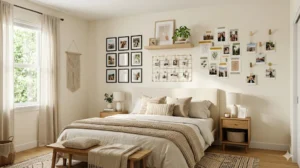
Research from environmental psychology suggests that personal photographs may strengthen emotional connection within living spaces. Displaying meaningful images can help create feelings of familiarity and belonging.
Modern design therefore focuses not just on appearance but also on emotional value. Flexible displays support evolving life stories while keeping interiors adaptable.
Many homeowners now prefer stylish gallery walls that can evolve over time instead of fixed arrangements that feel difficult to change.
People using adhesive hooks for photos or removable systems often discover that temporary decorating actually encourages greater creativity because changes feel easier and less risky.
Eco friendly approaches to wall decoration
Sustainability has become increasingly important in interior design. Reusable hanging systems reduce waste because they eliminate repeated patching, repainting, and wall repair materials.
Reusable systems support wall safe decorating and reduce unnecessary repairs in both rental and owned homes.
Many removable products now use recyclable packaging and lower residue adhesives designed to reduce chemical impact.
Repurposing materials also supports eco friendly decorating. Wooden clips, reclaimed shelves, and recycled frames can create attractive displays without unnecessary consumption.
Many people now prefer minimal wall damage decorating methods because they reduce maintenance costs and material waste over time.
Choosing the right method for your space
Every room requires a slightly different approach. Bedrooms benefit from softer and more personal arrangements, while offices often look best with organized layouts.
Small apartments usually need lightweight solutions that maximize visual openness. Larger homes can support layered displays and oversized arrangements more comfortably.
Lighting also matters. Soft natural light enhances photo visibility without excessive glare.
When selecting renter friendly photo wall ideas, always consider wall texture, humidity, sunlight exposure, and frame weight before installation.
Apartment wall decor should balance creativity with practical maintenance so that spaces remain functional and visually comfortable.
A thoughtful creative photo arrangement prevents walls from looking cluttered while still adding personality to a room.
Testing one small section first can help avoid larger problems later.
Final thoughts on damage free photo hanging
Decorating walls no longer requires nails, drills, or expensive repairs. With modern materials and creative planning, zero damage photo hanging offers stylish, flexible, and practical solutions for nearly every living situation.
Also Read: How lofted beds for small spaces can completely transform cramped rooms into functional living zones
Whether you prefer structured gallery walls, playful tape arrangements, floating shelves, or magnetic systems, there are countless ways to personalize your space safely. Many people discover that temporary decorating methods actually provide more freedom because layouts can evolve over time without commitment.
Modern removable mounting solutions make decorating without drilling much easier than before. These ideas work well for creative photo wall ideas for apartments where permanent installations are often restricted.
Modern wall styling now focuses on flexibility as much as appearance. By understanding wall materials, choosing quality removable products, and following proper installation techniques, you can create beautiful displays that protect both your walls and your photographs. The best photo arrangements combine creativity, function, and emotional meaning while keeping your home adaptable for future changes.
Sources and References
- National Park Service
- Library of Congress
- Smithsonian Institution
- Environmental psychology research summaries from American Psychological Association
FAQs
What works best on textured walls besides adhesive strips?
Textured walls often reduce adhesive contact, so lightweight hanging rails, tension wire systems, and leaning frame arrangements usually perform better. Magnetic boards and removable pegboards can also improve stability while preserving delicate wall finishes. Combining lightweight materials with balanced spacing creates safer and more reliable displays.
Are adhesive display systems safe for printed photo paper?
Most removable systems work safely with printed photos when used correctly. Acid free photo corners, lightweight clips, and magnetic holders generally provide better preservation than strong tape directly on prints. Conservation guidance from archival institutions also recommends avoiding prolonged heat and direct sunlight exposure.
Can floating shelves improve small apartment decoration?
Floating shelves help maximize vertical space while reducing visual clutter. They allow layered displays that combine framed photos with decorative items, creating depth without overcrowding walls. This approach works especially well in renter friendly photo wall ideas because it supports frequent rearrangement without repeated wall contact.
What lighting works best for modern gallery walls?
Soft indirect lighting usually improves visibility without creating glare on photo surfaces. Warm LED lighting and natural daylight from side angles often enhance image detail more effectively than overhead spotlights. Avoid strong direct sunlight because ultraviolet exposure may gradually fade printed photographs.
How can students create affordable removable photo displays?
Students can combine washi tape, lightweight clips, printable photo grids, and fabric hanging panels for inexpensive decoration. Recycled frames and cork boards also help create flexible layouts while minimizing wall damage. Temporary systems remain practical for dorm rooms where frequent moving is common.
Why are layered frame arrangements becoming more popular?
Layered displays create visual depth and allow easier seasonal updates. Instead of committing to fixed wall spacing, people can explore how to hang pictures without nails by rotating photographs naturally while maintaining a relaxed design style. This flexibility supports changing interiors without requiring new wall installations every time preferences change.
Do removable wall systems help preserve rental property walls?
Quality removable systems like adhesive wall hooks for photos reduce holes, chipped paint, and patching needs compared to traditional nails. When installed and removed correctly, they minimize long term wall maintenance and support cleaner property turnover. Many renters prefer temporary decorating methods because they protect security deposits while allowing personalization.