Living with less waste and more intention is no longer a niche lifestyle choice. It is becoming a practical necessity. As homes get smaller and environmental awareness grows, people are rethinking how they store everyday items. This is where eco friendly storage solutions step in, offering a balance between functionality, sustainability, and aesthetic simplicity while supporting eco conscious living.
This guide explores how to create smarter storage systems that reduce waste, improve organisation, and support long term environmental goals. It is built on research backed practices and real world application rather than trends that fade quickly.
Why sustainable storage matters more than ever
Storage is often overlooked in sustainability conversations, yet it plays a major role in consumption habits. Poor storage leads to clutter, duplication, and unnecessary purchases. According to the United Nations Environment Programme, household consumption patterns significantly contribute to global waste generation.
When items are not visible or organised, they are forgotten and often replaced. This creates a cycle of overconsumption driven by poor conscious consumption habits. Thoughtful storage breaks that cycle.
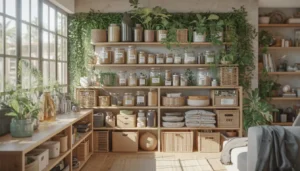
Sustainable storage focuses on:
- Extending the lifespan of products
- Reducing single use materials
- Minimising clutter and waste
- Supporting mindful consumption
This is why many households are shifting toward sustainable storage ideas that align with low waste living and long term sustainability goals.
The core principles behind eco conscious storage
Before choosing containers or systems, it helps to understand the principles that define sustainable storage.
Reduce before you organise
The most effective storage system starts with owning less. Strong decluttering strategies reduce the need for additional storage products, which often come with their own environmental footprint.
Reuse over replace
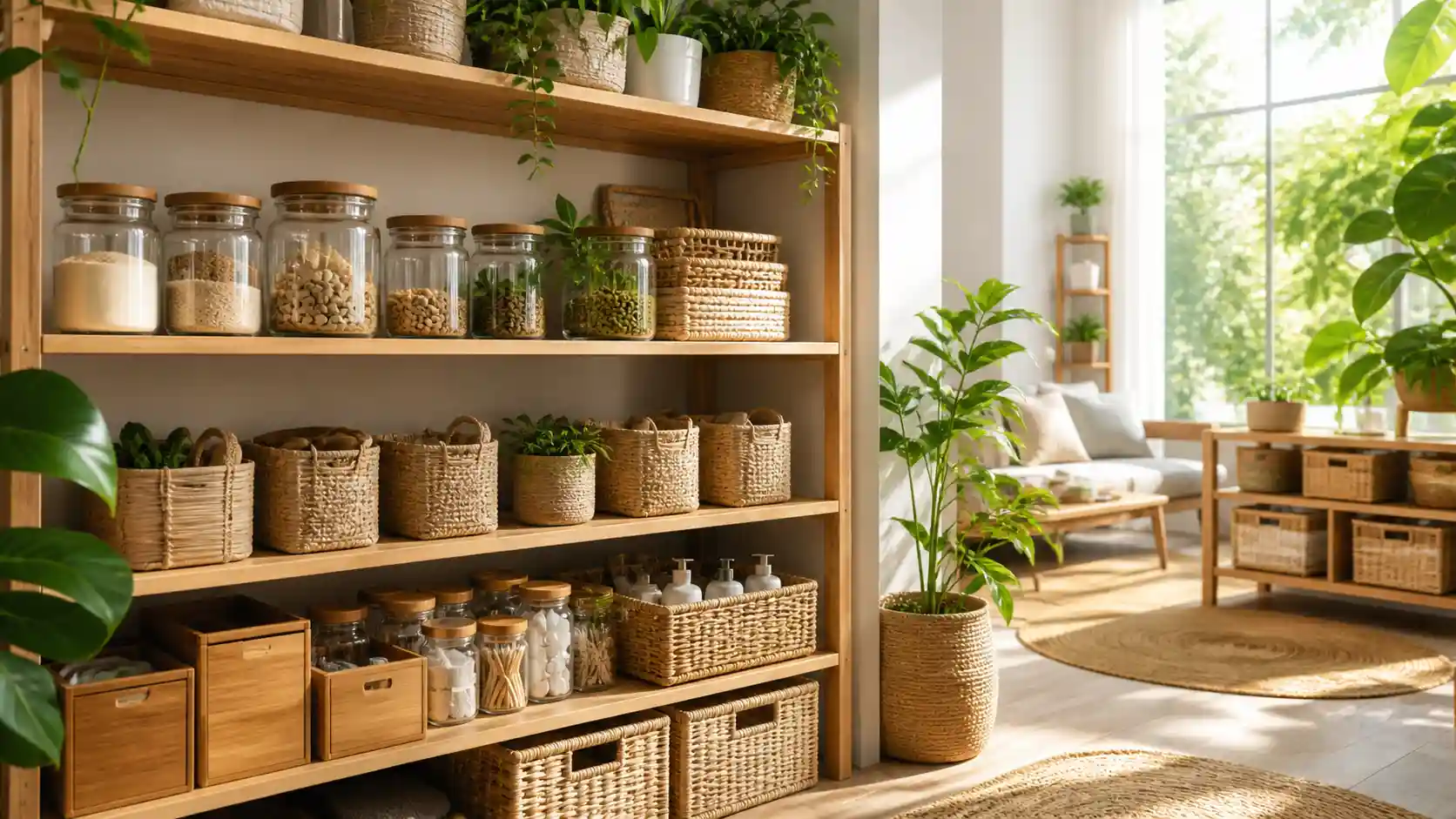
Glass jars, wooden crates, and fabric baskets can replace plastic bins. Using reusable containers reduces demand for new production.
Choose durable materials
Materials such as stainless steel, glass, bamboo, and solid wood fall under environmentally friendly materials that last longer and are easier to recycle.
Avoid hidden waste
Some storage products look sustainable but involve complex manufacturing or non recyclable components. Always consider the full lifecycle as part of home sustainability practices.
These principles form the foundation of practical eco friendly home organization, where sustainability is integrated into everyday routines rather than treated as an afterthought.
Room by room sustainable storage ideas
Different spaces require different strategies. A one size fits all approach rarely works.
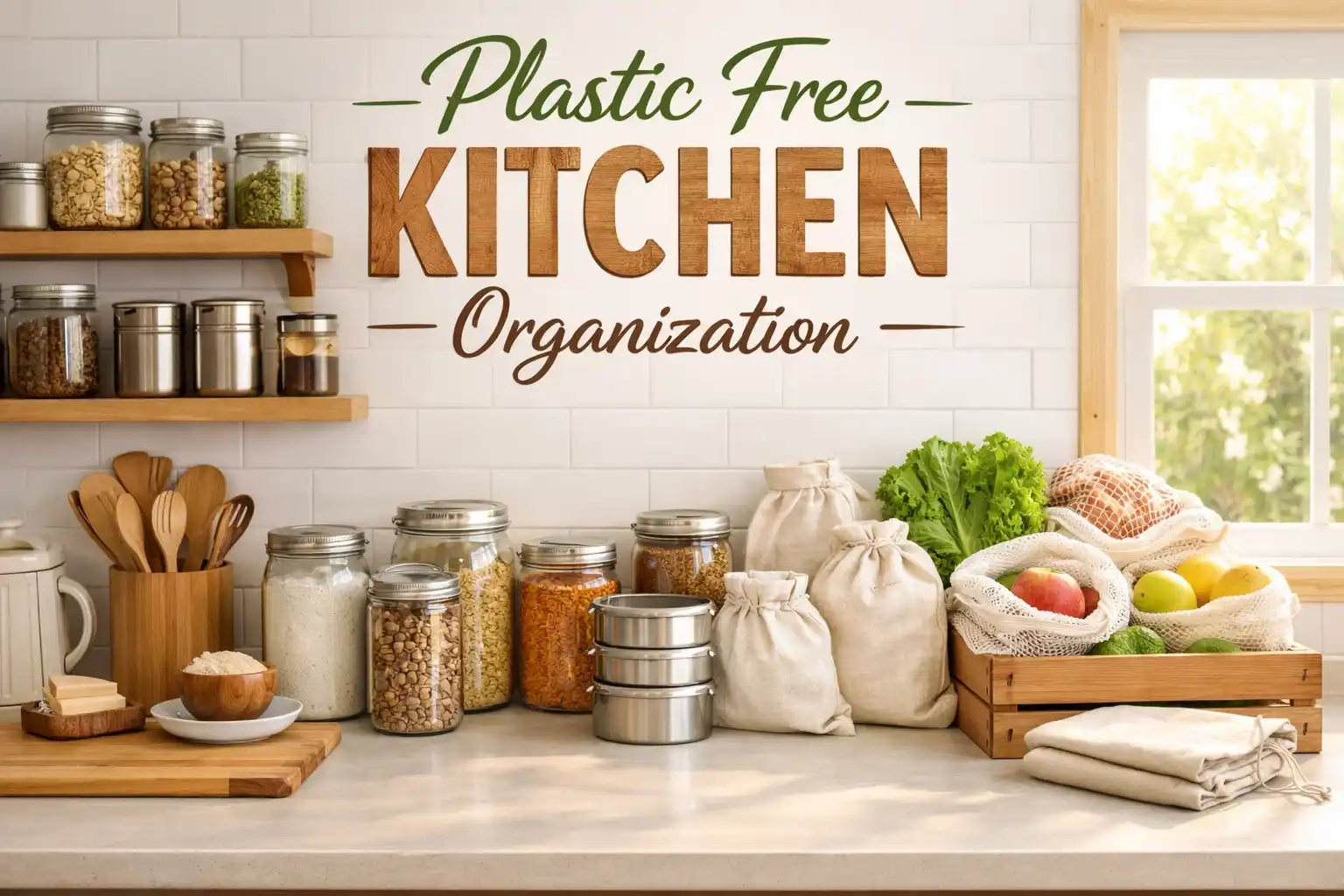
Kitchen storage
The kitchen is one of the highest waste generating areas in a home.
Effective strategies include:
- Using glass jars for pantry staples
- Switching to stackable metal containers
- Storing produce in breathable fabric bags
These approaches support plastic free storage and align closely with no-waste storage systems, especially when paired with bulk buying habits.
The Food and Agriculture Organization highlights that better food storage can significantly reduce household food waste. Proper storage is not just about organisation. It directly impacts waste reduction at home.
Bedroom and wardrobe storage
Closets often accumulate unused items due to poor visibility.
Better alternatives include:
- Open shelving instead of deep drawers
- Fabric organisers made from natural fibres
- Seasonal rotation systems
These methods support eco-friendly storage ideas while encouraging minimalist organization and more intentional wardrobe habits.
Bathroom storage
Bathrooms tend to rely heavily on plastic packaging.
Eco friendly changes include:
- Refillable containers for personal care products
- Bamboo trays and organisers
- Glass jars for small essentials
This approach contributes to sustainable home organization and promotes better household waste management in daily routines.
Living room and general storage
Living areas benefit from multi functional storage.
Options include:
- Storage benches made from reclaimed wood
- Woven baskets for blankets and books
- Modular shelving systems
These solutions support functional home storage while maintaining a clean and organised space that reflects clutter free home design.
How eco friendly storage solutions reduce waste long term
Adopting eco friendly storage solutions helps:
- Prevent duplicate purchases
- Reduce food spoilage
- Limit packaging waste
- Extend product usability
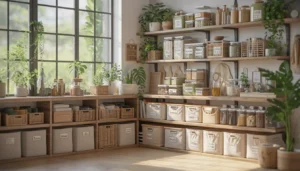
Research from the Environmental Protection Agency shows that reducing household waste starts with source reduction, not recycling alone. Storage plays a direct role in this process and supports broader green storage methods.
Materials that make a real difference
Choosing the right materials is critical.
Glass
Non toxic, reusable, and widely recyclable. Ideal for food storage.
Stainless steel
Durable and resistant to wear. Suitable for long term use.
Bamboo
Fast growing and renewable. Common in organisers.
Natural fabrics
Cotton, jute, and linen support flexible storage needs.
These materials reinforce low-waste storage solutions and align with sustainable lifestyle habits.
Practical strategies for small spaces
Limited space often leads to overbuying storage products that do not work.
Smarter strategies include:
- Vertical storage using wall mounted shelves
- Hidden storage under furniture
- Multi purpose containers
These techniques are essential for sustainable storage for small spaces and improve eco friendly home organization without increasing material consumption.
Urban housing studies from the Organisation for Economic Co operation and Development show that efficient space use reduces consumption patterns over time.
Common mistakes to avoid
Even well intentioned efforts can go wrong.
Over buying storage products
Buying too many organisers defeats the purpose of sustainability.
Choosing aesthetics over function
Visually appealing products that do not meet daily needs often go unused.
Ignoring maintenance
Sustainable storage requires consistent upkeep.
Mixing incompatible systems
Too many styles reduce efficiency and disrupt smart organization systems.
Avoiding these mistakes ensures that zero waste storage ideas remain practical and effective.
Building habits that support zero waste storage solutions
Storage alone does not create sustainability. Habits complete the system.
Key habits include:
- Regular decluttering cycles
- Conscious purchasing decisions
- Labelling and categorising items
- Tracking usage patterns
These behaviours strengthen zero waste storage solutions and promote responsible consumption habits.
Behavioral research from the Journal of Consumer Research shows that visible organisation improves awareness and reduces unnecessary purchases.
Designing a system that evolves with your lifestyle
Storage needs change over time.
Flexible strategies include:
- Modular storage units
- Adjustable shelving
- Interchangeable containers
This adaptability supports eco friendly home organization and aligns with simple living solutions that evolve without constant replacement.
The psychological impact of organised sustainable spaces
Organisation affects mental clarity.
Studies from the Princeton University Neuroscience Institute suggest that clutter reduces focus and increases stress levels. Systems built around planet-friendly storage concepts improve productivity and support better decision making.
How to start without overwhelming yourself
Transitioning does not require a complete overhaul.
Start with:
- One room at a time
- Replacing items gradually
- Reusing existing materials
- Avoiding perfection
This approach makes it easier to understand how to organize home sustainably without unnecessary pressure.
Conclusion
Sustainable living does not depend on drastic changes. It grows through consistent, thoughtful decisions. By adopting eco friendly storage solutions, households can reduce waste, improve organisation, and create systems that support long term environmental goals.
Also Read: 19 smart bedroom decor ideas for creating stylish and functional multi use spaces
The key is not to buy more, but to use better. When storage aligns with sustainability principles, it transforms everyday living into something more intentional, efficient, and environmentally responsible.
Sources and section mapping
United Nations Environment Programme
Food and Agriculture Organization
Environmental Protection Agency
Organisation for Economic Co operation and Development
Journal of Consumer Research
Princeton University Neuroscience Institute
FAQs
How can sustainable storage ideas improve daily routines
Sustainable organization ideas simplify daily routines by reducing clutter and improving visibility of essential items. When everything has a designated place, people spend less time searching and more time using what they already own. This reduces stress and promotes better time management while supporting long term sustainability goals.
What are the easiest zero waste storage solutions to start with
The easiest minimal waste storage ideas involve reusing existing containers such as glass jars, cloth bags, and metal tins. These require no additional purchases and immediately reduce reliance on disposable packaging. Starting small helps build consistency without overwhelming the process.
How does minimalist eco home organization affect buying habits
Plastic-free home organization increases awareness of what is already available in the home. This visibility reduces duplicate purchases and encourages more intentional buying decisions. Over time, it naturally lowers consumption and supports a more mindful lifestyle.
Are waste-reducing storage ideas suitable for small apartments
Yes, earth-friendly storage solutions work especially well in small apartments because they focus on efficiency and minimalism. Using vertical space, multi functional furniture, and compact containers allows better use of limited space without adding unnecessary clutter.
Can environmentally conscious storage solutions save money over time
waste-reducing storage systems reduce the need for repeated purchases by extending the life of products and preventing waste. Over time, this leads to noticeable cost savings, especially in areas like food storage and household supplies.
What materials are best for environmentally friendly home organization
Natural and durable materials such as glass, stainless steel, bamboo, and cotton are ideal. These materials last longer, are easier to maintain, and have a lower environmental impact compared to plastic alternatives.
How often should sustainable storage systems be updated
Sustainable storage systems should be reviewed periodically rather than frequently replaced. Small adjustments based on changing needs help maintain efficiency without creating unnecessary waste or consumption.