Modern homes continue to shrink in size while daily activities continue to expand. Many people now use their bedrooms for sleeping, working, studying, reading, exercising, or even relaxing with entertainment systems. As a result, designing a room that supports multiple functions without feeling crowded has become increasingly important. Thoughtful bedroom decor ideas can help transform limited square footage into a comfortable and organized environment that supports both productivity and relaxation.
A well planned bedroom does more than look attractive. According to research from environmental psychology and housing studies, organized and visually balanced spaces can improve comfort, reduce stress, and support better daily routines. When every item has a purpose and layout decisions support movement and flexibility, even small rooms can feel open and functional.
Many homeowners now prefer smart layouts for compact sleeping spaces because they help rooms support both relaxation and productivity without feeling overcrowded.
This guide explores practical strategies for designing multi purpose bedrooms that balance aesthetics with efficiency. You will discover layout techniques, storage solutions, lighting strategies, and furniture choices that support modern lifestyles while maintaining comfort and visual harmony.
Why multi use bedrooms are becoming more common
Housing trends and changing work habits have increased demand for flexible interiors. Remote work, online learning, and compact urban housing often require rooms to support several activities at once. Bedrooms now frequently serve as hybrid spaces that combine sleeping areas with workstations, reading corners, or storage zones.
This shift is especially noticeable in urban apartment living where bedrooms often function as multi purpose living spaces for work, rest, and storage.
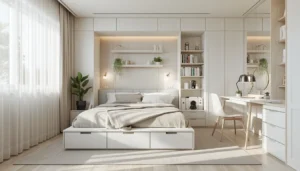
Interior design researchers have noted that flexible living spaces improve usability in smaller homes. Instead of dedicating separate rooms for each activity, homeowners can create adaptable environments that support multiple needs throughout the day.
This shift has also encouraged people to focus on bedroom decor tips for small spaces that improve organization without sacrificing comfort or personal style.
Start with functional zoning
One of the most effective ways to organize a multi purpose bedroom is through zoning. Zoning creates separate visual or functional areas inside one room without requiring physical walls.
Good interior space planning helps create a compact bedroom layout that feels organized while supporting several daily activities in one room.
Define sleeping and working areas
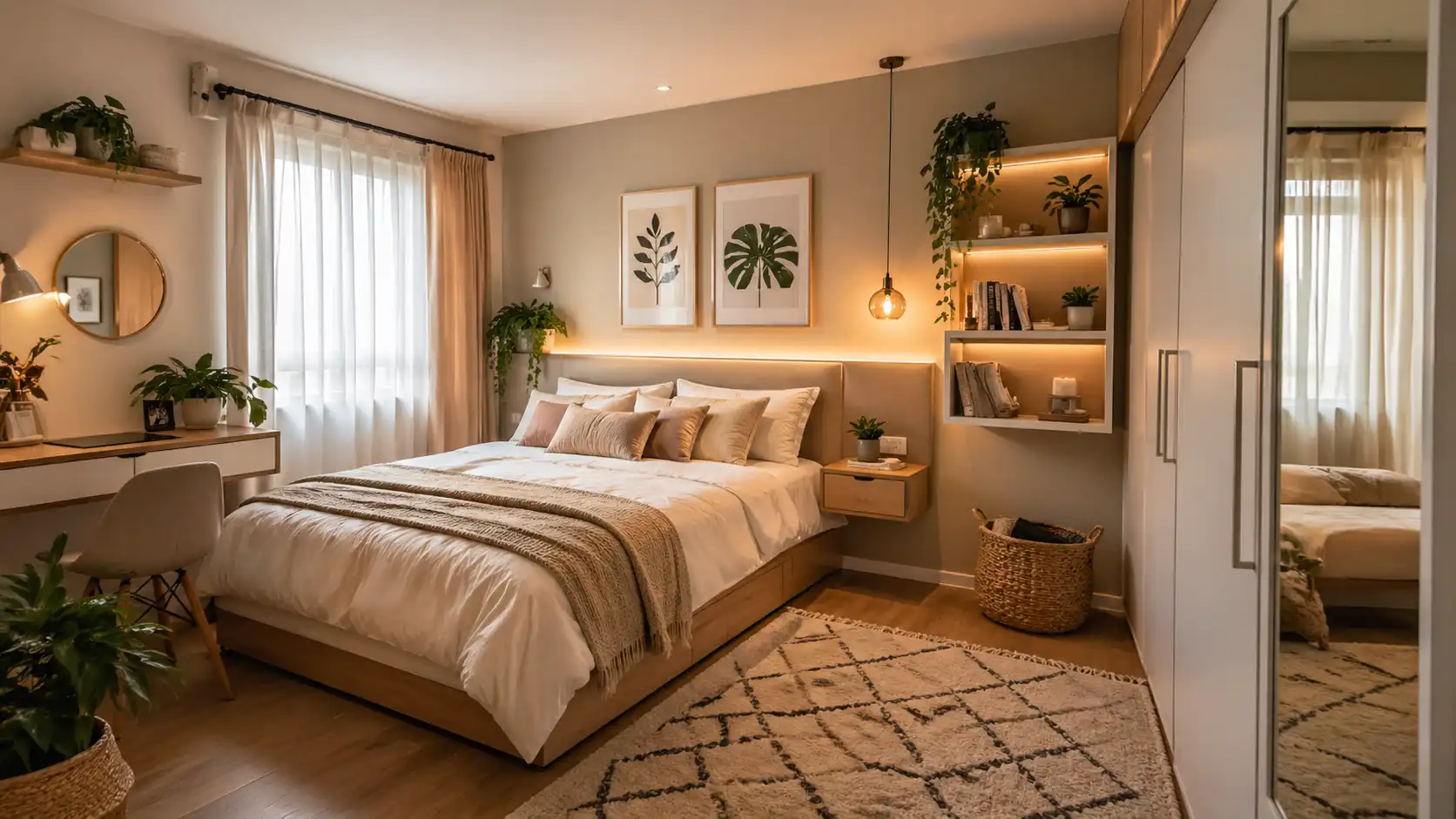
Keeping the sleeping area visually separate from work or study zones can improve mental balance. A desk placed directly beside the bed may blur boundaries between rest and productivity. Instead, position workstations near natural light while keeping sleeping areas calmer and less cluttered.
Bookshelves, rugs, or curtains can help divide spaces subtly. Even small visual separations help rooms feel more organized and intentional.
Use furniture to guide movement
Furniture placement affects how people move through a room. Avoid blocking walking paths with oversized items. Position larger furniture pieces along walls to maintain open floor space.
Flexible interior design strategies often rely on modular furniture that can adapt easily as household needs change.
Multi functional bedroom design often works best when furniture supports both flexibility and accessibility. Foldable desks, movable ottomans, and modular shelving units can adapt to changing daily needs.
Choose furniture that serves multiple purposes
Furniture selection plays a major role in maximizing functionality.
Many homeowners now invest in dual purpose furniture because it improves space optimization without sacrificing comfort.
Storage beds for hidden organization
Beds with built in drawers create valuable hidden storage for clothing, bedding, or seasonal items. This reduces the need for extra cabinets and helps maintain visual simplicity.
These beds are popular hidden storage solutions for people trying to maintain clutter free interiors in smaller bedrooms.
Foldable desks and wall mounted tables
Wall mounted desks can fold away after use, creating more open space during non working hours. These compact solutions work especially well in apartments and shared bedrooms.
Wall mounted storage and foldable workstations work especially well for a practical home office bedroom setup.
Convertible seating options
Benches with internal storage or sofa beds provide extra seating while supporting additional functions. Flexible seating also allows rooms to adapt for reading, relaxation, or guest accommodation.
These functional furniture ideas allow rooms to shift easily between relaxation and productivity throughout the day.
Many space saving bedroom decor ideas focus on reducing furniture bulk while improving overall usability.
Improve storage without overcrowding the room
Storage often becomes the biggest challenge in multi use bedrooms. Clutter quickly makes rooms feel smaller and more stressful.
Strong small room organization strategies can make even limited bedrooms feel more comfortable and visually balanced.
Use vertical storage solutions
Tall shelving units maximize wall height instead of consuming floor space. Floating shelves also create storage opportunities without adding visual heaviness.
Vertical storage solutions remain especially useful for minimalist bedroom decor tricks because they help maintain open movement areas.
Organize hidden storage zones
Under bed storage containers, hanging closet organizers, and stackable bins can keep seasonal or rarely used items out of sight.
Labeling storage sections also improves efficiency and reduces unnecessary clutter buildup over time.
Reduce visual clutter
Interior design studies suggest that excessive clutter may contribute to feelings of stress and distraction. Keeping surfaces relatively clear can improve focus and relaxation.
Organized living spaces often feel calmer because fewer distractions compete for attention within the room.
Using matching baskets or containers creates a cleaner visual appearance while improving organization.
Use lighting to support different activities
Lighting strongly influences how a room functions throughout the day.
Lighting choices also influence how calming bedroom colors appear during different times of the day.
Combine layered lighting sources
Relying on a single ceiling light often creates harsh or uneven illumination. Combining task lighting, ambient lighting, and accent lighting creates better balance.
Desk lamps support work activities while soft bedside lamps create relaxing evening environments.
Maximize natural light
Natural light can make smaller rooms feel larger and more welcoming. Position desks or reading chairs near windows whenever possible.
According to environmental design studies, exposure to natural light may support mood and productivity in indoor spaces.
Use adjustable lighting
Dimmable lights allow rooms to shift from productive daytime settings to calming nighttime environments more easily.
Bedroom decor ideas for flexible layouts
Flexible layouts in bedroom decor ideas allow rooms to evolve as needs change.
Efficient room layouts help improve movement and functionality while keeping bedrooms visually open.
Create movable furniture arrangements
Lightweight furniture pieces can easily shift positions depending on activities. Rolling carts, folding chairs, and movable side tables create adaptable layouts without permanent commitment.
These adaptable arrangements support flexible interior design without requiring permanent structural changes.
This approach supports versatile bedroom layout ideas because it encourages versatility while maintaining comfort.
Use rugs to define zones
Area rugs visually separate sections of the room without using walls. A rug beneath a desk area creates distinction between work and sleeping zones.
Different textures can also add warmth and visual depth to interiors.
Keep layouts balanced
Avoid placing all heavy furniture on one side of the room. Balanced layouts improve visual harmony and help smaller rooms feel less crowded.
Choose calming colors and textures
Color choices significantly influence how spacious and relaxing a room feels.
Use lighter color palettes
Soft neutral shades often reflect more light and create a more open appearance. Pale gray, warm white, muted green, and soft beige remain popular choices for compact rooms.
Add texture for warmth
Layered textiles such as blankets, cushions, and curtains add depth without increasing clutter. Natural materials like cotton and linen create a softer atmosphere.
Avoid excessive visual noise
Too many patterns or contrasting colors can make rooms feel visually crowded. Limiting decorative elements helps maintain balance.
Many compact bedroom decor ideas work best when paired with calm and consistent color palettes.
Smart technology for multi purpose bedrooms
Technology can improve convenience without increasing clutter.
Use wireless charging stations
Wireless chargers reduce cable clutter around bedside tables and workspaces.
Install smart lighting systems
Smart bulbs allow users to adjust brightness and color temperature depending on activities or time of day.
Consider compact entertainment setups
Wall mounted televisions or projectors save floor space compared to bulky entertainment units.
Create work friendly bedroom areas
Many people now work remotely from bedrooms, especially in smaller homes.
Carefully planned bedroom workspace ideas can improve focus while preserving separation between work and relaxation zones.
Prioritize ergonomic seating
Poor posture can lead to discomfort during long working hours. Ergonomic chairs and proper desk height support healthier working conditions.
Separate work from sleep visually
Keeping work materials organized and out of direct sight after work hours can help create mental separation between productivity and rest.
Minimize distractions
Noise reducing curtains or soft furnishings may help absorb sound and create quieter environments.
These bedroom decor tips for small spaces can improve comfort for people balancing work and personal activities in one room.
Add personality without overcrowding
Decor should reflect personality without overwhelming the space.
Minimalist room styling often works well in compact bedrooms because it reduces unnecessary visual distractions.
Use meaningful decorative accents
Instead of filling shelves with random objects, choose a few meaningful decorative pieces that support the room’s overall style.
Include plants thoughtfully
Indoor plants can improve visual comfort and add freshness to interiors. Smaller plants placed on shelves or desks work well in compact spaces.
Rotate seasonal decor
Rotating decorative items seasonally prevents overcrowding while keeping interiors visually fresh.
Common mistakes to avoid in multi use bedrooms
Some design decisions can reduce functionality instead of improving it.
Oversized furniture often restricts movement and makes small rooms feel cramped. Poor lighting placement can create eye strain or uncomfortable shadows. Ignoring storage needs usually leads to clutter accumulation over time.
Another common mistake involves trying to combine too many functions into one room without clear organization. Defining priorities helps maintain usability and comfort.
How organization supports mental comfort
Research in environmental psychology suggests that organized living environments may support reduced stress and improved concentration. Bedrooms designed with intentional storage and balanced layouts often feel calmer and easier to maintain.
Functional room organization for modern homes encourages better routines by helping residents maintain cleaner and more manageable spaces.
Creating organized systems also reduces daily frustration. When frequently used items remain accessible and clutter stays controlled, rooms function more efficiently.
This is one reason why multi functional bedroom design continues gaining popularity among people living in compact homes or shared apartments.
Budget friendly ways to upgrade multi use bedrooms
Improving functionality does not always require expensive renovations.
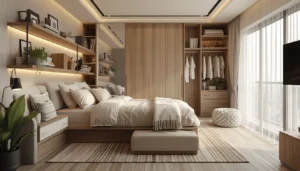
Rearranging existing furniture can sometimes improve flow dramatically. Repurposing storage baskets, adding floating shelves, or changing lighting arrangements can also make noticeable improvements.
Secondhand furniture and simple DIY projects often provide affordable ways to create practical upgrades for multi purpose rooms.
Many homeowners searching for small bedroom styling ideas discover that thoughtful organization matters more than expensive furniture purchases.
Conclusion
Modern living often requires rooms to serve more than one purpose, especially in smaller homes and apartments. With thoughtful planning, bedrooms can successfully support sleeping, working, relaxing, and storage needs without feeling crowded or chaotic. Smart bedroom decor ideas focus on flexibility, organization, and visual balance to create spaces that feel both functional and comfortable.
From layered lighting and hidden storage to adaptable furniture and calming color palettes, every design choice contributes to better usability. Whether you are redesigning a compact apartment bedroom or improving a shared living space, practical solutions can help create a more efficient environment that supports daily routines and long term comfort.
Also Read: 15 stunning temporary flooring ideas that instantly make any room look luxurious
From wall mounted storage to modular furniture solutions, thoughtful design choices can create organized and adaptable bedrooms that support modern lifestyles effectively.
As flexible living continues shaping modern interiors, people increasingly rely on space saving bedroom decor ideas and practical organization strategies to create rooms that adapt easily to changing lifestyles while maintaining warmth and personality.
Sources and section mapping
- American Psychological Association
- Cornell University Human Factors and Ergonomics Research
- National Institutes of Health
- University of Minnesota Extension
- Environmental Protection Agency
FAQs
How can bedroom decor tips for small spaces improve daily comfort?
Compact room decor solutions often focus on improving organization, lighting, and furniture placement to make compact rooms feel more comfortable and functional. Using vertical storage, foldable furniture, and hidden storage compartments can free up valuable floor space while improving movement throughout the room. Many people also find that reducing clutter and creating clearly defined activity zones supports better focus and relaxation. These strategies help smaller bedrooms feel more balanced and less visually overwhelming during busy daily routines.
Why is dual purpose bedroom design important for modern homes?
Flexible bedroom space planning has become increasingly important because many people now use bedrooms for sleeping, remote work, studying, and relaxation within the same space. Flexible layouts allow rooms to adapt throughout the day without requiring major furniture changes. Using movable furniture, layered lighting, and compact storage systems helps maintain comfort while supporting different activities. This approach is especially valuable in apartments or shared homes where limited square footage requires rooms to perform several functions efficiently.
What are the best small space bedroom styling solutions for shared rooms?
Some of the most effective efficient bedroom layout ideas for shared rooms include loft beds, wall mounted desks, under bed storage containers, and floating shelves. These solutions help maximize available space without overcrowding the room. Shared rooms also benefit from clearly divided zones that give each person a sense of privacy and organization. Choosing furniture with built in storage can reduce clutter while improving overall functionality for multiple users sharing one environment.
How does lighting affect multi functional bedroom design?
Lighting plays a major role in adaptive bedroom interior design because different activities require different levels of brightness and focus. Task lighting improves visibility for reading or working, while softer lighting creates relaxing environments for rest. Adjustable lighting systems help rooms transition smoothly between daytime productivity and evening relaxation. Natural light also helps smaller spaces feel larger and more welcoming, which is especially useful in compact bedrooms designed for several daily functions.
Can space saving bedroom design tips reduce stress?
Many environmental psychology studies suggest that organized and visually balanced spaces may help reduce feelings of stress and distraction. Bedroom makeover ideas, often encourage minimizing clutter, improving storage systems, and maintaining open movement paths. These changes can create calmer environments that feel easier to manage. Organized bedrooms may also improve daily efficiency because essential items remain easier to locate and store properly.
What furniture works best for multifunction living bedroom concepts?
Furniture that serves more than one purpose usually works best for multifunction living bedroom concepts. Storage beds, foldable desks, modular shelves, and benches with hidden compartments all help maximize functionality while reducing clutter. Lightweight movable furniture also allows rooms to adapt for different activities throughout the day. Choosing compact furniture with simple lines can make rooms feel more open while improving comfort and usability.
Why are space saving bedroom decor ideas useful for apartments?
Apartments often have limited square footage, making minimalist bedroom decor concepts especially valuable for maintaining comfort and organization. Using vertical storage, compact furniture, and flexible layouts can help residents maximize every available area without creating visual clutter. Smart storage solutions also improve functionality by keeping frequently used items accessible while reducing overcrowding. These strategies allow apartment bedrooms to support sleeping, working, and relaxation more effectively within smaller living environments.