Designing shelves that look polished and balanced is one of the most overlooked skills in interior decorating. Many people buy beautiful shelves, add decorative objects, and still feel that something looks unfinished or cluttered. Professional designers approach shelving differently. They focus on proportion, texture, colour flow, and visual rhythm instead of simply filling empty areas.
The good news is that anyone can learn these techniques. With the right approach, even a basic shelf can become a focal point that improves the entire room. The best part is that shelf styling does not always require expensive decor pieces. Thoughtful arrangement matters far more than luxury accessories.
These home shelf styling ideas can help create a cleaner, more intentional, and visually balanced space while reflecting your personality naturally. Whether you are styling open shelves in a living room, a compact bookshelf in an apartment, or decorative shelving in a bedroom, the right methods can make the entire room feel professionally curated.
Why shelf styling matters in interior design
Shelves do much more than provide storage. In modern interior design, shelves influence the atmosphere, visual balance, and functionality of a room. According to the National Endowment for the Arts, organised and visually pleasing living spaces can positively affect mood, creativity, and daily comfort. Well arranged shelving contributes to that sense of order and calm.
Professional designers often use shelves to guide the eye across a room. A properly styled shelf can soften empty walls, add texture, create visual height, and improve colour harmony. This is why shelving plays a major role in minimalist interiors, Scandinavian spaces, and contemporary interiors where clean layouts matter.
Good shelf styling also supports practical living. Open shelving makes frequently used items easier to access while encouraging homeowners to stay organised. The challenge lies in balancing beauty and function without making the space appear overcrowded.
Start with a clear purpose before decorating
One of the biggest mistakes people make is decorating shelves without defining their purpose first. Professionals always decide how the shelves will function before adding objects.
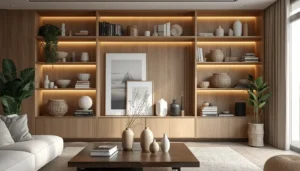
Some shelves are mainly decorative, while others serve practical purposes such as storing books, displaying family items, or organising essentials. Defining the goal helps determine how much decor is needed and what type of objects belong there.
For example, shelves in a home office may focus on books, storage baskets, and subtle decorative accents. Living room shelves often prioritise visual styling, artwork, candles, and sculptural pieces. Kitchen shelving usually blends functionality with decorative details like ceramic jars or glassware.
Once the purpose becomes clear, the styling process becomes much easier and more intentional.
Use the rule of visual balance
Professional designers rarely place objects randomly. Instead, they use visual balance to make shelves feel harmonious.
Visual balance does not mean everything must be symmetrical. In fact, slightly uneven arrangements often look more natural and modern. The goal is to distribute visual weight evenly across the shelf.
A large vase on one side may balance a stack of books with a framed print on the opposite side. Dark objects can visually weigh more than lighter items, so designers often spread darker accents throughout shelving arrangements to avoid heavy looking corners.
This technique works especially well for modern shelf decor ideas because contemporary spaces often rely on simplicity and clean visual flow rather than excessive decoration.
Layer objects to create depth
Flat shelf arrangements usually appear lifeless. Professionals create depth by layering objects at different distances and heights.
A framed artwork placed behind a vase instantly creates dimension. Small decorative objects positioned in front of stacked books make shelves feel curated instead of staged. Layered decor also helps break rigid lines, making shelving appear softer and more inviting.
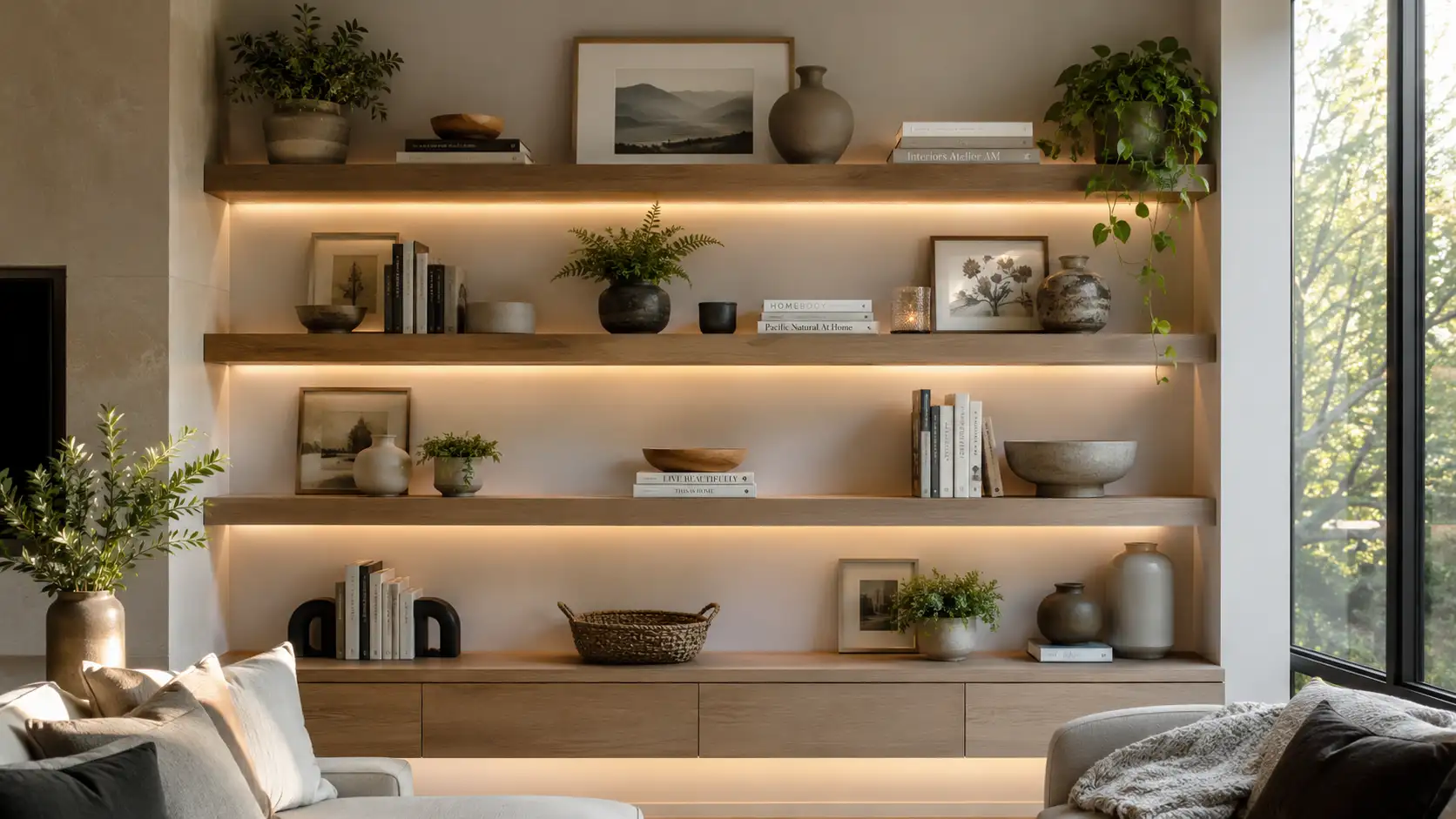
Texture plays a major role here as well. Combining materials such as wood, ceramic, linen, metal, and glass creates visual richness without requiring bold colours.
Interior designers often recommend mixing smooth and rough surfaces together. Organic textures such as wood, linen, woven fibres, and clay create subtle contrast that keeps shelves visually interesting.
Choose a consistent colour palette
One reason professionally designed shelves look elegant is colour consistency. Too many unrelated colours can make shelves feel chaotic and distracting.
Designers usually select two to four dominant colours and repeat them subtly throughout the arrangement. A neutral colour palette often works best because it creates flexibility and timeless appeal. Shades like white, beige, soft grey, olive green, charcoal, and warm brown blend naturally into most interiors.
This does not mean shelves must look boring. Accent colours can still appear through books, artwork, flowers, or decorative accents. The key is repetition. When colours repeat across different shelf levels, the entire display feels intentional.
For those searching for how to style shelves like a designer, colour coordination is one of the simplest upgrades that creates an immediate professional effect.
Leave empty space intentionally
Many homeowners believe every shelf must be completely filled. Professional designers do the opposite. They deliberately leave empty space to improve breathing room and visual clarity.
Negative space allows decorative objects to stand out individually instead of competing for attention. It also prevents shelves from looking cluttered or overwhelming.
Minimalist interiors rely heavily on this principle. According to research published by the University of Southern California, visual clutter can increase cognitive overload and reduce focus. Clean, open shelf arrangement styles often feel calmer and more relaxing.
Empty space becomes even more important on floating shelves because these styles naturally expose more of the wall behind them.
Mix books with decorative objects naturally
Books are one of the easiest styling tools because they add colour, texture, and height. However, professional designers rarely line books up mechanically across every shelf.
Instead, they combine vertical and horizontal book stacks. Some books remain standing while others become platforms for candles, bowls, or sculptural decor.
This approach creates movement and prevents monotony. It also introduces variation in height, which is essential for dynamic shelf composition.
These bookshelf styling tips work especially well in living rooms and home offices where books naturally contribute personality and warmth to the environment.
Coffee table books with neutral covers are particularly popular in curated interiors because they provide visual sophistication without overwhelming the room.
Incorporate natural elements
Nature inspired decor continues to dominate modern interior trends because it adds warmth and softness to indoor spaces.
Plants are one of the most effective shelf styling tools. Small trailing plants, dried branches, eucalyptus stems, or ceramic planters instantly bring life to shelves. According to research from Harvard University, indoor plants may contribute positively to emotional wellbeing and perceived comfort in living environments.
Natural materials such as wood, stone, linen, rattan, and clay also help shelves feel grounded and inviting. Even small organic accents can soften modern interiors that might otherwise appear too cold or structured.
When exploring modern shelf decor ideas, natural textures often create the balance that makes contemporary spaces feel welcoming instead of sterile.
How home shelf styling ideas improve small spaces
Small rooms benefit enormously from thoughtful shelving because vertical storage maximises limited square footage.
Open shelving can visually expand compact rooms when styled correctly. Light colours, reflective materials, and balanced spacing help maintain an airy atmosphere. Floating shelves are particularly useful because they expose more floor space and reduce visual heaviness.
Many designers use shelf decorating ideas for small spaces to maximise storage while maintaining an open and uncluttered appearance.
Mirrors placed near shelves can also reflect light and create the illusion of greater depth. Designers often pair shelving with soft shelf lighting to make smaller rooms feel brighter and more open.
In apartments and compact homes, shelves should avoid excessive decoration. Too many objects can make tight spaces feel crowded quickly. Functional decorative storage and multipurpose decor pieces help maintain both organisation and aesthetics.
This is where home shelf styling ideas become highly practical rather than purely decorative.
Add personal details carefully
Professional shelf styling should still feel personal. The goal is not to create a showroom but a space that reflects real life.
Family photographs, travel souvenirs, handmade pottery, or meaningful artwork can all add authenticity. However, professionals usually limit personal objects strategically instead of displaying everything at once.
Curated personal touches create emotional warmth without visual overload. Designers often rotate decorative items seasonally to keep shelves feeling fresh while preventing clutter accumulation.
Personal details also help shelves tell a story. A shelf display feels more inviting when it reflects experiences, interests, or memories rather than looking completely generic.
Use lighting to highlight shelves
Lighting dramatically changes how shelves appear. Poor lighting can make even beautifully styled shelves feel dull or flat.
Interior designers frequently use layered lighting around shelving. Wall sconces, picture lights, LED strips, or nearby lamps help create warmth and dimension. Soft shelf lighting also highlights textures and decorative details more effectively.
Warm white lighting generally works best because it creates a comfortable atmosphere while maintaining natural colour tones.
In darker rooms, lighting becomes essential for open shelving because shadows can make shelves appear visually heavy. Proper illumination helps decorative objects stand out individually and improves the overall mood of the room.
Avoid overcrowding decorative shelves
Over styling is one of the most common shelf decorating mistakes. Shelves filled with too many unrelated items quickly lose visual impact.
Professional designers edit aggressively. They remove unnecessary objects until the arrangement feels balanced and intentional.
A helpful guideline involves varying object sizes while limiting the total number of accessories per shelf. Large statement pieces often create more impact than multiple small decorations.
This approach is central to how to style shelves like a designer because restraint often creates a more luxurious and sophisticated appearance than excessive decoration.
Editing also makes cleaning easier, which is important for maintaining attractive shelves over time.
Style shelves differently in every room
Different rooms require different shelf styling approaches because functionality changes throughout the home.
Living room shelves
Living room shelving usually combines decorative objects, books, framed art, and plants. The goal is warmth and visual interest without clutter.
Neutral colour palettes work particularly well because they complement changing seasonal decor easily.
Kitchen shelves
Kitchen shelves should prioritise accessibility and practicality. Glass jars, ceramic dishes, cookbooks, and wooden cutting boards often work beautifully together.
Open kitchen shelving also benefits from repetition because matching containers create visual order.
Bedroom shelves
Bedroom shelving should feel calming and minimal. Soft textures, candles, framed photographs, and subtle decor pieces create a peaceful atmosphere.
Heavy visual clutter can negatively affect relaxation and sleep quality, according to sleep environment research from the Sleep Foundation.
Home office shelves
Office shelving should balance organisation and inspiration. Decorative baskets, books, greenery, and simple artwork help maintain productivity without distraction.
These bookshelf styling tips can adapt easily depending on the room’s purpose and design style.
Homeowners often search for open shelving design inspiration when trying to create functional yet visually appealing display areas in modern homes.
Follow the designer triangle method
Many professionals use a visual triangle technique when arranging shelves. This method places objects of varying heights in triangular groupings to guide the eye naturally.
For example, a tall vase, medium candle, and smaller decorative bowl can form a balanced triangle. Repeating triangular arrangements throughout shelving creates rhythm and flow.
This method works particularly well on asymmetrical shelves because it prevents visual imbalance while maintaining a relaxed appearance.
The triangle principle is commonly used in interior styling, photography, and visual merchandising because the human eye naturally responds well to balanced composition patterns.
Rotate decor seasonally
Professionally styled homes rarely keep shelves unchanged throughout the year. Designers rotate accessories seasonally to maintain freshness and relevance.
Spring often includes greenery and lighter colours. Autumn may introduce warm textures and earthy tones. Winter shelves frequently feature candles, layered textures, and darker accents.
Seasonal updates do not require complete redesigns. Swapping a few decorative pieces can significantly refresh the space.
Rotating decor also prevents shelves from becoming visually stagnant over time.
Combine functionality with beauty
The best shelves balance practicality with aesthetics. Decorative shelves that serve no purpose beyond appearance can become frustrating in everyday life.
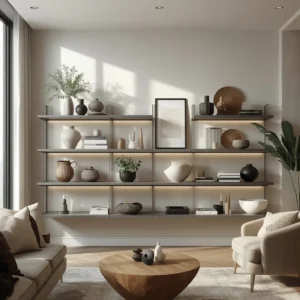
Functional shelf styling may include decorative storage boxes, trays, labelled containers, or concealed organisation tools. Professional designers often hide less attractive essentials inside decorative baskets to maintain visual cleanliness.
This blend of organisation and design is a defining feature of successful modern apartment decor because contemporary interiors increasingly prioritise practical living.
Good shelf organisation improves both functionality and visual appeal at the same time.
Common shelf styling mistakes to avoid
Even beautiful decor pieces can fail when arranged poorly. Understanding common mistakes helps create more polished results.
Using too many tiny accessories
Small decorative objects scattered randomly often create visual clutter instead of elegance. Larger statement pieces usually look more sophisticated.
Ignoring proportion
Tiny accessories on oversized shelves can feel disconnected. Likewise, oversized decor on narrow shelves may appear cramped.
Matching everything perfectly
Overly coordinated shelves can feel artificial. Mixing textures, shapes, and materials creates more natural visual interest.
Forgetting height variation
Shelves with objects all at the same height often look flat. Height variation introduces movement and depth.
Neglecting maintenance
Dust, tangled cords, and overcrowding reduce the effectiveness of even well styled shelves. Regular editing and cleaning are essential.
Understanding these issues makes it easier to apply home shelf styling ideas successfully in real spaces.
Why simplicity often looks more luxurious
Luxury interiors rarely depend on excessive decoration. Instead, they focus on thoughtful composition, quality materials, and clean presentation.
Simple shelves often appear more expensive because they allow each object to stand out clearly. Designers carefully select fewer but more meaningful pieces.
This principle explains why minimalist shelf displays continue to dominate modern interiors. Clean arrangements create calm, sophistication, and timeless appeal.
The idea is not emptiness for the sake of trendiness. Instead, simplicity improves focus, balance, and visual comfort.
Conclusion
Learning how to decorate shelves professionally is less about buying expensive decor and more about understanding balance, spacing, texture, and intentional design. With thoughtful planning, even simple shelving can transform the atmosphere of an entire room.
These home shelf styling ideas demonstrate that professional looking shelves rely on editing, layering, colour consistency, and personal touches that feel authentic rather than forced. Whether styling a small apartment bookshelf or large built in living room shelving, the same design principles apply consistently.
Also Read: https://ourhousemanual.com/home-color-palette/
By combining practical organisation with thoughtful decor placement, anyone can achieve shelves that look elegant, welcoming, and professionally styled. The key is to focus on simplicity, visual balance, and meaningful details rather than trying to fill every inch of space.
Sources and section mapping
- National Endowment for the Arts
- University of Southern California research on visual clutter and cognitive overload
- Harvard University research on indoor plants and wellbeing
- Sleep Foundation research on bedroom environments and relaxation
FAQs
How do minimalist interiors influence bookshelf styling tips?
Minimalist interiors encourage cleaner shelf arrangements with fewer decorative objects and more breathing space. Instead of overcrowding shelves, minimalist styling focuses on intentional decor choices, neutral colours, and visual balance. This approach often makes bookshelves feel calmer, more organised, and visually sophisticated while improving functionality at the same time. Many designers also recommend incorporating shelf decorating ideas for small spaces within minimalist homes because compact areas benefit greatly from reduced visual clutter and smart vertical storage solutions. The combination of simplicity and thoughtful arrangement helps shelves feel elegant without appearing empty or unfinished.
Why do modern shelf decor tips use natural textures so often?
Natural materials such as wood, linen, stone, ceramic, and woven fibres add warmth and softness to interiors. Modern spaces can sometimes appear cold or overly structured, so natural textures help create emotional comfort and visual balance. They also blend easily with neutral colour palettes and contemporary furniture styles. Designers often use layered organic materials to create open shelving design inspiration that feels welcoming and timeless rather than overly trendy. Even small additions like woven baskets, clay vases, or wooden trays can soften modern shelving and make the room feel more connected to nature.
What makes how to style shelves like a designer different from regular decorating?
Professional shelf styling focuses on composition rather than decoration alone. Designers carefully balance height, spacing, colour repetition, lighting, texture, and negative space. Instead of filling shelves randomly, they create arrangements that guide the eye naturally while maintaining functionality and simplicity. Professional styling also involves editing unnecessary objects and ensuring that every piece contributes visually to the overall arrangement. This thoughtful approach prevents clutter while making shelves feel intentional, curated, and balanced. It is this attention to detail that separates professionally styled shelving from casual decorating.
How can decorative storage improve open shelving design?
Decorative storage baskets, trays, and containers help hide clutter while maintaining a polished appearance. They combine organisation with aesthetics, which is essential for functional modern interiors. Storage pieces also introduce texture and visual structure to shelves without making the arrangement feel overcrowded. Many designers prefer decorative storage because it allows homeowners to keep practical items accessible while preserving a clean visual appearance. This balance becomes especially important in living rooms, kitchens, and home offices where shelves need to support both functionality and decorative appeal at the same time.
Why does height variation matter in bookshelf styling ideas?
Objects with different heights create visual movement and prevent shelves from looking flat or repetitive. Combining tall vases, medium sized artwork, stacked books, and smaller accents creates layered composition. This variation helps shelves appear professionally curated instead of mechanically arranged. Interior designers often use triangular groupings of objects to guide the eye smoothly across the shelf. Without height variation, shelves may feel stiff and visually uninteresting. Even subtle changes in object placement can dramatically improve shelf composition and create a more dynamic overall design.
How do floating shelves support modern shelf decor ideas?
Floating shelves expose more wall space, making rooms feel lighter and less visually heavy. Their clean lines work especially well in modern interiors because they support minimalist aesthetics and flexible styling arrangements. They are also highly effective in small spaces where visual openness matters. Floating shelves allow decorative objects to stand out individually while maintaining a cleaner overall appearance. Designers frequently use floating shelving in apartments, bedrooms, kitchens, and offices because they provide practical storage without overwhelming the room visually. Their simplicity makes them adaptable to many interior styles.
How can colour repetition improve how to style shelves like a pro?
Repeating colours subtly throughout shelving creates harmony and visual rhythm. Professional designers often use a limited palette to ensure shelves feel connected instead of chaotic. Repeated tones help unify books, decorative objects, artwork, and plants into one cohesive arrangement. This technique also helps shelves blend naturally into the surrounding room design instead of competing for attention. Colour repetition does not require exact matching. Even similar shades and complementary tones can create visual consistency while still allowing enough variation to keep shelves interesting and personal.